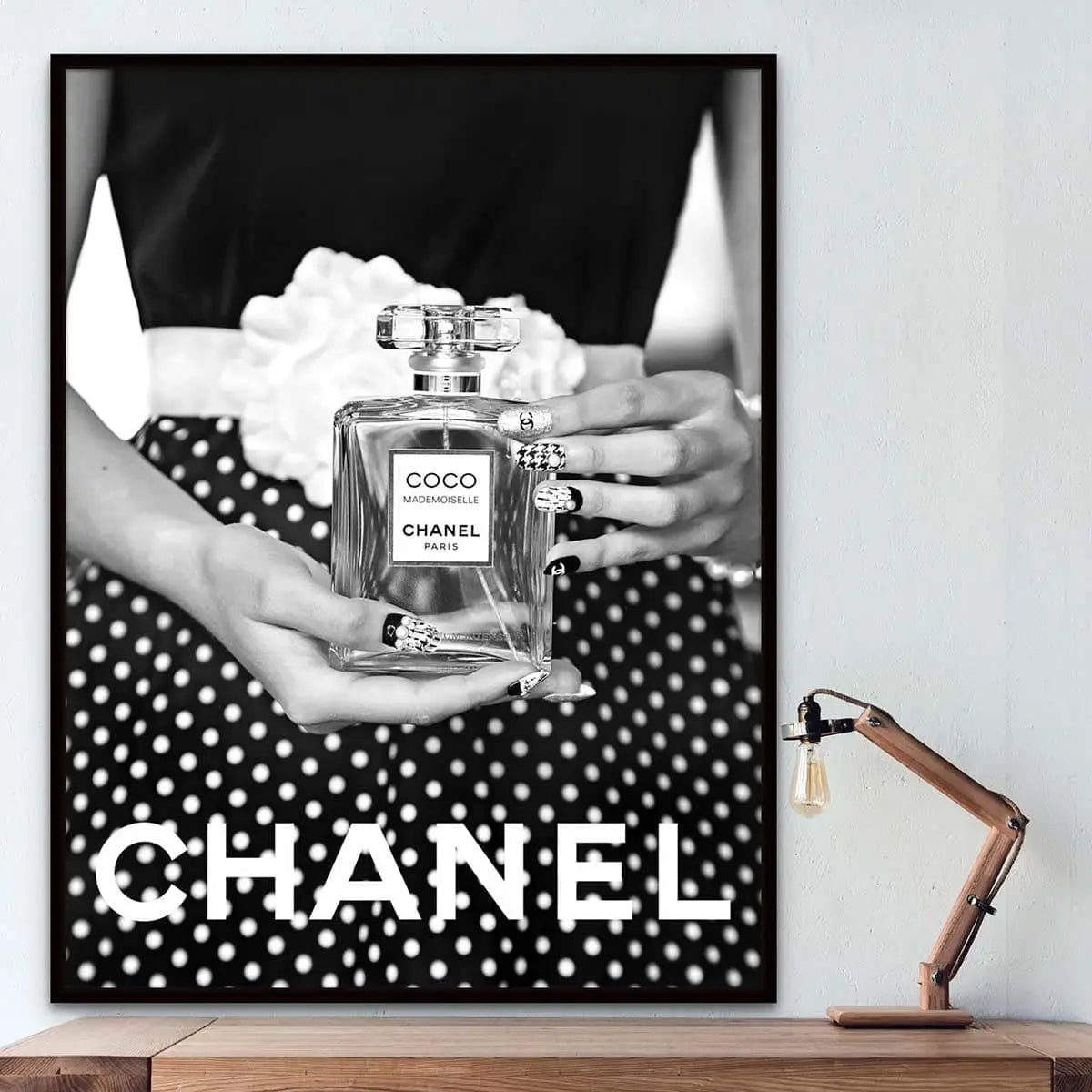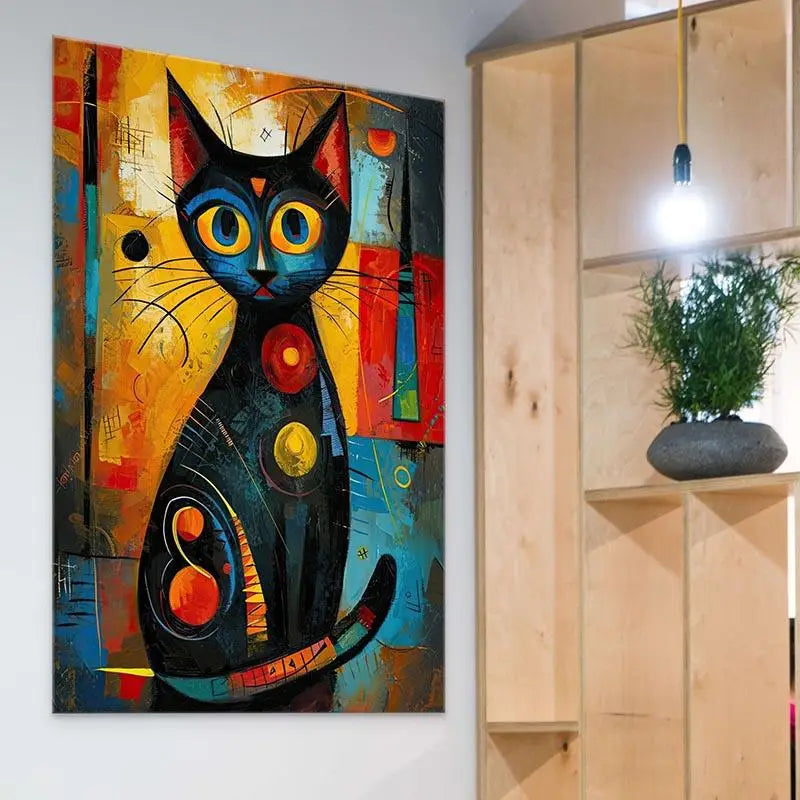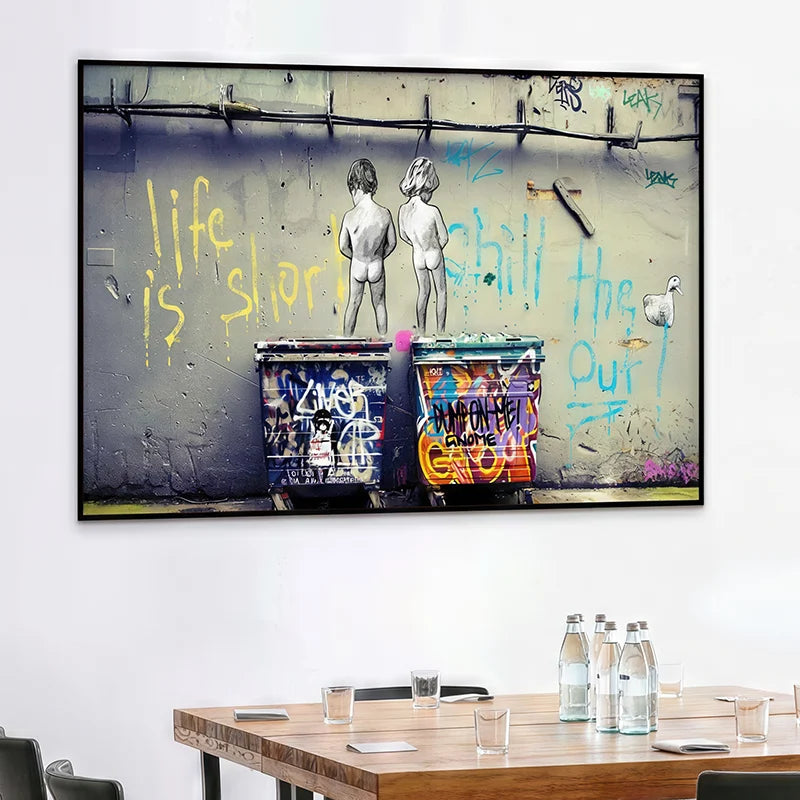

Wall decor · Contemporary living room
Colorful living room wall art : how to bring style to your walls ?
A white wall can quickly feel lacking in character. Yet a few carefully chosen accessories and a piece of colorful decorative wall art are all it takes to transform the atmosphere of a living room. Large canvas, triptych, gallery wall or abstract wall art : discover the best ideas for adding color, depth and genuine personality to your interior.
Why add color to the living room ?

The living room is often the heart of the home. It is where you entertain, relax and share everyday moments. Its decor should therefore be enjoyable to live with while also reflecting your personality. Colorful wall decor creates a focal point without having to replace all your furniture.
Wall art can also bring balance to an overly neutral room, warm up a gray wall or echo a color already found in a sofa, rug or cushions. Terracotta, deep blue, sage green, ochre yellow, powder pink and orange offer endless possibilities for personalizing a modern interior.
How to choose the right color palette ?

Before choosing a canvas, look at the dominant colors in your living room : walls, floor, sofa, curtains and accessories. The aim is not to match the exact same shades, but to create visual continuity.
The 60-30-10 rule
To create a balanced color palette, you can follow a simple formula :
- 60 % dominant color : walls, floor or large sofa ;
- 30 % secondary color : curtains, rug or main piece of furniture ;
- 10 % accent color : wall art, cushions, vase or lamp.
In a white or beige living room, a brightly colored abstract artwork naturally becomes the focal point. In an already colorful interior, opt for black-and-white, monochrome wall art or a piece featuring similar shades to maintain balance.
Match the colors to your desired atmosphere
- Blue and green : a soothing, natural atmosphere ;
- Terracotta, orange and yellow : a warm, sun-filled atmosphere ;
- Powder pink and beige : soft, elegant decor ;
- Black, white and red : a bold, contemporary contrast ;
- Gold, bronze, and brown : a chic, sophisticated touch.
Choose a large wall canvas
A large canvas is ideal for decorating an open wall above a sofa, sideboard, or console table. It draws the eye as soon as you enter the room and can define the entire decor. It is particularly effective when the living room features understated furniture and light-colored walls.
For a contemporary look, choose street art wall art, an expressive abstract piece, or bold, colorful pop art. For a softer feel, a landscape, botanical composition, or illustration in natural tones will blend in beautifully.
The canvas should have enough space around it to breathe. Avoid crowding the same wall with small decorative objects : when the artwork is large, it should remain the focal point.
Create a display with multiple panels
A triptych, four-panel piece, or five-panel wall art can cover a wide area while maintaining a sense of lightness. The separate panels create a visual rhythm and blend naturally with the wall color.
Which format should you choose ?
- Triptych : perfect above a sofa or low cabinet ;
- Four-panel wall art : ideal for a wide wall and an evenly spaced arrangement ;
- Five panels : ideal for creating a panoramic effect on a large wall.
Before hanging the panels, lay them on the floor to test the spacing and viewing order. Keep even gaps between each section to maintain a clean, balanced arrangement.
Create an original gallery wall

A gallery wall combines several pieces of wall art in different sizes and styles. It is perfect for creative, bohemian, vintage, or eclectic interiors. To avoid a cluttered look, choose a unifying element : a color palette, a theme, or the same type of frame.
Three easy-to-create arrangements
- Symmetrical arrangement : frames of the same size aligned around a central axis.
- Gallery wall arrangement : artworks of different sizes grouped within an imaginary rectangle.
- Linear arrangement : several pieces of wall art aligned horizontally in a hallway or above a piece of furniture.
To enhance your cozy interior, pair Banksy-inspired wall art with an abstract piece, urban photography, or a vintage poster. A cohesive look will come from the color palette and arrangement rather than a single style.
Coordinating wall art with accessories
Colorful wall art will look even better when it complements the living room accessories. Echo one or two colors from the artwork in small accents rather than trying to match the entire room.
- a cushion or throw in a shade featured on the canvas ;
- a ceramic or colored glass vase ;
- a green plant to balance bold colors ;
- a black, gold or brass metal lamp ;
- a rug with subtle patterns to anchor the arrangement.
However, avoid making everything match. Successful decor also includes contrasts, different materials and a few calmer areas that allow the eye to rest.
Choosing the right size and placement

The size of the wall art should be proportional to the wall and the furniture beneath it. Above a sofa, a single artwork or an arrangement measuring approximately two-thirds of its width will generally create a pleasing balance.
Practical guidelines
- position the center of the artwork at eye level, generally between 145 and 160 cm from the floor depending on the room ;
- leave approximately 15 to 25 cm between the bottom of the wall art and the top of the sofa ;
- center the arrangement over the sofa, console table or sideboard, rather than simply on the wall ;
- leave enough space around doors, windows and light fixtures ;
- test the arrangement with kraft paper or masking tape before drilling.
In a small living room, a vertical format can create a sense of height. In a long room, a large horizontal wall art piece or a linear arrangement can help complement the proportions of the wall.
Which material should you choose for living room wall art ?

The material influences the final look and style of the room. At Montableaudeco, you can choose the finish that best suits your decor and budget :
- Frameless poster : a lightweight, affordable option that is easy to update ;
- Stretched canvas on wooden frame : a warm, contemporary look, ready to hang ;
- Black or white floating frame : an elegant finish that highlights the artwork without overwhelming it ;
- Plexiglass : a glossy, modern surface that is particularly well suited to vibrant images.
To compare styles, explore our selection of street art wall art or return to our full range of decorative wall art.
Mistakes to avoid for harmonious decor
- Choosing a format that is too small for a wide wall or above a large sofa;
- Using too many bold colors without preserving neutral areas;
- Hanging the wall art too high, which disrupts its connection with the furniture;
- Mixing too many styles without a shared color palette;
- Neglecting the lighting: avoid direct glare and opt for soft lighting directed toward the artwork;
- Overcrowding the wall with accessories that obscure the arrangement.
The best results often come from one statement piece, a few coordinating color accents, and more understated accessories. This gives your living room more character without sacrificing its sense of space.
Frequently asked questions about colorful living room decor
What color wall art should you choose for a white living room?
A white living room complements almost any color palette. For a warm ambiance, choose terracotta, orange, or yellow tones. For a more soothing atmosphere, opt for blue, green, or a beige and gold composition.
What wall art should you hang above a sofa?
Choose an artwork that is approximately two-thirds the width of the sofa. A large horizontal canvas, a triptych, or an arrangement of several wall art pieces works particularly well.
Can you mix different styles of wall art?
Yes, provided you keep one common element: a dominant color, a theme, a frame finish, or a consistent layout. This approach allows you to mix abstract art, street art, photography, and illustration without creating visual clutter.
How can you add style to a wall without repainting it?
Hang a large wall art piece, a multi-panel composition, or a gallery wall. Then add a few coordinating accessories, such as cushions, a lamp, a vase, and a plant.