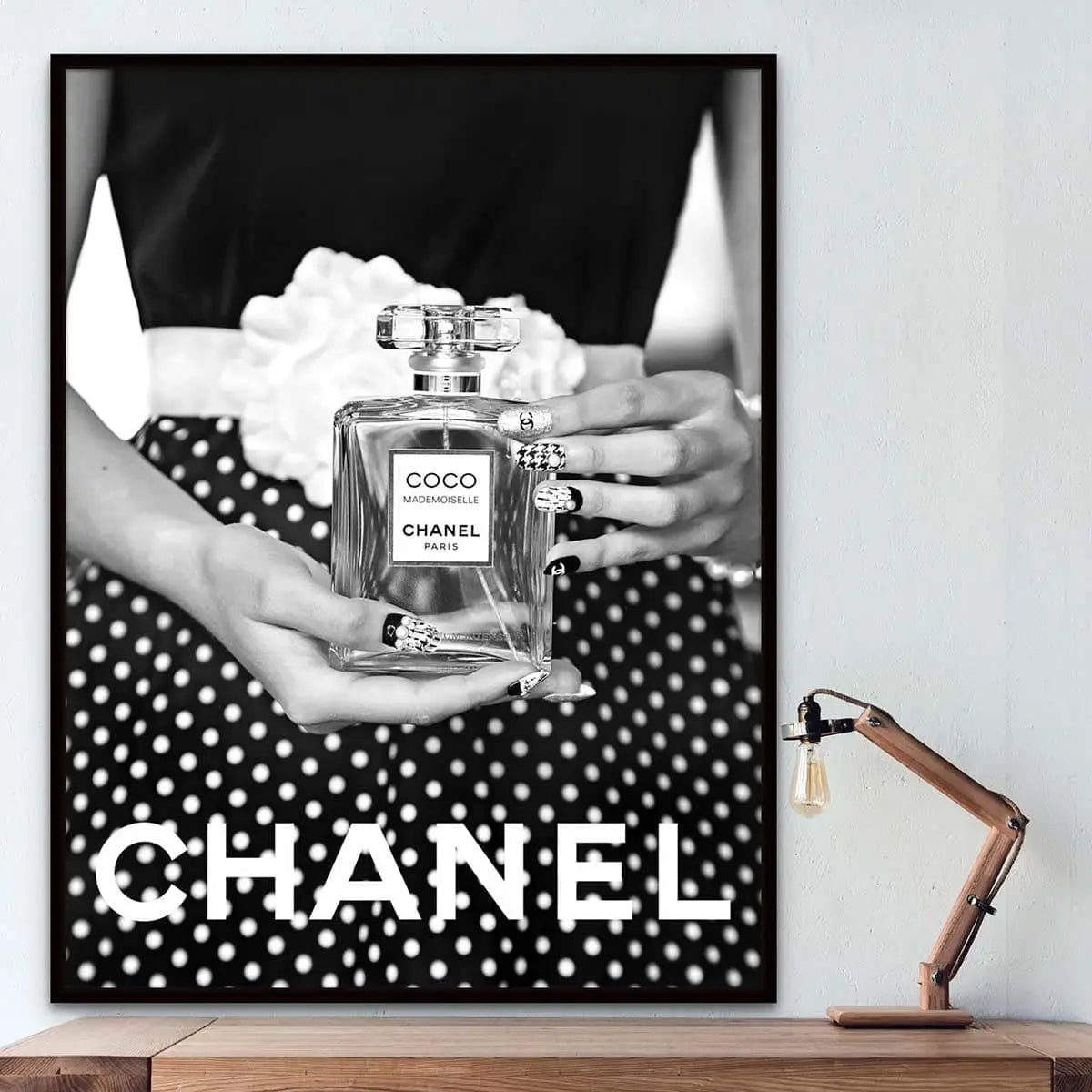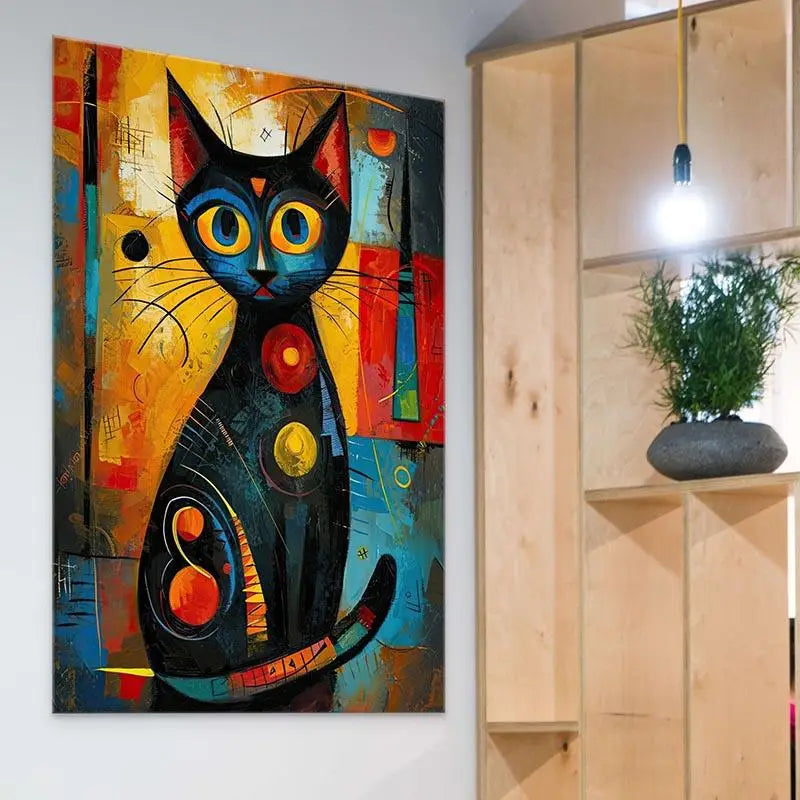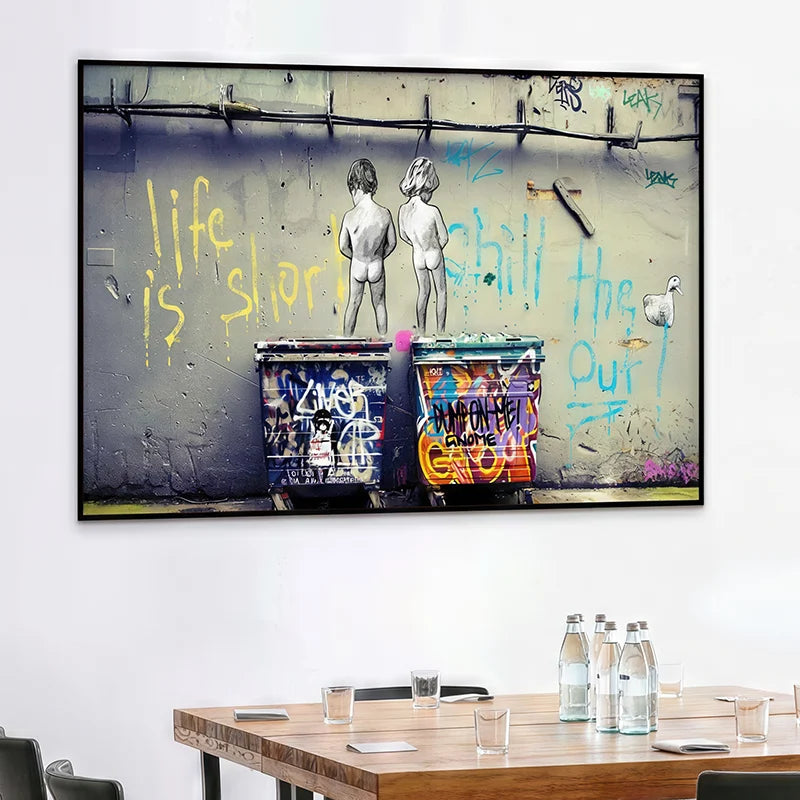

Your room is furnished, but do the walls still feel a little empty? Wall decor featuring wall art may be all it takes to transform the atmosphere. A landscape that brings back memories of a trip, an abstract composition in the colors of your living room, or a personal portrait can create a striking focal point.
The most important thing is not to fill every wall. It is to choose images you love and find the right place for them. Style, size, material, and placement: here are seven ideas for creating harmonious decor without making things complicated.
1. Turn your wall into a space for self-expression
An expressive wall says something about you. It can evoke a place you love, your passion for music, or simply your love of color. To give it a clear direction, ask yourself what kind of atmosphere you want to experience when you enter the room: warm, graphic, soothing, or full of energy?
Next, choose the wall that will serve as the focal point. In a living room, this is often the wall behind the sofa or sideboard. In a bedroom, an open section of wall above a dresser is an ideal place for a personal image. In the entryway, wall art that catches the eye as soon as you arrive sets the tone.
You can combine wall art, shelves, and plants, but leave some open space. Wall decor is easier to appreciate when the objects are not all competing for attention. Start with one main piece, then add only what enhances the overall look.
2. Choose wall art that complements your interior
Start with your furniture and existing colors
Before looking for a design, consider your sofa, curtains, and flooring. Wall art that picks up one or two shades already present in the room creates an immediate visual connection. By contrast, a bold accent color can bring a very neutral interior to life.
With light wood and beige textiles, you could choose a landscape in soft tones or a terracotta composition. In a gray and white living room, a few touches of deep blue add contrast. There is no need to match every accessory: a subtle echo is enough.
Choose an image you will enjoy looking at
A black-and-white photograph, abstract wall art, and an urban illustration each tell a different story. Choose according to your taste, then consider how the image fits into the room. A highly detailed subject needs viewing distance and space, while a simple design can make a statement without overwhelming the wall.
If you love lettering and colorful compositions, our guide to choosing the perfect street art wall art will help you explore this style in greater detail.
3. Mix formats without losing balance
The format influences how the wall art fills the space. A large composition can define a wall, while a collection of small frames invites you to discover several images. The right choice depends on the available width, nearby furniture, and viewing distance.
| Format | Suggested placement | Composition tip |
|---|---|---|
| Horizontal | Above a sofa or sideboard. | Visually connect the wall art to the width of the furniture. |
| Vertical | Narrow section of wall, entryway, or space between two openings. | Leave space around the frame and light switches. |
| Square | Above a console table or as part of a gallery wall. | Repeat a color or finish to tie the elements together. |
| Triptych or multi-panel composition | A clear wall that allows the entire composition to be appreciated. | Include the spaces between the panels in the total width. |
| Gallery wall | Living room, hallway, or office. | Arrange the formats around a central axis or main image. |
Above a sofa, a composition measuring about two-thirds of its width can be a useful starting point. For a 210 cm sofa, this means an overall width of around 140 cm, including spacing. This guideline should be adapted to the room, the available dimensions, and the desired effect.
When creating a gallery wall, maintain a common thread through the theme, color palette, or finish. Our guide on how to create a street art gallery wall at home shows how to apply this idea to urban décor.
4. Create personal décor with your memories
Custom wall art gives pride of place to a cherished memory or someone special. Whether it features a family photo, a couple's portrait, or a holiday landscape, the subject takes on a new dimension when it becomes part of your everyday décor.
Choose a photo suited to your project
Use the original file whenever possible, with a sharp subject and sufficient detail. A screenshot or heavily compressed image may affect the final result, especially in a large format. Check faces, dark areas, and framing before choosing the size.
Consider the proportions too. A portrait photo cannot always be turned into horizontal wall art without cropping. Leave some space around important elements and check the design guidelines to prevent a face or text from ending up too close to the edge.
Customize within the options of your chosen design
Depending on the product, customization may include a photo, names, a message, or certain graphic elements. Check the available fields and requirements on the product page before preparing your request. Not all designs allow you to freely change the colors, textures, and dimensions.
To explore the available options, browse our collection of custom portraits and wall art.
5. Choose the medium and finish
The artwork catches your eye, but the medium also plays a role in how it blends into your space. Here is how to distinguish the main options available from Montableaudeco, depending on their availability on the product page:
- The unframed poster: it lets you choose your own frame. Remember to factor it into your budget and final dimensions.
- Stretched canvas: its depth gives the wall art a stronger presence and allows it to be displayed without an additional frame.
- The black floating frame: it creates a contrasting outline, ideal for graphic compositions.
- White floating frame: it complements a bright interior and blends more discreetly into a white wall.
- Acrylic glass print: its glossy finish suits contemporary interiors; check its placement in relation to light sources.
Note the difference between the appearance of texture and actual relief: a print may depict brushstrokes or thick dabs of paint without recreating that raised texture to the touch. The price varies depending on the selected material and size.
6. Perfect Your Wall Art Placement and Spacing
Choose Between Symmetry and a Free-Form Arrangement
Symmetry creates a regular rhythm, but it is not essential. An asymmetrical arrangement can be just as balanced if the pieces share an axis, a color palette, or a harmonious distribution of visual weight. Lay the wall art on the floor to compare several arrangements.
For small frames, spacing of 5 to 8 cm can be a good starting point. Adjust it to their size and the width of the wall. For multi-panel wall art, follow the product guidelines first to preserve the visual flow of the design.
Test the Height Before Hanging
View the placement while standing, then while seated if the wall art is in the living room. The image should remain visually connected to the furniture below without appearing too close to the ceiling. Paper templates allow you to preview the size and spacing before installation.
Match the Mounting Hardware to the Wall Art and Wall
The choice of mounting hardware depends on the total weight, the wall material, and the hanging system on the back of the wall art. Follow the instructions provided with the hanging system and hardware. A hook designed for concrete may not meet the same requirements as a fixing for a hollow wall.
Adhesive strips are not suitable for every piece of wall art or every surface. Check their weight capacity, compatibility with the paint, and installation instructions; they do not guarantee residue-free removal. A picture ledge is another option for varying your arrangements, provided it is securely mounted and suitable for the weight.
7. Enhance Your Wall Art with Lighting
Observe your wall in the morning and evening. A glossy finish may create reflections opposite a window or light fixture. Before purchasing, picture the wall art from your main viewpoints: the entrance, sofa, and dining table.
Adjustable lighting can help showcase a composition. Change its direction to minimize glare and prevent an overly bright area from obscuring details. Also follow the display and care instructions specific to the material.
Finish with just a few accessories: a lamp, a plant, or an object in a color that echoes the wall art. Keep the view of the image unobstructed. Successful decor gives the eye enough space to appreciate what you have chosen.
Frequently asked questions about wall decor
How can you decorate a large empty wall with wall art?
Choose one large composition, a set of panels, or a well-organized gallery wall. Start with the width of the furniture and the actual space available. You do not need to cover the entire wall: leaving open space around the artwork helps it stand out.
Can you mix different styles of wall art?
Yes. A photograph can be displayed alongside an illustration or an abstract composition. To create a cohesive look, repeat a color, frame finish, or alignment pattern. Arrange the pieces on the floor before hanging them.
What size wall art should you choose above a sofa?
A total width of around two-thirds the width of the sofa is a good starting point. Adjust it based on the available space, the wall height, and the number of frames. Measure the entire arrangement, including the gaps.
Can you hang wall art without drilling?
Some adhesive hanging systems are suitable for specific weights and surfaces. Check the instructions, the wall art's total weight, and compatibility with the wall. If these conditions are not met, choose an appropriate mechanical fixing.
How do you choose a photo for custom wall art?
Use the original file whenever possible, ensuring it is sharp and minimally compressed. Check that its orientation suits the selected format and that important elements remain away from the edges. Follow the image requirements specified for the product.
Find the wall art that will bring character to your walls
Have you chosen the perfect spot and the mood you want to create? Explore Montableaudeco's artwork, then compare the available materials and sizes. The goal is to find an image you'll enjoy seeing in your home every day.
Explore decorative wall art