


- The lack of sleep is an issue that can quickly disrupt the body's overall balance. The body accumulates fatigue and concentration decreases. In the long term, the quality of life drops significantly.
To avoid reaching that point, all you have to do is transform your bedroom into a soothing space. But how should you go about it? What choices should you prioritize to calm the mind and relax the body? Here are some essential tips for creating a zen bedroom and finally enjoying restorative sleep again.
Decorate the wall with inspiring artwork
To sleep soundly, you need to succeed in creating a zen bedroom, and that starts with the layout of the walls. Far from aggressive images or loud colors, the ideal would be to opt for artwork that evokes tranquility, escape, and positivity. For example, landscapes like misty forests, deserted beaches at sunrise, or majestic mountains bathed in light can instantly soothe the mind.
For a comfortable bedroomYou also have the option of choosing abstract works with fluid shapes and harmonious colors. If necessary, you can even consider black and white photographs depicting serene scenes or portraits imbued with calm.
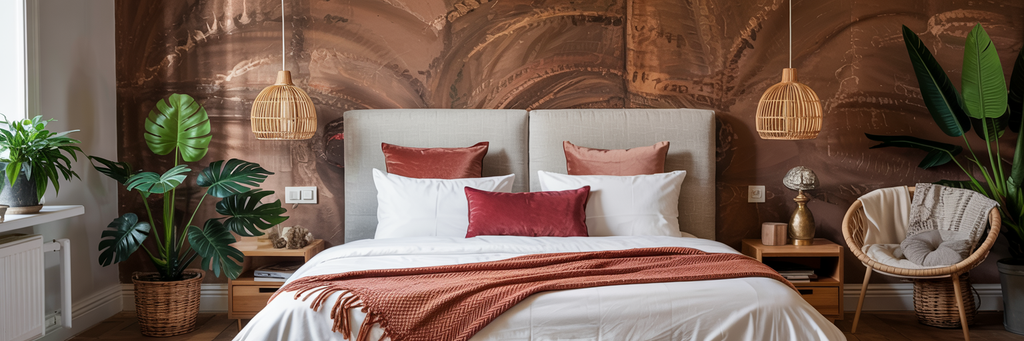
Cover an entire wall with textured wallpaper
For a soft feeling in your resting area, another highly effective tip is to cover an entire wall with textured wallpaper. By papering just one wall, usually the one behind your bed, you create a sense of comfort and serenity that envelops the room. This approach adds texture and visual interest without overloading the whole room.
In fact, you can use wallpaper with:
- Subtle embossed patterns;
- Effects of natural materials like bamboo or cork;
- Or even soft, velvety textures.
You can also choose light and organic patterns, such as stylized leaves or subtle waves, which evoke nature and promote relaxation.
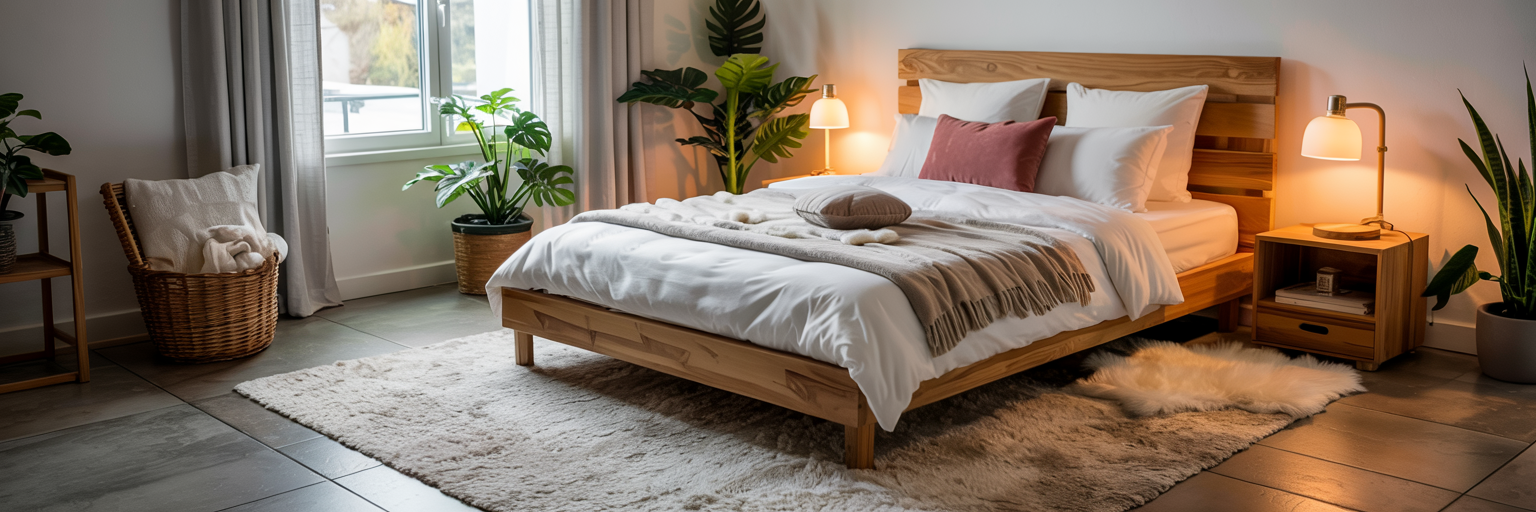
Place a soft rug on the floor
To create a zen bedroom and improve the quality of your sleep, bet on this sensory detail: a soft rug on the floor. This sensory detail plays a crucial role: it begins the ritual of relaxation from the very moment your feet touch the soft material. Additionally, the rug insulates against temperature changes and absorbs ambient noise.
You can position it strategically: under the bed, or on either side of it, for a gentle awakening. You also have the option to combine several small rugs in an asymmetrical arrangement. But be careful: make sure they don’t slip. Even better, choose a washable or reversible model to easily maintain the cleanliness of the room, a key factor for healthy sleep.

Hang a delicate mobile from the ceiling
Unlike imposing chandeliers or aggressive ceiling lights, a mobile can introduce a soothing and meditative visual element to your restful space. This small decorative detail, with its slow and graceful movements, can have a big effect on your mental state at the end of the day. Its movements invite your gaze to wander, creating a visual micro-meditation before falling asleep.
Indeed, you can choose, for example, a mobile made of driftwood, natural feathers, or rice paper. Once the choice is made, place it above the bed or in a clear corner, near a window to catch even the slightest breeze.
Finally, if you can, create your own mobile. This can become a meditative activity in itself. Use materials you like to touch, watch them move, and let yourself be carried away by their harmonious slowness.
Avoid clutter
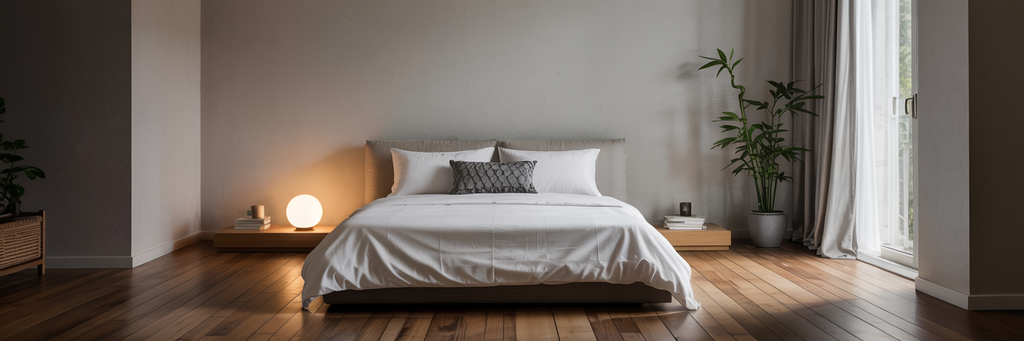
Lastly—and this may be the most fundamental aspect to creating a zen bedroom—avoid clutter. The accumulation of items and furniture hampers the flow of space, overloads the mind, and hinders relaxation.
To improve your bedroom comfort, focus on the essentials. Do a thorough sort: keep only what is useful to you or gives you a positive emotion. This could, for example, be a symbolic object, an inspiring book, or a soft lamp. If necessary, you can use closed storage to hide what needs to be hidden.
You can also choose to adopt a minimalist approach, keeping only streamlined furniture. The bed, two nightstands, a small chair, a shelf, and that's all.