
Living room decorative wall art: the simple tip to transform your interior
Do you find your living room attractive, but feel it’s still missing that little something that truly gives it character?
Before changing the sofa, repainting the walls, or replacing all the furniture, simply look at the main wall in your room.
A well-chosen living room decorative wall art piece can be enough to completely change the way an interior feels. It draws the eye, adds color, structures the space, and instantly says something about your personality.
Discover how to choose the right style, size, colors, and placement to transform your living room without undertaking major renovations.

Start by identifying the wall that naturally draws the eye: above the sofa, facing the entrance, or on a large empty wall. Then choose a piece of wall art with enough presence to structure the space, and echo one or two colors already found in your decor.
Why can decorative wall art transform your living room?
The living room is generally one of the most visible rooms in the home. It’s where we welcome guests, relax, and where the decor most clearly expresses our style.
Wall art can therefore play a much more important role than a simple accessory.
Create a focal point
A well-positioned artwork immediately draws the eye and prevents a large wall from feeling empty or impersonal.
Add color
Wall art can introduce blue, terracotta, green, gold, or a bold color without changing the entire room.
Express your personality
Street Art, abstract, landscape, black and white: your choice naturally reflects what you love.
Change your space without renovation
A new artwork can change the atmosphere of your living room in just a few minutes, without repainting or replacing furniture.
Which wall art should you choose for your living room style?
The wall art should blend into the room’s overall feel, but it doesn’t need to match the furniture style exactly.
A subtle contrast can actually make the decor more interesting.
Modern living room
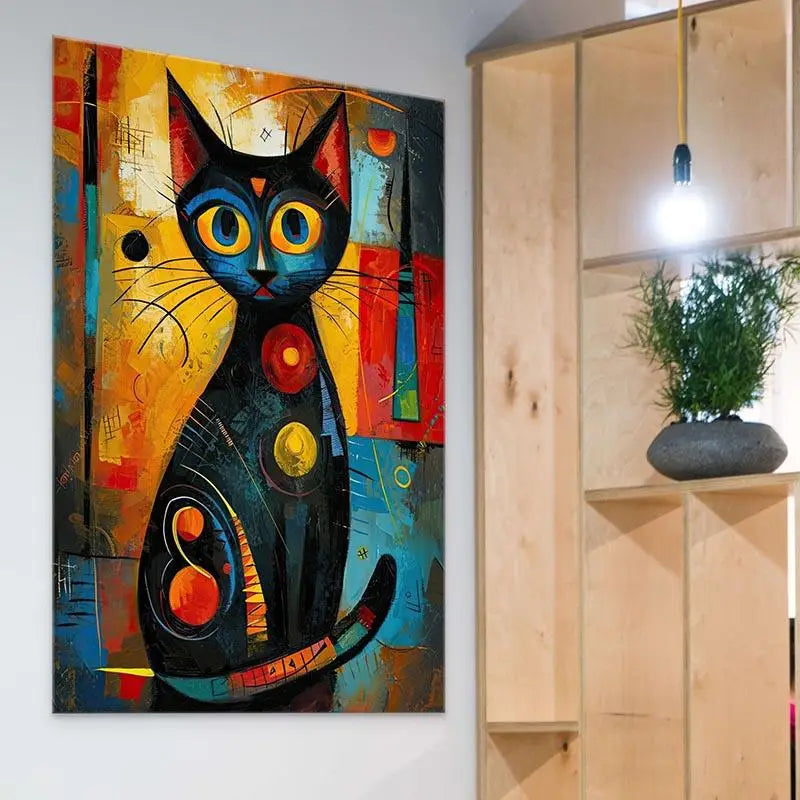
Choose abstract compositions, graphic lines, stylized faces, or contemporary creations.
Street Art living room
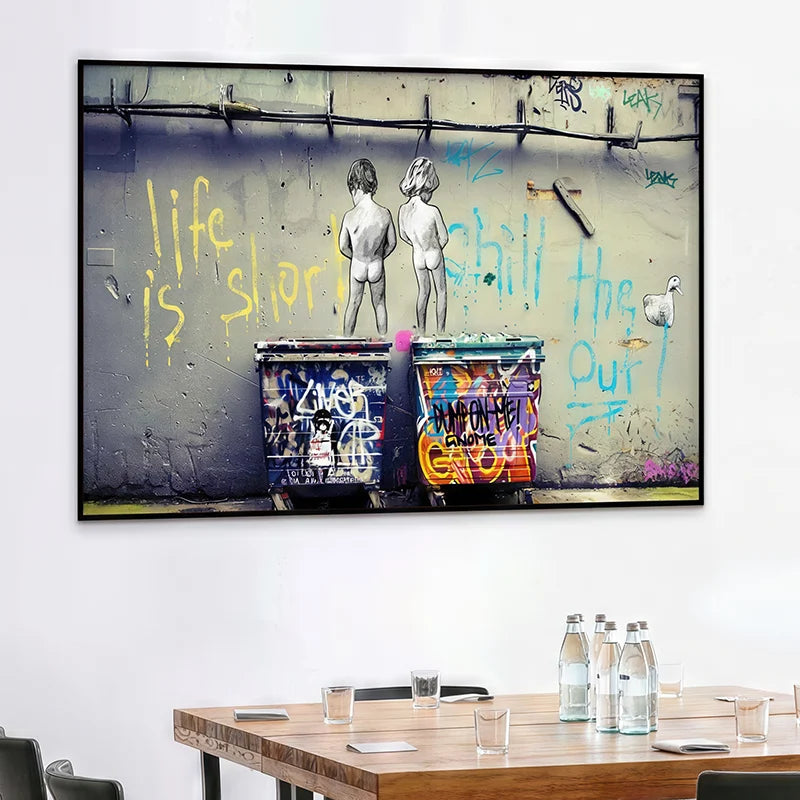
Bold colors, graffiti, Pop Culture references, or street-inspired compositions instantly add character.
Chic living room
Black and white, beige tones, deep blue, or certain golden touches create a sophisticated result.
Warm living room
Landscapes, greenery, mountains, or horizons bring a sense of escape.
Abstract living room
Abstract art lets you play freely with shapes, textures, and color combinations.
Refined living room
Choose an artwork with few colors, plenty of visual space, and a simple composition.
How do you choose the colors of wall art for your living room?
Color has a huge impact on how a room is perceived.
Two main strategies work particularly well.
Create harmony
Choose an artwork that picks up one or two colors already present on the cushions, sofa, rug, or curtains.
The wall art then seems to belong naturally in the room.
Create contrast
In a very neutral living room, a colorful artwork can become the true visual signature of the décor.
A beige or white wall, for example, makes an excellent backdrop for a striking piece of wall art.
Identify three dominant colors in your living room. Your wall art can pick up one or two of these shades and add a stronger third color to create a visual focal point.
What size wall art should you choose for a living room?
Size is essential. A beautiful piece of wall art can lose much of its impact if it looks tiny on a large wall.
Conversely, a piece that is too imposing in a small space can make the room feel overwhelmed.
| Situation | Recommended format | Desired effect |
|---|---|---|
| Small wall | Compact or vertical format | Decorate without overwhelming |
| Above a sofa | Large horizontal format | Create a cohesive look with the furniture |
| Large empty wall | XXL, panoramic or triptych | Create a true focal point |
| Reading corner | Small or medium format | Create an intimate atmosphere |
| Wall gallery | Several formats | Add rhythm and personality |
When wall art is hung above a piece of furniture, it is generally more harmonious if its width remains related to that of the furniture. Wall art that is much narrower than a large sofa can look lost.
Which wall art should you choose above a sofa?
The wall behind the sofa is one of the most appealing spots in the living room.
The sofa and the wall art should work together as a single composition.
Center the wall art in relation to the sofa
In a classic composition, the center of the wall art should generally align with the center of the sofa.
Avoid placing the artwork too high
The wall art should remain visually connected to the sofa. Too much space between the two elements breaks that relationship.
Adapt the width
A large sofa can better support a generous wall art piece, a panoramic format, or a composition of several artworks.
Let the composition breathe
Avoid adding too many small decorative objects around a strong wall art piece. The artwork needs room to draw the eye.
Where to place wall art in the living room?
The best placement is not necessarily the largest wall.
Instead, look for the wall you naturally notice when entering the room.
Above the sofa
The classic and highly effective placement for structuring the heart of the living room.
Above a console table
Ideal for creating an elegant composition with a lamp, a vase, or a few decorative objects.
On the wall facing the entrance
The wall art then becomes one of the first things you notice when entering.
In an empty corner
A vertical format can bring plenty of character to an area that had previously been overlooked.
Large wall art piece or several smaller pieces?
Both solutions work, but they do not create the same effect.
A large wall art piece
It immediately creates a strong visual impact.
It is an excellent solution for modern, minimalist, or high-end decor.
Several wall art pieces
They add more rhythm and allow you to tell a story through several images.
This solution works very well for gallery walls.
A well-proportioned large wall art piece is often more powerful than a multitude of small elements.
How to create a gallery wall in your living room?
A gallery wall lets you combine several artworks and create highly personal decor.
Choose a common thread
A shared palette, theme, finish, or style helps maintain visual unity.
Prepare the composition on the floor
Before drilling, arrange your wall art on the floor to test several layouts.
Vary the dimensions
A combination of vertical, horizontal, and square formats can create plenty of dynamism.
Keep spacing consistent
Even if the formats differ, consistent spacing instantly creates a more professional look.
Which finish should you choose for living room wall art?
The medium can change the result as much as the image itself.
Frameless poster
A light, modern, minimalist look.
Stretched canvas
A gallery effect with a stronger visual presence on the wall.
Black floating frame
It enhances contrasts and gives a very elegant contemporary finish.
White floating frame
Brighter and more understated, it blends especially well into light-filled living rooms.
Plexiglass
A glossy finish that enhances colors and visual depth.
Mistakes to avoid with living room decorative wall art
Choosing wall art that is too small
On a large wall, a small standalone wall art piece can look lost.
Hanging too high
The artwork loses its connection with the furniture and becomes less pleasant to look at.
Matching everything perfectly
Wall art does not need to have exactly the same colors as your sofa. A little contrast creates personality.
Overloading the wall
Adding too many wall art pieces and decorative objects can reduce the impact of each element.
Following trends only
The wall art will remain in your home. Above all, choose a piece you truly love.
Ignoring lighting
Poorly lit artwork can lose some of its impact, especially in the evening.
How to preserve your wall art in the living room?
Simple care helps preserve a beautiful presentation over the long term.
- Avoid prolonged exposure to direct sunlight whenever possible.
- Gently dust with a soft cloth or a tool suited to the medium.
- Avoid using household products directly on the artwork.
- Regularly check the stability of the wall mounting.
- Avoid areas with high humidity.
Cleaning depends on the medium of your wall art: canvas, poster, floating frame, or Plexiglass are not maintained in exactly the same way.
5 inspirations to transform your living room
1. Blue and gold abstract
Perfect in a white, beige, light gray, or midnight blue living room.
It creates a chic, contemporary atmosphere.
2. Colorful Street Art
Ideal for breaking up an overly restrained décor and instantly bringing more energy to the room.
3. Panoramic landscape
A wide horizon above the sofa can create a feeling of openness and escape.
4. Black and white
A timeless solution for creating an elegant living room without multiplying colors.
5. Large contemporary wall art
A single XXL piece can be enough to transform the entire main wall.
Find the wall art that will transform the atmosphere of your living room
There is no one perfect wall art piece for every interior.
The right choice is the one that works with your space, but above all the one that stirs emotion when you look at it.
What if your living room simply needed the right wall art?
You may not need to redo your entire décor.
Sometimes, a single piece is enough to bring more depth, color, and above all personality to a room.
Imagine your wall with the artwork that makes you think: “Wow, that one would look magnificent in my living room.”
Discover Living Room Wall Art See What’s NewFAQ: choosing decorative wall art for your living room
Which wall art should you choose for a modern living room?
Abstract, contemporary, geometric or Street Art wall art works particularly well in modern interiors. The choice mainly depends on the room’s colors and the atmosphere you want to create.
What size wall art should you choose above a sofa?
The wall art should be wide enough to stay proportionate to the sofa. A large horizontal format, a panoramic piece or several coordinated artworks work particularly well.
At what height should you hang wall art in the living room?
The artwork should remain comfortable to look at and visually connected to the furniture beneath it. In particular, avoid hanging it unnecessarily close to the ceiling.
What color wall art for a beige living room?
Beige offers many possibilities. Blue, black, terracotta, green or subtle golden touches can create a beautiful contrast.
Which wall art for a gray living room?
Gray can be brought to life with a colorful artwork or kept very elegant with black and white. Blue, yellow, red or natural shades also work very well.
Should the wall art match the sofa?
No. It’s generally enough to create a few color echoes. A slightly contrasting wall art piece can even give your living room more personality.
Large wall art piece or wall gallery: which should you choose?
A large wall art piece creates immediate impact and a more refined result. A wall gallery allows for more creativity and variety.
Which finish should you choose for living room wall art?
Stretched canvas offers a gallery-style finish, the black floating frame enhances contrast, the white frame feels brighter, and Plexiglass adds a glossy, contemporary look.
Which wall art should you choose to visually enlarge a living room?
A panoramic wall art piece, a landscape with depth or an artwork with luminous tones can help create a sense of openness on a large wall.
Decorative living room wall art: sometimes, one change is enough
Transforming a living room doesn’t necessarily mean changing all the furniture or taking on major renovation work.
A well-chosen wall art piece can be enough to structure a wall, add a missing color, create a focal point and give your room more personality.
Abstract, contemporary, Street Art, landscape or black and white: don’t choose based only on trends.
Above all, choose the artwork you’ll enjoy looking at every day.
Find my wall art for the living room