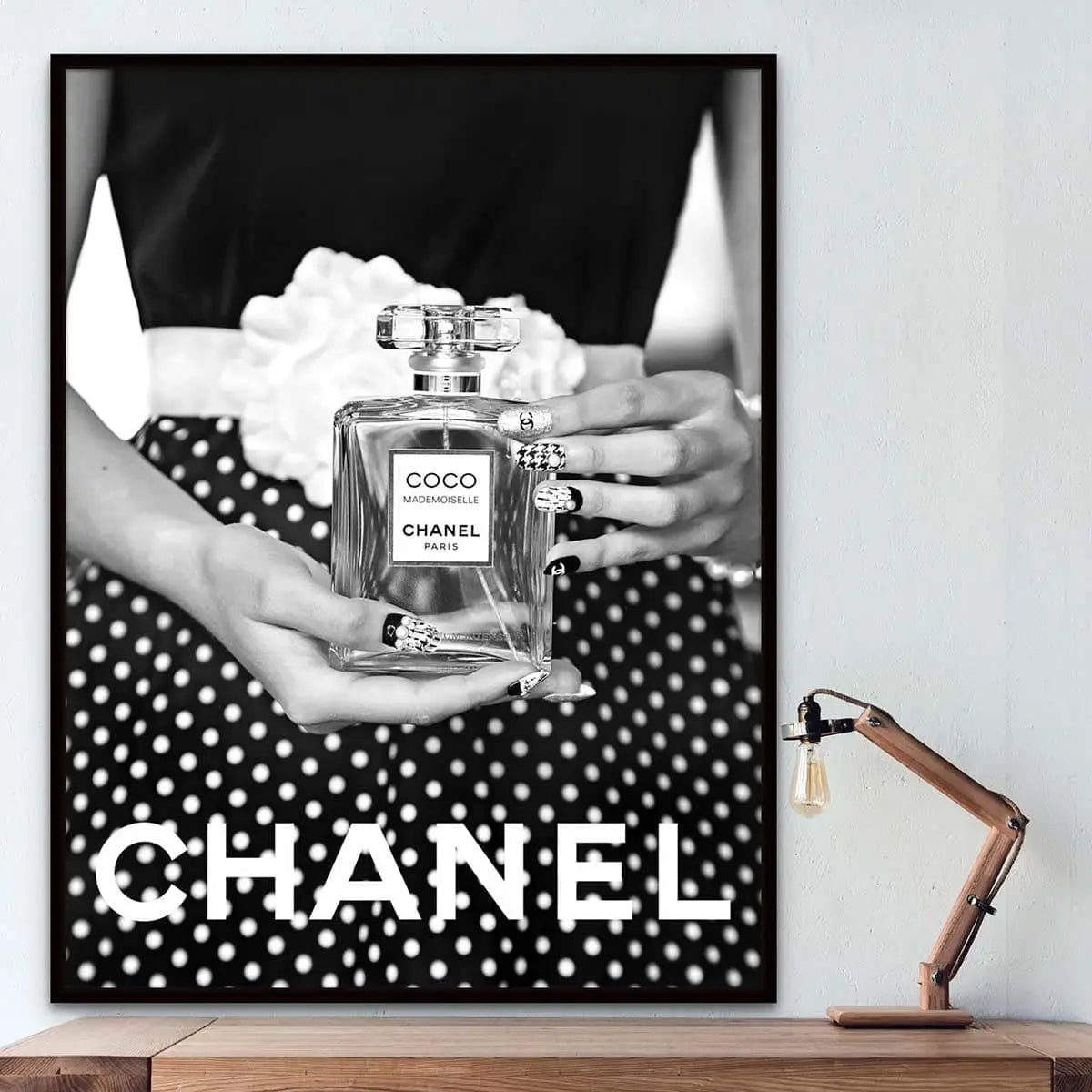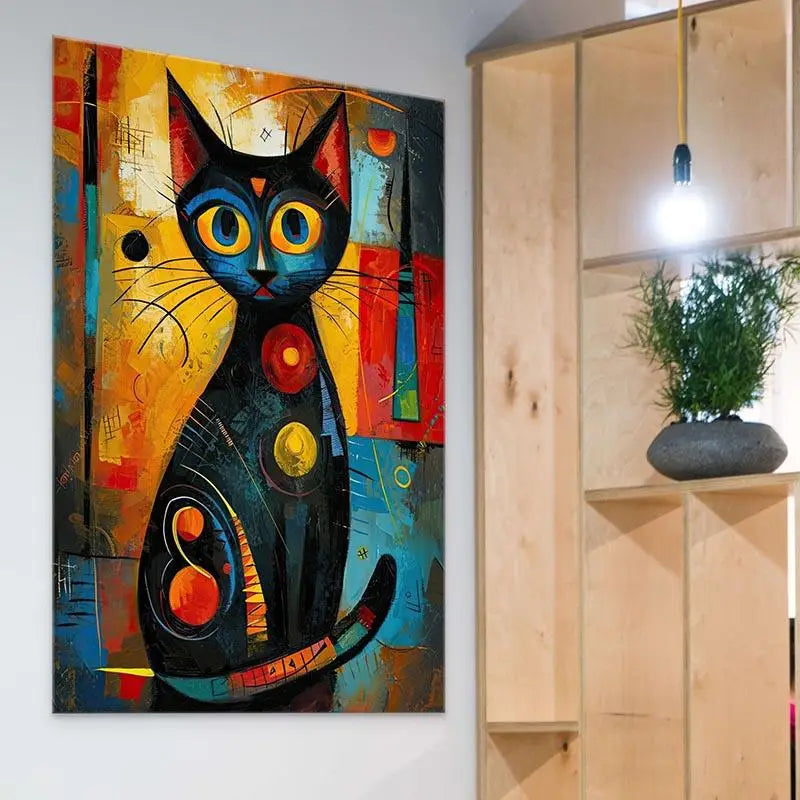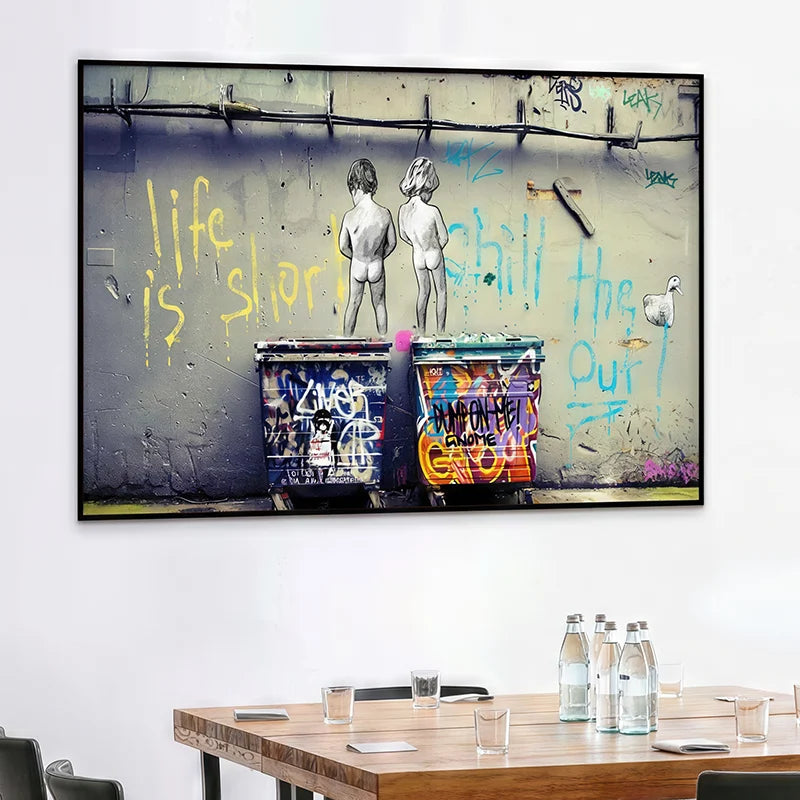

Intertwined letters, bold colors, and spray-paint effects: graffiti wall art brings a striking graphic presence to your interior. It can enliven a minimalist living room, personalize an office, or add character to an entryway.
To find the artwork that suits you, start by understanding its visual language. Here’s how to distinguish graffiti from street art, identify the compositions you like, and incorporate them into your decor without overwhelming the room.
1. Understanding the Visual Language of Graffiti Wall Art

In interior design, graffiti wall art often draws on the visual language of urban lettering: transformed letters, contrasting outlines, layered elements, and spray-paint effects. The text may remain legible or become almost abstract, to the point where the shapes and colors catch the eye first.
Graffiti and Street Art: Closely Related Worlds
Graffiti places great emphasis on writing and letter styles. Street art encompasses a broader range of practices, including stenciling, collage, and figurative compositions. The two can overlap within the same image, but stencil wall art is not necessarily an example of graffiti lettering.
To identify the visual techniques, read our article on the techniques used in street art. Understanding composition helps you choose a piece based on more than just its style label.
What Changes the Mood of a Room
A very dense composition creates a strong focal point. Large letters on a light background give the design more room to breathe. A palette limited to blue, black, and white can create an urban feel while remaining easy to coordinate with your furniture.
You don’t need an industrial loft to embrace this style. On a white wall, above a beige sofa, or next to wooden furniture, the contrast between the image and the materials can be enough to add character.
2. From Urban Lettering to Wall Decor

Writing on walls existed long before spray paint. This ancient practice should therefore be distinguished from the modern graffiti movement associated with urban lettering. The Tate's overview of graffiti art traces the roots of this art movement to 1970s New York.
Letters as a signature
In graffiti lettering, the name and its visual treatment take center stage. Its visual appeal lies in the design of the letters, their rhythm, and the way they interact. Outlines, shadows, and contrasts can create a sense of depth on a flat surface.
These visual codes explain why some pieces remain expressive even when the word depicted is difficult to decipher. As in an abstract composition, the eye follows the curves, diagonals, and blocks of color.
A change of medium and context
On a piece of wall art, the image is viewed in a different setting from the street. The furniture beneath it, the wall color, and the lighting all shape how it is perceived. A decorative print can draw on an urban aesthetic without being spray-painted directly onto the canvas.
To explore this further, our article on the rise of street art as a popular art form examines how urban expression reached a wider audience.
3. Choose the design, size, and material

Start with the effect you want to create
Ask yourself what appeals to you about graffiti: the vibrant colors, the shape of the letters, the message, or references to a passion? This first answer will help you compare designs without being guided solely by their intensity.
| What you want | Visual inspiration | Decorating tip |
|---|---|---|
| Energize a neutral living room | Colorful letters and bold contrasts. | Keep the surrounding accessories understated. |
| Create a graphic atmosphere | A limited palette featuring black and white. | Echo one of its colors in a textile or decorative object. |
| Express a passion | A design blending graffiti with a musical or cultural theme. | Choose a subject you will enjoy every day. |
| Focus on shapes | Lettering with an almost abstract or geometric style. | View the composition from the entrance to the room. |
Check the size on your wall
Measure the available space and view it from your usual position. A horizontal piece often complements a sofa or sideboard, while a vertical piece suits a narrower section of wall. The right size also depends on the viewing distance needed to appreciate the details.
Comparing finishes
An unframed poster lets you choose your own frame. Stretched canvas on a wooden frame adds presence through its depth. A black floating frame accentuates contrasts, while a white one looks more understated on a light-colored wall. An acrylic glass print offers a glossy finish and should be positioned with reflections in mind.
These options depend on the model. Check the product page and compare prices for equivalent sizes and materials. Drips or paint strokes depicted in the image may simply be visual effects and do not guarantee a textured surface.
4. Banksy, stencils, and pop culture: understanding the influences

Banksy's name often comes up when discussing urban art. For your décor, it helps to distinguish the appeal of his visual style from letter-focused graffiti. A silhouette, a colorful detail, or an unexpected combination can create a powerful image with just a few elements.
Consider the message as much as the colors
A humorous, poetic, or provocative image will not set the same tone in a room. Take time to consider its subject and what it evokes for you. An image you find amusing in an office may not suit the atmosphere you want to create in a bedroom.
Pop culture can also be incorporated into an urban composition through music, cinema, or familiar objects. Choose these references because they appeal to you, then make sure their graphic treatment complements your interior.
Understanding what you are buying
A decorative print, a creation inspired by a particular style, and an original work attributed to an artist are not the same thing. Check the product description for details about the technique, medium, potential artist, and type of presentation.
A signature reproduced in an image does not prove that it is original. If you are considering a purchase presented as an authentic Banksy artwork, refer to the official information from Pest Control. For your interior design project, focus on a clear description and a finish that suits your expectations.
5. Finding the right place in your home

In the living room: give your wall art room to breathe
Place an expressive composition on a wall with plenty of open space. If the rug, curtains, and cushions already feature lots of patterns, simplify the surrounding elements so the image remains easy to appreciate. A single matching color accent is often enough to tie the wall art into the rest of the room.
In the office or bedroom: balance the visual impact
In an office, wall art that reflects your tastes adds a personal touch to the space. Check for reflections if the finish is glossy. In a bedroom, you can opt for a more limited palette and an airy design without sacrificing graffiti-inspired style.
For this room, discover our ideas for incorporating urban art into a bedroom. If you prefer several images, our guide to creating a street art gallery wall will help you plan the overall arrangement.
Explore the collection using specific criteria
In our street art wall art collection, find designs with patterns and colors that match your project. Shortlist a few pieces, then compare sizes, available materials, and the price of your preferred configuration.
This allows you to choose an image for what it brings to your interior: color, graphic rhythm, or a personal reference. Before installation, also check that the mounting hardware is suitable for the weight of the wall art and your wall type.
Frequently asked questions about graffiti wall art
What is the difference between graffiti wall art and street art wall art?
Graffiti wall art often puts lettering and its transformations front and center. Street art covers a broader range of practices, including stenciling, collage, and figurative imagery. Some compositions blend several styles.
Does graffiti wall art suit a classic living room?
Yes. The contrast with classic furniture can create an interesting effect. Choose a color palette that complements the room and leave space around the wall art, especially if its design is intricate.
Should you choose a large format?
Not necessarily. Measure the wall and consider the available viewing distance. A smaller, well-positioned piece may work better than a large wall art piece that fills the entire space.
Is graffiti wall art spray-painted?
Some are, but a decorative print can also recreate this effect on a variety of materials. Read the description to distinguish the production technique from the style depicted.
Make space for your style
Expressive lettering, bold colors, or a more understated composition: explore Montableaudeco’s designs and choose one you’ll enjoy seeing every day.
Discover street art wall art