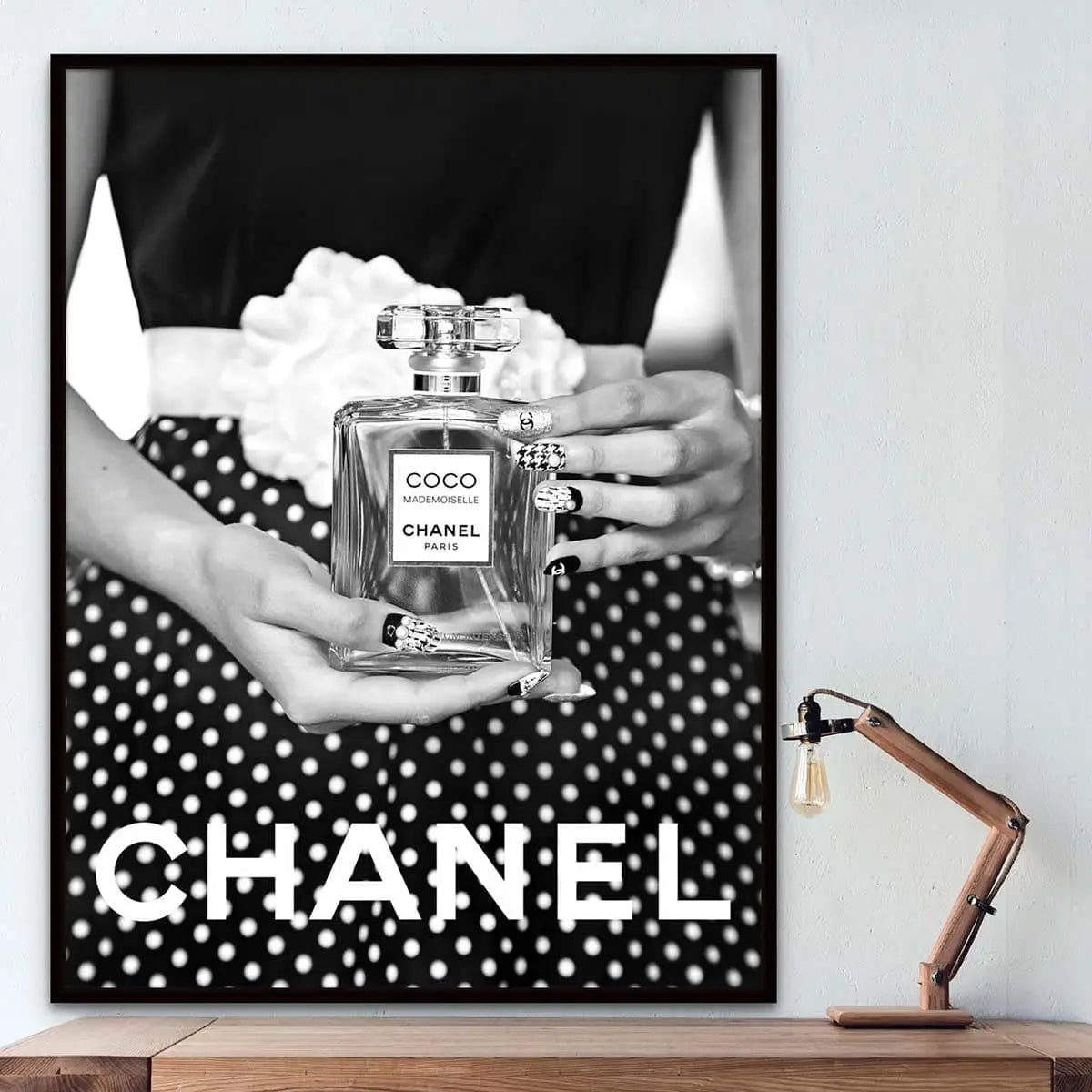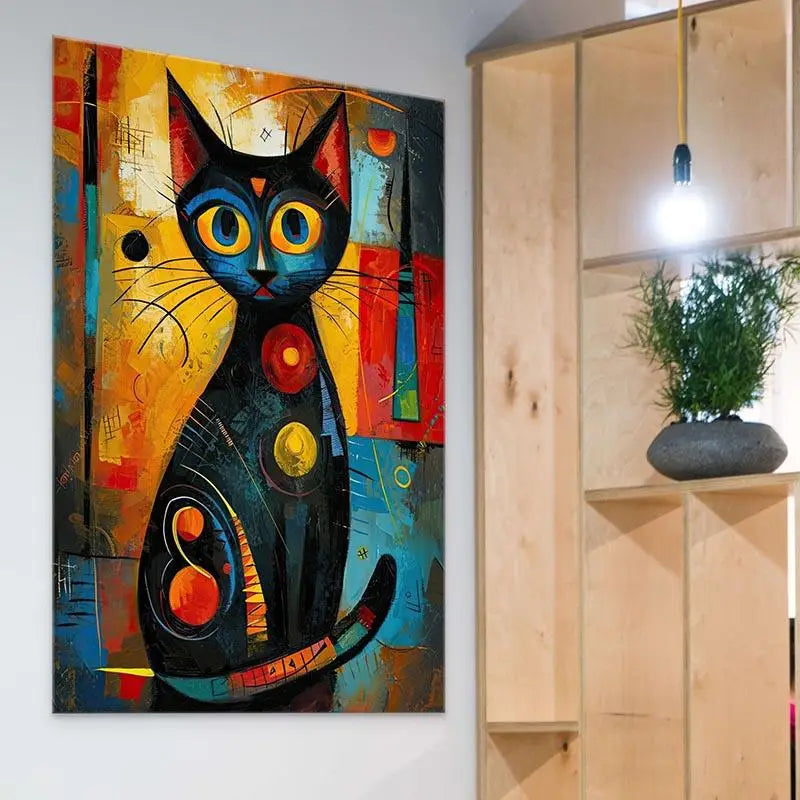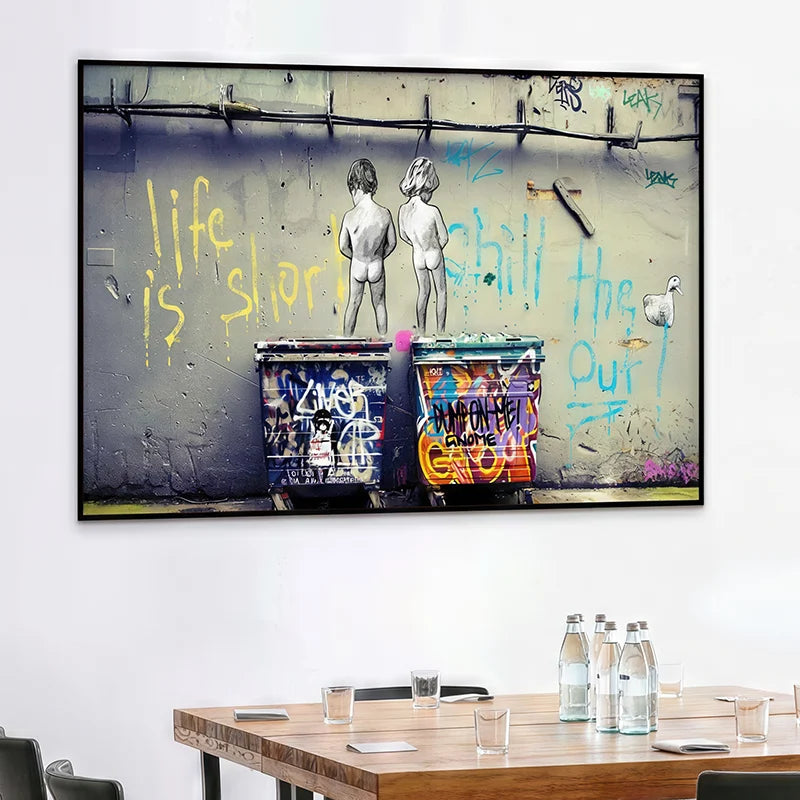

Colorful, provocative, poetic, or graphic, Street Art wall art gives an interior instant personality.
Inspired by urban culture, graffiti, stencil art, collage, and Pop Culture, it can transform a simple white wall into a true focal point.
But with such a variety of styles, colors, and formats, one question comes up: how do you choose Street Art wall art suited to your interior decor?
Room style, wall dimensions, colors, placement, and finish: these are the essential criteria for making the right choice without overwhelming your interior.
Start by choosing a visual you love, then check that it matches the proportions of the wall and the colors of your room. In a neutral interior, a colorful graffiti artwork can become the focal point. In an already very busy room, a more understated or black-and-white composition will often be easier to integrate.
1. Where does Street Art come from?
Modern graffiti culture developed strongly in American cities in the late 1960s and throughout the 1970s.
Tags, signatures, and lettering appear especially in urban spaces and on various media linked to major cities.
Over the decades, practices have multiplied: graffiti, stencil, collage, mosaic, poster, and wall fresco.
Street Art thus becomes a vast field of expression whose influences now extend far beyond the street.
The graphic energy remains.
2. How to recognize a Street Art wall art piece or artwork?
There is no single look for Street Art.
Two creations can be radically different while still drawing on the codes of urban art.
Lettering
Words, tags, signatures, and typography can occupy a large part of the composition.
Powerful colors
Red, yellow, blue, pink, or neon colors often create a strong visual impact.
Stencils
Silhouettes and contrasting shapes make the image instantly readable.
Collages
Images, words, and textures can be visually layered.
Popular culture
Music, cinema, fashion, sports, and famous figures inspire many creations.
Wall effect
Brick, concrete, splashes, and graphic textures evoke the urban environment.
3. Which style of Street Art wall art should you choose?
For energetic decor
Graffiti wall art focuses on colors, tags, and paint effects.
It works beautifully in a modern living room, an industrial-style room, or a gaming space.
For graphic contrast
Stencil-inspired compositions are especially suited to understated, black-and-white, or minimalist interiors.
For decor full of color
Pop Art brings together popular culture, portraits, and powerful colors.
For a more artistic decor
Words, symbols, crowns, and expressive shapes create an aesthetic between urban culture and contemporary art.
4. The 5 essential criteria for choosing your Street Art wall art
Choose with your emotions first
The wall art must above all speak to you. The subject, message, or graphic universe should match your personality.
Determine the room
A piece intended for the living room does not always have the same requirements as wall art for a bedroom, office, or entryway.
Measure the wall
Don’t just judge the wall art from a photograph. Visualize its actual dimensions on your wall.
Analyze the colors
You can either extend your interior’s palette or deliberately create contrast.
Choose the finish
Canvas, floating frame, Plexiglass, or poster can give the same visual a different personality.
5. How to choose the colors of your Street Art wall art?
Color is often the element that immediately draws the eye in an urban artwork.
| Your decor | Recommended wall art | Effect |
|---|---|---|
| White wall | Multicolor, red, blue, yellow | Very strong contrast |
| Beige living room | Black, orange, blue, red | Energize the space |
| Industrial decor | Black, red, raw graffiti | Reinforce the urban feel |
| Minimalist interior | Black and white, stencil | Elegant graphic contrast |
| Already very colorful room | Reduced palette | Avoid overload |
echo one color from the wall art in one or two elements of the room: a cushion, an armchair, a vase, or an accessory. This creates visual continuity without matching everything.
6. Which Street Art wall art should you choose for a living room?
The living room is particularly suited to Street Art wall art because it often has a wall large enough to give the piece real presence.
Above the sofa
A horizontal or panoramic format helps create a visual connection with the furniture.
On the main wall
A large format can become the centerpiece of the living room.
Above a sideboard
The wall art can be paired with a few understated objects to create a balanced composition.
To find a model suited to your living room, explore our Living Room Wall Art collection .
7. Street Art wall art in industrial decor
The pairing of Street Art and industrial decor feels especially natural.
Concrete, brick, black metal, and raw wood echo the materials of urban spaces.
Colorful graffiti can bring the touch of color that an interior mainly composed of gray, black, and brown is missing.
the rawer and darker your furniture is, the more you can choose a piece with powerful colors.
8. Can you put Street Art wall art in a bedroom?
Yes, provided you choose the visual intensity according to the atmosphere you want to create.
A bedroom can feature graffiti wall art, an urban portrait, or a piece inspired by Pop Culture.
If the wall art has many colors and details, you can simply keep the walls, bedding, and furniture more neutral.
9. Can you add Street Art to a child's or teenager's bedroom?
Street Art can fit perfectly in a child's or teenager's bedroom.
Characters, graffiti, gaming worlds, sports, or Pop Culture help create a more personal space.
Choose a theme they love
The wall art can reflect their passions, heroes, or favorite world.
Maintain visual space
If the wall art is very colorful, avoid filling every wall with other patterns.
Choose the right format
A well-proportioned unique piece can be more effective than an accumulation of small decorative items.
Keep a neutral base
White, beige, light gray, or wood allow the colors of the wall art to stand out.
For this universe, you can also explore our Kids' Bedroom Wall Art collection .
10. Create a Street Art wall art gallery at home
A unique piece is not the only possibility.
You can create a Street Art gallery wall with several wall art pieces, as long as you maintain a common thread.
A shared palette
The works can feature one or two identical colors.
One shared world
Graffiti, Banksy, or Pop Art: a shared theme makes the overall look more cohesive.
Regular spacing
A consistent rhythm between frames helps avoid a sense of disorder.
It consists of creating a dialogue between several works.
11. What size should you choose for your Street Art wall art?
The size should be chosen based on the available surface area and the furniture.
Large empty wall
An XXL wall art piece can create an impact similar to a wall mural.
Above a sofa
A fairly wide horizontal format generally helps balance the furniture.
Narrow wall
A vertical format can emphasize the height of the space.
Small space
Keep some visible wall space around the work to maintain a sense of breathing room.
recreate the dimensions of the wall art with masking tape directly on the wall. It's one of the simplest ways to visualize the final result.
12. Canvas, floating frame, Plexiglass, or poster?
Frameless poster
A simple, lightweight solution that recalls the world of the urban poster.
Stretched canvas
It gives the creation a more artistic look.
Black floating frame
It highlights the contours and accentuates the character of a Street Art work.
White floating frame
It brings more lightness to a highly colorful composition.
Plexiglass
Its glossy surface enhances the colors and gives a contemporary finish.
Explore our collections to find your Street Art wall art
Once the style, colors, and placement are defined, all that remains is to find the work that matches your personality.
Which Street Art will tell your story?
Good wall art should not simply fill a wall.
It should catch your eye, blend into your interior, and above all make you want to keep looking at it for a long time.
Discover Street Art Wall Art Explore GraffitiFAQ: how to choose the right Street Art wall art
How do you choose Street Art wall art for your living room?
Consider the size of the wall, the colors of your furniture, and the atmosphere you want to create. In a neutral living room, colorful wall art can become an excellent focal point.
What wall color works with Street Art wall art?
White, beige, or light gray walls are especially easy to pair with very colorful artworks.
What is the difference between Street Art wall art and graffiti wall art?
Graffiti is one expression of urban culture. Street Art can encompass a broader range of techniques, such as stenciling, collage, or murals.
Can you put Street Art wall art in modern décor?
Yes. An urban artwork can even create a particularly interesting contrast with understated, contemporary furniture.
Can you put Street Art in a child’s bedroom?
Yes. Simply choose a theme and colors suited to the room’s style, and avoid multiplying graphic elements on every wall.
Which Street Art wall art should you choose for industrial décor?
Graffiti, black and red compositions, concrete textures, and urban worlds pair especially well with brick, metal, and raw wood.
What size should you choose above a sofa?
A generously sized horizontal format generally creates a better relationship with the width of the sofa.
Which medium best enhances the colors of Street Art?
Plexiglass offers a glossy, contemporary look, while stretched canvas brings a more artistic finish. The choice depends on the effect you want.
The ideal Street Art wall art is the one that finds its place in your home.
Street Art offers rare freedom in interior décor.
It can be minimalist or explosive, monochrome or multicolored, poetic or provocative.
To choose well, don’t simply look for the most spectacular wall art.
Look for the piece whose format, colors, and universe naturally harmonize with your interior.
The right artwork is the one that catches the eye without overwhelming the room and says something about your personality.
Find My Street Art Wall Art