
Graffiti and Street Art: Two Worlds for One Urban Decor

The streets have spoken, and their colorful whispers are making their way into our interiors. If you have ever struggled to tell graffiti apart from street art, you are in the right place. Let’s untangle these two fascinating worlds together, and discover how to illuminate your home with their authentic essence.
Graffiti: The Art of Urban Revolt
If you have ever tagged a wall or seen someone feverishly painting one in a public space, then you have touched the heart of graffiti. Born amid the urban turmoil of the 1960s, graffiti burst forth as a powerful voice, sometimes illegal, always rebellious.
From major American cities to Paris, through hip-hop culture, artists like Bando used walls as canvases, transforming vandalism into a movement of artistic expression.
From Spray Paint to Artwork: Graffiti Demystified
“If tagging is ever allowed, I’ll stop” - Oclock
Originally, graffiti was nothing more than a signature, a mark left on a wall or in the subway. But over time, thanks to artists like Cornbread in Philadelphia and Taki in New York, it evolved into a true art form. Simple tags gave rise to breathtaking wall murals that raised the bar.
When it comes to graffiti, the techniques are as varied as the artists themselves:
- Aerosol paint: the classic choice, with sprays in vibrant colors.
- Wall murals: large-scale works, often legally commissioned.
- Stencils: templates used to quickly reproduce an image or motif.
And for those who want to go further, there are even books dedicated to graffiti art, inviting you to immerse yourself in this universe.
Street Art: From Underground to Pop Culture
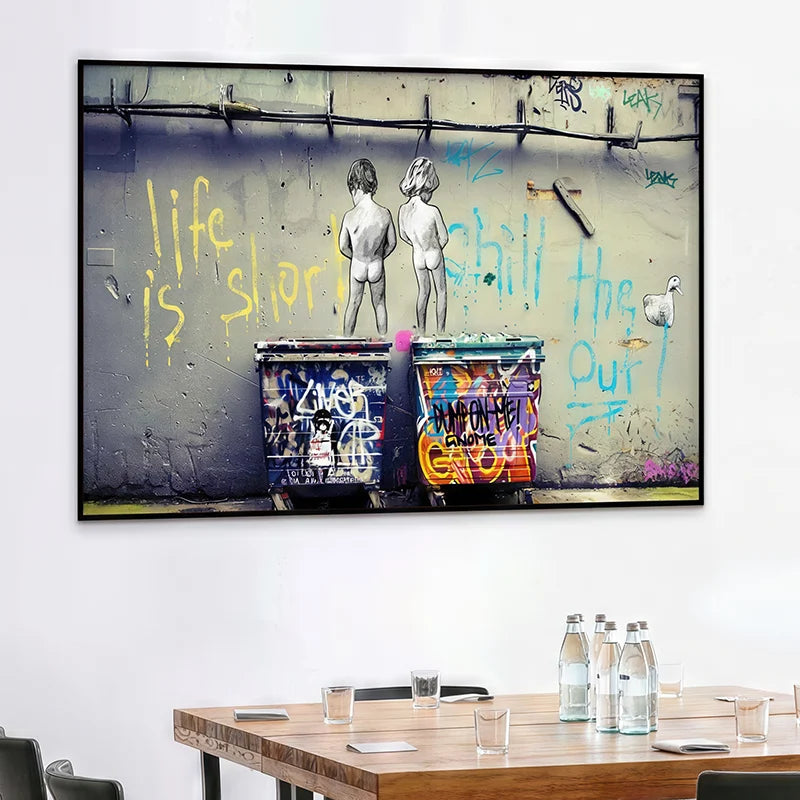
As graffiti was emerging, another artistic movement was beginning to make its mark: street art. Less rebellious, more aesthetic, and often legal, this art form took over urban spaces, from London to Barcelona. Does a name come to mind? Banksy, of course! This artist helped popularize the genre while preserving its often satirical edge.
Give Your Home an Urban Soul
So, ready to give your décor a fresh new look? Taking inspiration from urban art is a sure way to create a unique interior. Whether you prefer stencils or murals, every style has its place in our homes. Imagine a mural inspired by the streets of Berlin in your living room, or a stencil evoking the charm of Barcelona in your bedroom.
Breaking down Graffiti and Street Art
If you stroll through the alleyways of Paris or the avenues of New York, you have no doubt already come across forms of urban art that caught your eye. But have you ever taken the time to explore and distinguish graffiti from street art? Ah, the complex yet fascinating world of urban art! Here, we dive into its origins, its distinctions, and how these masterpieces can enhance your sweet home.
Every wall, every street, every corner has a unique story to tell, etched by talented urban artists. If this aesthetic speaks to you, why not bring it into your home?
The early days of graffiti
Flashback to the 1960s, a time when the walls of Philadelphia and New York began to come alive with new forms of expression. Graffiti, shaped by the rise of the aerosol spray can, emerged as a form of protest art. Artists like Cornbread in Philadelphia were pioneers, tagging their names or messages across public spaces. It was revolutionary, slightly illegal, and incredibly expressive!
As graffiti evolved, hip-hop culture also played its part, connecting street art with music and dance. The Second World War had left cities in ruins, creating a playground for urban artists. And graffiti spread, reaching a wider audience.
Street art: from the street to commercial glory
In the late 1990s, a new artistic movement emerged. Unlike traditional graffiti, street art used a range of techniques - stencils, posters, stickers, and installations. It became a global phenomenon, with works by artists such as Banksy exhibited in the world’s leading galleries. The streets of Paris, New York, and other major cities around the world were these artists’ canvases.
With the rise of the Internet, these artists’ works went viral. Street art then began moving from the streets into art galleries, becoming a commercial form of artistic expression. Of course, this commercialization drew criticism. Some believe street art loses its essence when it becomes too commercial. But can we really blame an artist for wanting to make a living from their art?
How urban art transforms our interiors
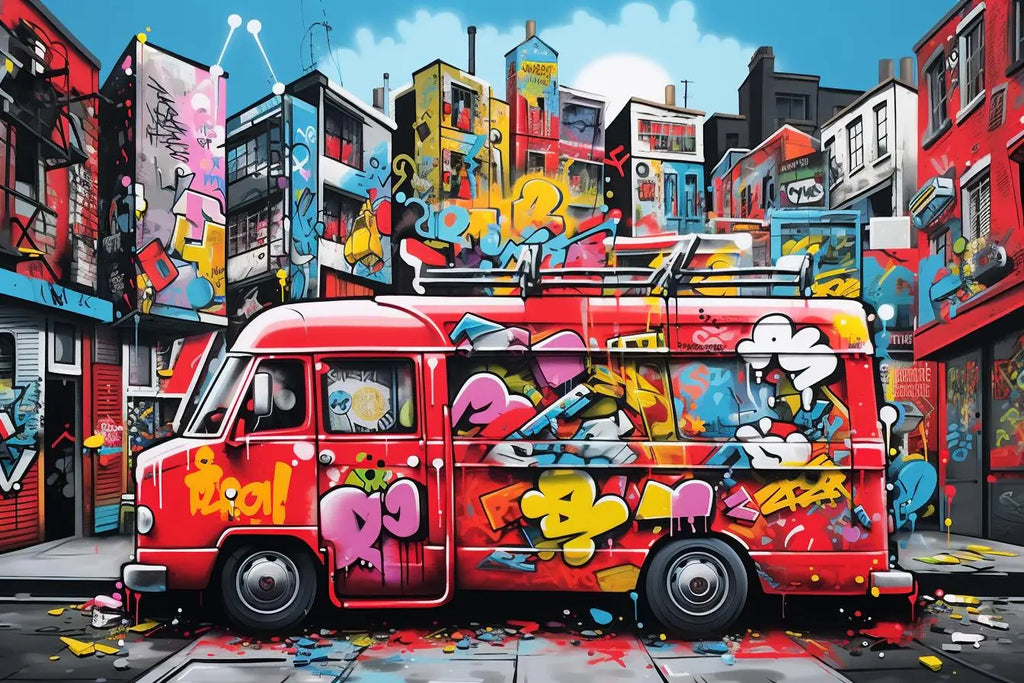
Have you ever stopped to admire Invader’s murals in Toulouse or the urban artworks that bring color to the streets of Europe? If so, then you know this is much more than simple graffiti. Urban arts, such as graffiti and street art, have the power not only to transform urban spaces, but also our interiors. Yes, you read that right! Creating a modern, artistic, and stylish atmosphere at home is within everyone’s reach.
From the bold scale of a mural to the subtle detail of a stencil, these diverse art forms are rooted in urban culture and practice. And now, more and more people are looking to bring this urban spirit into their interior décor. From graffiti artists to urban art enthusiasts, the desire to connect with this aesthetic is unmistakable.
Common misconceptions about graffiti
We often tend to associate graffiti with illegal tags or vandalism, especially when thinking of the first modern graffiti in Philadelphia or Berlin. Yet it is far more complex than that. Understanding its true definition and capturing its artistic richness can sometimes feel like a treasure hunt through public space. But the reality? Behind every image, there is a story, a culture, and often a powerful message. So, let’s define a few key points.
Graffiti is not simply vandalism. Some consider tagging public property without permission to be an act of vandalism, but that definition is far too simple. Graffiti, at its essence, is a distinct form of artistic expression. It is part of hip-hop culture, just like dance and music. It is a way for artists to tell stories, criticize society, or simply beautify a place.
“There is remarkable diversity among them” - Unknown
To explore the subject further, it would also be interesting to look at artists such as Banksy, known for their often satirical character and social commitment. And let’s not forget that some of these artists now have works exhibited in prestigious places such as the Paul Valéry Museum. So, the next time you come across a piece of graffiti in the street, take a moment to appreciate it. It could well be the work of a future great artist!
Street art: art for everyone?
Street art, often seen as the most democratic form of art, has its roots in the artistic movements of the streets of Paris and other major European cities. Public and artistic by nature, it gives everyone a platform for self-expression. Yet, as this art form becomes more accessible and takes on an important place in our society, it is sometimes criticized for its commercial tendency, especially when it moves from alleyways to exhibition galleries.
The success story of street art, with urban artists from France and beyond, has sometimes led to a form of commercialization. Critics believe that moving from the street to the gallery can cause the art to lose some of its essence and democratic value. However, the growing popularity of street art highlights its undeniable impact on the modern art world.
The role of the Internet in the spread of street art
The digital age, with the rise of the Internet and social media, has transformed the art world. Street artists in particular have been able to gain rapid international visibility thanks to this digital revolution. The spread of urban art, once confined to the walls of major cities like New York or Berlin, now reaches a wider audience through digitalization.
“For some time now, especially since Banksy’s worldwide success, hardly a week goes by without the media reporting an event related to urban arts.” - Unknown
Social media allows artists to share their work, follow trends, and develop new techniques. This modernized hip-hop culture, amplified by the power of the Internet, has encouraged the emergence of new talent and has undeniably contributed to the explosion in popularity of contemporary street art.
Breaking Free from Stereotypes: Street Art and Integration
Street art, with its often satirical nature and expressive power, goes beyond simple murals. It also serves as a bridge between diverse cultures and social classes, breaking down barriers and encouraging integration within society. Around the world, from Paris to London, artists use this art form to convey strong, modern messages, helping to diversify the urban art movement.
This art form, which transcends social and cultural boundaries, turns the voices of the marginalized into powerful works of art. Social integration through street art provides a space for communication and artistic expression, offering a fresh perspective on modern society.
Graffiti: Beyond the Tag
When we talk about graffiti, the image that often comes to mind is a simple signature or tag on a wall. Yet graffiti, as an art form, goes far beyond that. From its beginnings in major American cities, such as Philadelphia with Taki, to Banksy’s worldwide fame, graffiti has established itself as a powerful form of artistic expression.
“Street art is to graffiti a bit like Doc Gynéco is to rap. Different, but born from the same movement.” - Aria Jones
Tagging, often seen as simple vandalism, actually conceals a rich culture and a deep history. Graffiti, through its styles, techniques, and cultural impact, has evolved into an aesthetic and modern form of wall art, reflecting the artist’s expression and skill. Its role in modern urban culture is undeniable and continues to inspire new generations of urban artists.