
The gaze of a lion, a herd of elephants, or the silhouette of a wolf: animal wall art can bring a distinctive presence to your interior. But to enjoy it every day, the subject alone is not enough. The colors, dimensions, and finish must also complement the room.
Looking for animal-themed wall décor for your living room, bedroom, or office? This guide will help you choose artwork that reflects your style, then install, care for, and light it properly.
1. Why Choose Animal Wall Art?
Animal-themed wall art adds a recognizable subject to your décor. It can reflect your love of nature, evoke memories of a journey, or express your affection for a particular species. It is also a way to personalize a wall without adding numerous small accessories.
The composition makes a significant difference: a close-up portrait highlights an expression, while an animal shown in its natural landscape invites you to take in the entire scene. Consider whether you want to create an immediate focal point or subtly complement the room's atmosphere.
Original Painting or Decorative Print: Understanding the Difference
Animal wall art refers to a subject, not a production technique. It may be a hand-painted piece, a printed photograph, or an illustration reproduced on a surface. A print with a brushstroke effect does not necessarily have a raised texture.
When purchasing your décor, check the product description and finish. An artist's market value and art market appraisal methods are not relevant criteria for comparing decorative prints.
Our animal wall art collection lets you compare different visual styles before selecting the right format for your wall.
2. Which Animal and Style Should You Choose?
Start with a subject you truly love. A lion may evoke strength, an elephant may bring back travel memories, and a cat may feel like a familiar presence. These associations are personal, so above all, choose an image you will enjoy seeing every day.
Black and white, natural colors, or pop art?
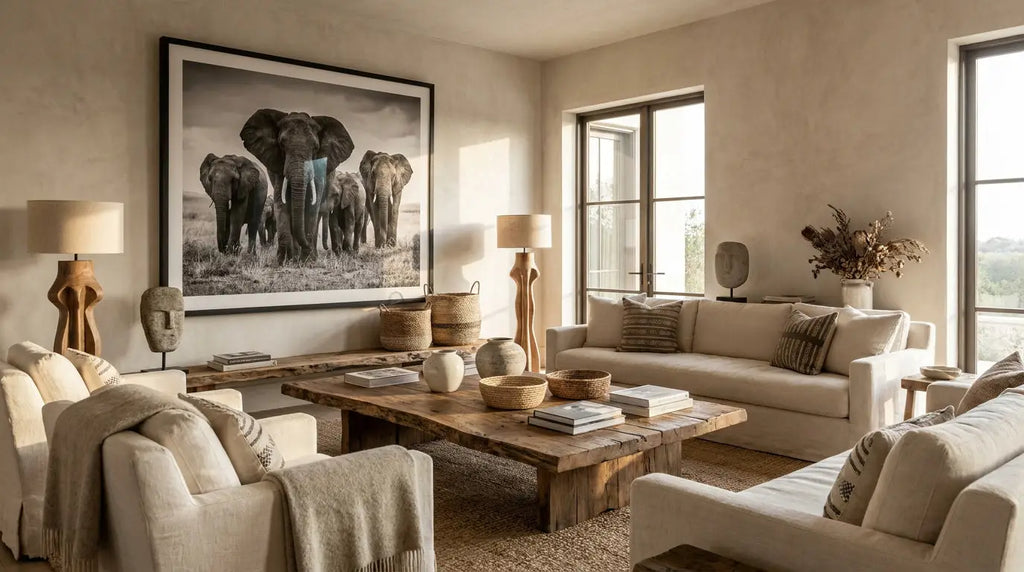
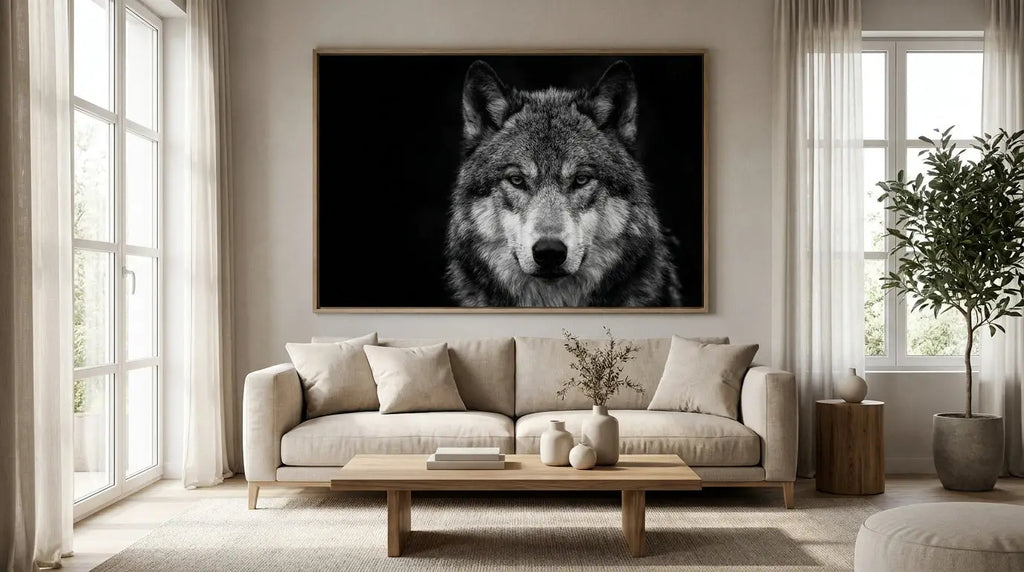
A black-and-white animal wall art highlights the gaze, outlines, and contrasts. It can complement wooden furniture, black accents, and light-colored textiles. However, consider how much black appears in the image: a very dark background will have a stronger presence than a bright composition.
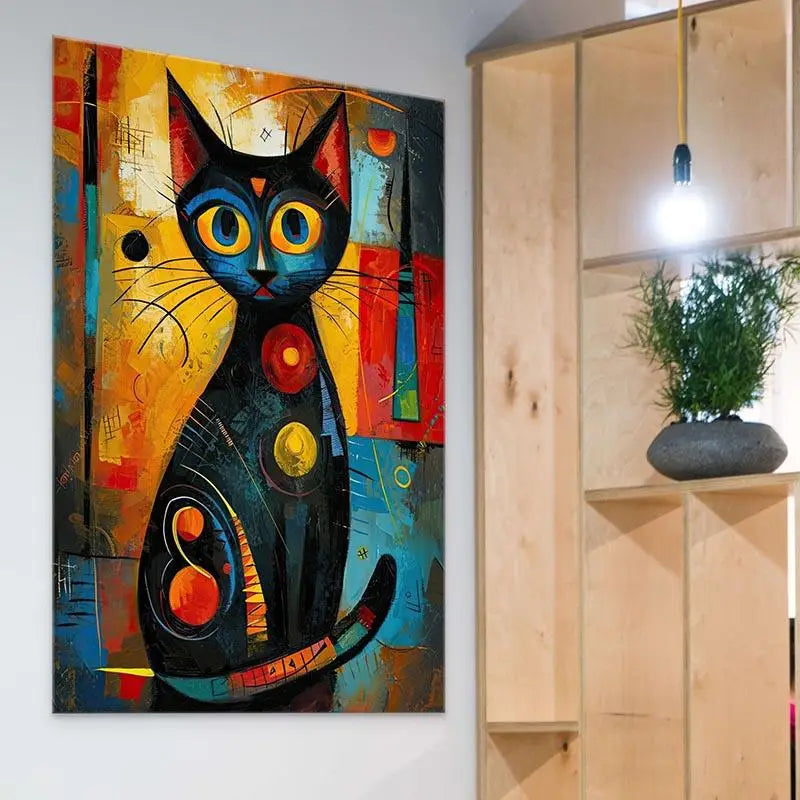
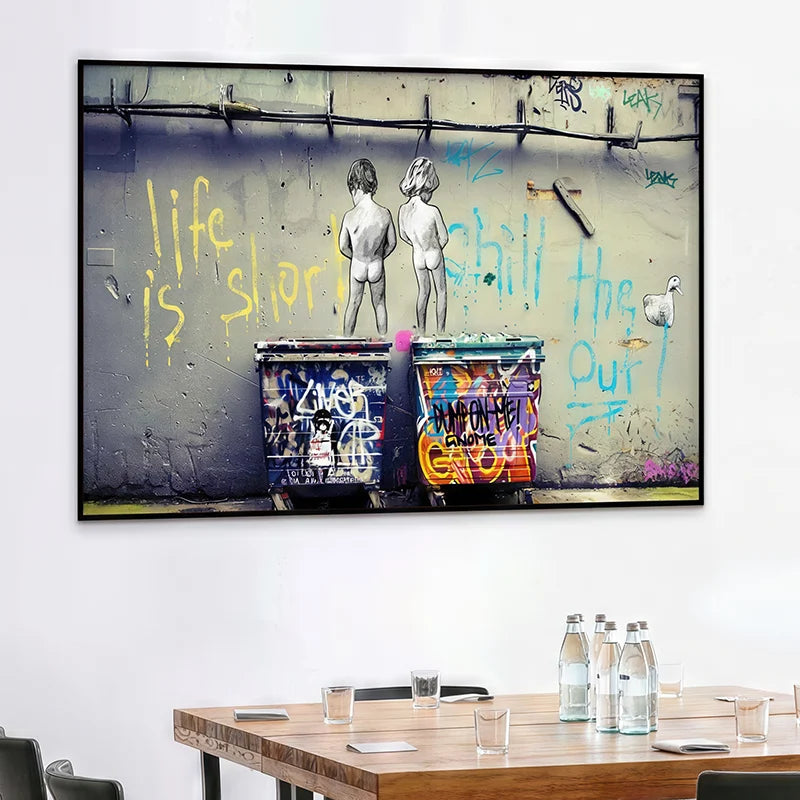
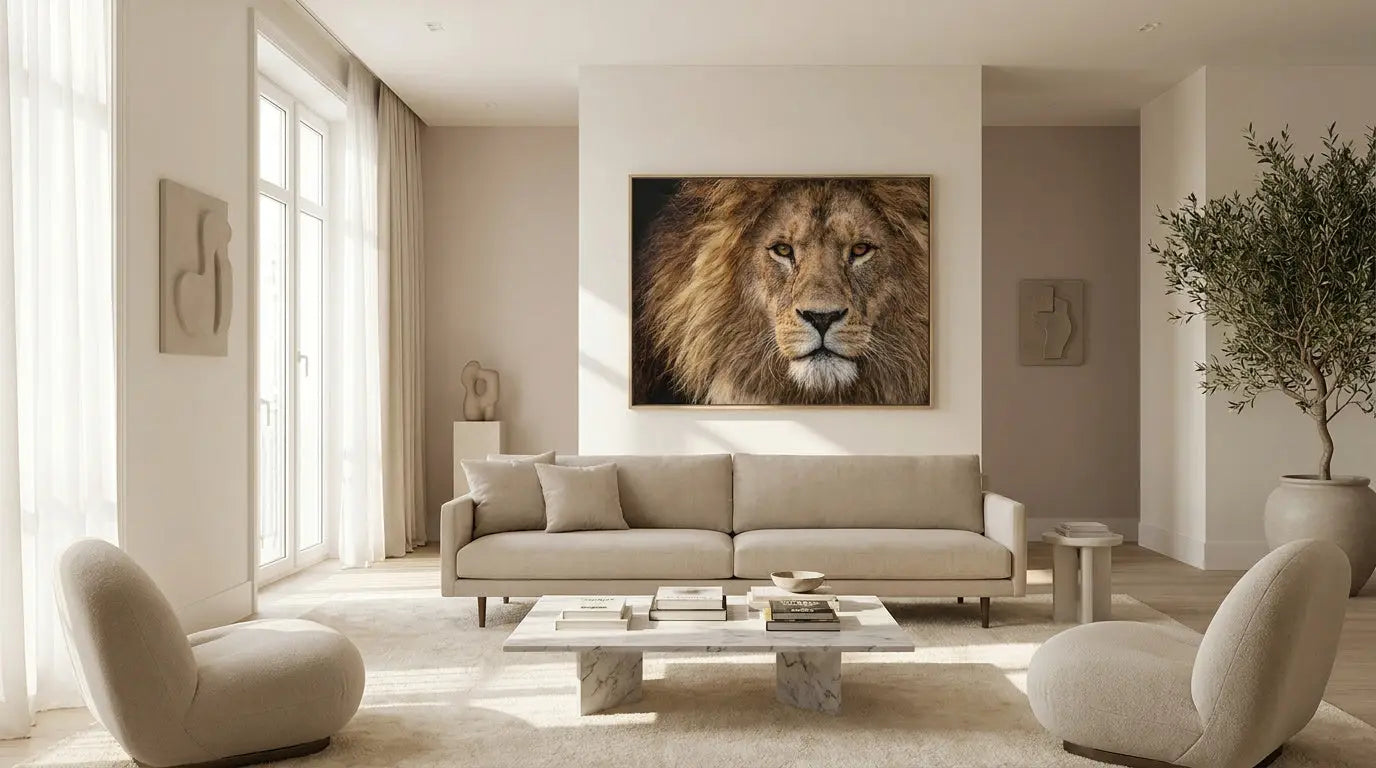
Natural tones easily complement a beige, sand, or wood-inspired interior. By contrast, pop art or graffiti illustrations create a colorful accent. To maintain a cohesive look, simply repeat one of the artwork's colors on a cushion or accessory.
| The look you want | Visual style to explore | Décor pairing |
|---|---|---|
| An understated atmosphere | Monochrome animal portrait | Light-colored wall, wood, and black accents |
| A touch of nature | Animal in its natural habitat | Natural textiles and soft colors |
| An expressive touch | Colorful animal or graffiti composition | Simple furniture with a matching color accent |
| A warm atmosphere | Dog or cat portrait | Reading nook or living space |
3. Choosing the size and placement
Measure the space actually available, taking doors, switches, light fixtures, and furniture into account. A large wall does not automatically require the largest size: the viewing distance matters too.
Above the sofa
As a visual guideline that you can adapt, try a width of around two-thirds that of the sofa. This is not a strict rule. A gallery wall can fill the same area, provided you include the spaces between the frames.
Cut out a paper template in the size you are considering and view it from the entrance and the main seating areas. This test helps you spot wall art that is too small, too high, or too close to a piece of furniture.
In the bedroom, home office, or entryway
In a bedroom, a soft composition can complement a restful décor. In a home office, choose a subject you enjoy looking at during breaks. A vertical composition may suit a narrow entryway better than a large panoramic piece.
4. Comparing Materials and Budget
The same design has a different presence depending on its finish. Compare the price of the exact material and size combination rather than relying solely on the “starting at” price shown in a collection.
- Frameless poster: it gives you the freedom to choose the frame. Remember to include the cost of a frame if you wish to add one.
- Stretched canvas on wooden frame: it adds depth to the wall and can be displayed without an additional frame.
- Black or white floating frame: it accentuates the outline of the wall art. Black enhances contrast, while white can appear more subtle against a light-colored wall.
- Plexiglass: its glossy finish can complement a contemporary look. Consider the position of windows and lamps to anticipate reflections.
Check the available options on the product page for your chosen design. To stay within your budget, prioritize the right proportions and a subject you love. A reasonably sized piece placed well will often make a stronger impression than large wall art that overwhelms the room.
5. Caring for Your Wall Art Based on Its Finish
The precautions depend on the material and its surface. Always follow the manufacturer's instructions first: a poster, printed canvas, and glossy panel cannot be cleaned in exactly the same way.
Dust Gently
For suitable surfaces, use a soft, clean cloth without applying excessive pressure. Avoid harsh household cleaners and abrasive accessories. Do not spray liquid directly onto the wall art or apply varnish without the manufacturer's recommendation.
For a poster, handle the paper with clean, dry hands. For Plexiglass, use only cleaning methods and products compatible with this material; not all glass cleaners are suitable. Delicate or damaged original artwork should be assessed by a professional conservator.
Preventing Damage
Avoid damp areas, splashes, and placing it too close to a heat source. Adding cardboard behind the frame does not make the wall art waterproof and is no substitute for choosing a suitable location.
When moving your wall art, protect the corners and hold it by the frame without pressing on the printed surface. Keeping suitable packaging also makes a future move easier.
6. Enhance Your Wall Art with Lighting
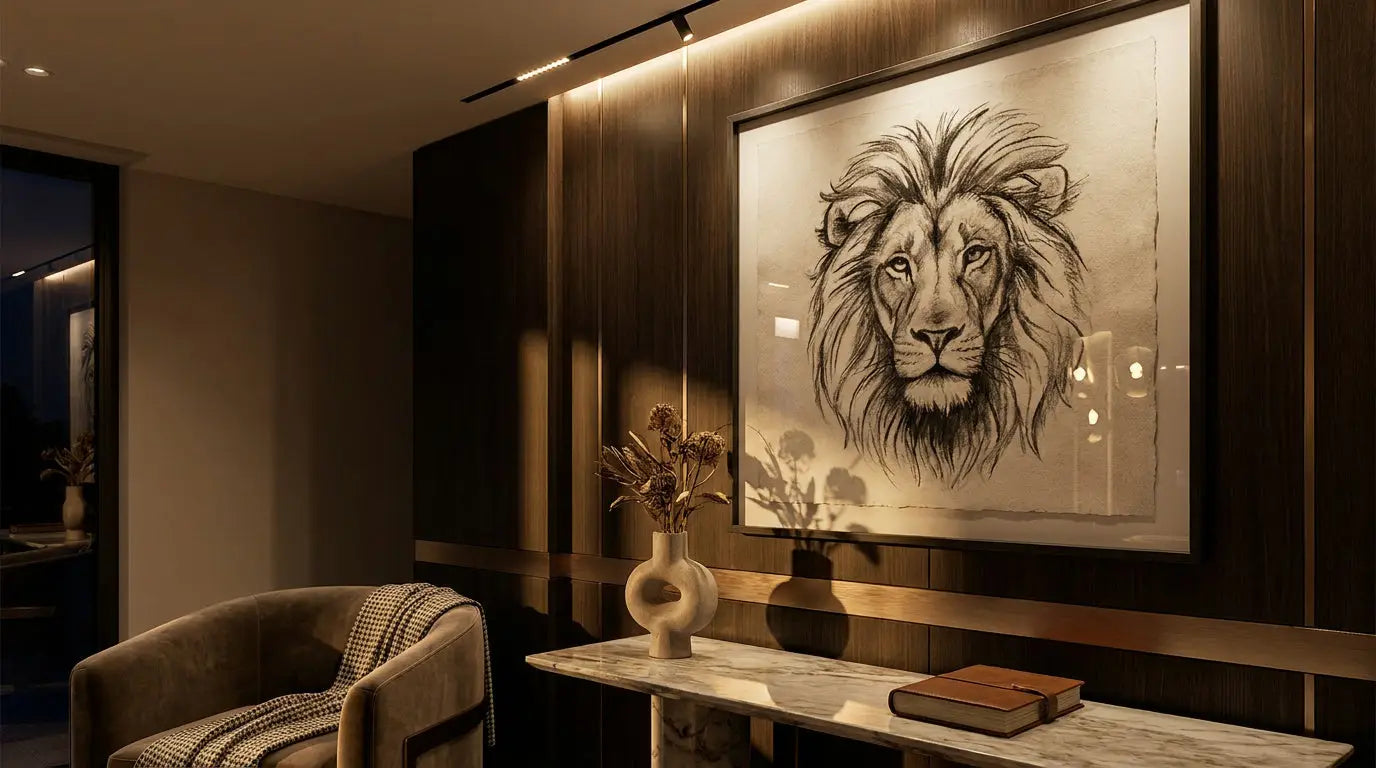
Good lighting reveals details without causing glare. Observe your wall at different times of day: sunlight can reach an image even if it appears to be in the shade when installed.
Choose indirect light
Avoid prolonged exposure to direct sunlight. A curtain or blind can help regulate the light, but the best location depends on the actual orientation of your windows and the sun's path.
Adjust the artificial lighting
An adjustable lamp can help showcase the subject. Adjust its position from your usual viewpoint, especially with a glossy finish. If you can see the bulb's reflection, change the angle or move the light source.
LED lighting does not eliminate every risk of fading: the intensity and duration of exposure also matter. Keep the light moderate and avoid illuminating the wall art continuously. Finally, compare how the colors look under your evening lighting before choosing a light color.
Frequently asked questions about animal wall art
Which animal wall art should you choose for a modern living room?
A monochrome portrait suits a minimalist setting, while a colorful animal can create a bolder accent. Above all, choose proportions that complement the furniture and colors that work with your décor.
Can you mix and match several animal wall art pieces?
Yes. Create a cohesive look with a shared color palette, frame finish, or graphic style. Test the arrangement on the floor before hanging and keep the spacing consistent.
Is wall art with a painted effect hand-painted?
Not necessarily. A printed illustration can visually reproduce brushstrokes. The product page should specify the technique and material; appearance alone is not enough to tell.
Where should you hang an acrylic glass print to minimize reflections?
Choose a wall where windows and lamps will not create direct reflections from your usual viewing position. Test the placement and adjust the lighting before permanently hanging the wall art.
How do you choose animal wall art as a gift?
Start with the recipient's favorite animal and home décor. Check the available space and the estimated delivery time for your chosen design so you can receive and prepare the gift on time.
Make room for your favorite animal
An expressive portrait, a nature scene, or a colorful illustration: choose the image that speaks to you, then compare sizes and formats to find the perfect fit for your interior.
Discover animal wall art