
Natural paint: benefits, prices, colors, and application tips
Want to renovate your walls while choosing more natural materials? Natural paint is becoming increasingly popular in interior decoration projects.
Lime, clay, casein, silicate, or plant-based binders: these paints offer especially interesting textures, colors, and finishes for creating a warmer interior.
But which eco-friendly paint should you choose? What budget should you plan for? How should you apply it? And above all, how can you match the color of your walls with your wall decoration?
Here is our complete guide to making the right choices.

Natural paint mainly uses raw materials of plant or mineral origin, such as lime, clay, casein, plant-based oils, or mineral pigments. Depending on the formulas and certifications, it can also have very low emissions of volatile organic compounds and is an appealing alternative for renovation and interior decorating projects.
1. Natural paint: definition and composition
The term natural paint generally refers to formulas made primarily with raw materials of natural origin.
These notably include plant-based binders, mineral fillers, natural pigments, lime, clay, and casein.
The principle is to limit, as much as possible, the use of components derived from petrochemicals and to favor mineral or renewable materials.
Plant-based origin
Some formulas notably use plant-based oils as a binder.
Lime and silicate
These solutions are especially valued for mineral-based surfaces and certain renovation projects.
Pigments
Pigments make it possible to achieve natural, deep, and sometimes subtly nuanced shades.
2. What Are the Benefits of Natural Paint?
More minimalist formulations
Many natural paints aim to reduce the use of solvents and petrochemical materials.
Often low emissions
Products with suitable certifications may show low emissions of volatile organic compounds.
A warm decorative finish
Matte, mineral, or slightly irregular textures often create particularly interesting visual depth.
A beautiful richness of color
Beige, terracotta, green, ochre, off-white, or mineral tones: natural palettes fit easily into today’s interiors.
Different surfaces
Depending on the paint chosen, application may be possible on plaster, plasterboard, wood, stone, or mineral surfaces.
More cohesive décor
Natural materials pair particularly well with wood, linen, rattan, plants, and wall art in organic tones.
It is born from the dialogue between paint, materials, light, and wall art.

3. Limewash, Clay, Casein, or Silicate Paint: Which Should You Choose?
| Type | Appearance | Use | Decorative atmosphere |
|---|---|---|---|
| Limewash | Matte, mineral, nuanced | Mineral walls, older buildings | Mediterranean, natural, authentic |
| Clay | Matte and velvety | Interior living spaces | Warm, soft, organic |
| Casein | Deep matte | Compatible walls and ceilings | Classic, elegant, refined |
| Silicate | Mineral | Compatible surfaces and façades | Contemporary or traditional |
not all natural paints are suitable for every surface. Always check the manufacturer’s recommendations before application.
4. Natural Paint or Conventional Paint: What Are the Differences?
The main difference lies in the formulation and the raw materials used.
| Criterion | Conventional paint | Natural paint |
|---|---|---|
| Binders | Often synthetic | Mainly plant-based or mineral, depending on the formula |
| Finish | Very uniform | Often more mineral and nuanced |
| Drying | Generally fast | May require more time |
| VOCs | Varies depending on the product | Often very low in suitable and certified products |
| Decorative style | Very wide choice | Particularly suited to natural atmospheres |
5. Natural Paint, VOCs, and Indoor Air Quality
When renovating a bedroom, living room, or living space, indoor air quality is naturally one of the criteria to consider.
Low-emission paints can be a worthwhile option in this approach.
Rather than relying solely on marketing claims, carefully check the information on the packaging: emission classification, composition, labels, and certifications.
even with paint presented as natural or low-emission, ventilate the room properly during and after the work.
6. What is the price of natural paint in 2026?
The price varies significantly depending on the brand, composition, type of paint, and finish.
As a guide, your initial article places the price of natural paint at around €15 to €25 incl. VAT per liter.
Eco-friendly primer
Around €16/L, depending on the product.
Matte finish
Around €23/L, depending on the range.
Satin finish
Some products can reach around €26/L.
These values are only indicative: compare the price per liter, but also the coverage per square meter and the number of coats required.
7. What coverage should you expect?
The coverage indicated in your content is generally between 8 and 14 m² per liter, depending on the product and the porosity of the substrate.
A perfectly smooth, properly prepared wall will generally use less paint than an old, porous, or uneven wall.
to paint a 20 m² wall with two coats, don’t simply calculate 20 m²: you will need to cover around 40 m² in total. Always add a small safety margin.
8. How to apply natural paint correctly?
Identify the substrate
Drywall, plaster, stone, wood, or concrete: start by determining the exact nature of the surface.
Clean the wall
Remove dust, grease, and old loose sections.
Repair imperfections
Fill cracks, sand if necessary, and achieve a stable surface.
Apply a suitable primer
Some natural paints require a specific primer to ensure good adhesion.
Apply the first coat
Use the roller, paintbrush, or brush recommended for the product.
Allow for drying time
Some natural formulations require more patience than conventional paint. Follow the manufacturer’s instructions carefully.
Apply the finish
A second coat generally helps improve the uniformity and depth of the color.

9. How to choose a natural color for your walls?
This is where paint and interior decor truly begin to come together.
The wall color greatly influences the perception of furniture, light, and your wall decor.
Beige & off-white
An excellent base for a bright, minimalist interior that is easy to decorate.
Sage green
It works particularly well with light wood, plants, and natural materials.
Terracotta
Warm and inviting, terracotta pairs perfectly with beige, cream, black, and contemporary wall art.
Clay & taupe
These colors create a soft, sophisticated atmosphere in a living room or bedroom.
Deep blue
An interesting shade for creating an accent wall and making light decor stand out.
Ochre
Warm and sunny, it pairs naturally with wood, off-white, and plant-based fibers.
10. How to pair natural paint with decorative wall art?
Once your walls are repainted, wall decor completes the design and gives the room a true identity.
The mistake is often wanting to match the wall art exactly to the wall color.
It is generally more interesting to create a dialogue between colors.
Beige wall
You can embrace almost anything: blue, green, terracotta, black, gold, or multicolored wall art.
Sage green wall
Try a beige, white, black, or gold piece, or one with a few botanical touches.
Terracotta wall
Wall art in cream, black, white, or deep blue tones can create an elegant contrast.
Off-white wall
It provides an excellent backdrop for a very colorful piece or large-format wall art.
Wall art gives it personality.
To continue your reflection, you can also discover how to choose and hang wall art to enhance your walls .
If you want to completely rethink your decor, also explore our ideas for turning your walls into true decorative features .
11. Which natural paint should you choose for each room?
| Room | Recommended atmosphere | Interesting colors | Wall decor |
|---|---|---|---|
| Living room | Warm and inviting | Beige, clay, green, terracotta | Large contemporary or abstract wall art |
| Bedroom | Soft and restful | Off-white, sage, beige, soft blue | Minimalist or soothing wall art |
| Kitchen | Bright | White, green, ochre, soft yellow | Food-inspired or contemporary illustrations |
| Office | Inspiring | Green, blue, beige | Graphic or abstract art |
| Entryway | Welcoming | Terracotta, beige, ochre | Vertical wall art or statement piece |
For your living space, you can browse our living room wall art collection .
12. Should you have your natural paint applied by a professional?
Most natural paints can be applied by a careful DIYer.
However, some techniques, especially certain limewash effects or the preparation of older surfaces, may require greater expertise.
In your original article, the cost of a professional service is estimated between €20 and €50 per m², supplies included, depending on the surface, the project, and the level of finish.
If you prefer to entrust the work to a specialist, you can compare several quotes before choosing.
Your partner link can be kept: find a painter in Dunkirk with Trustup .
Finished painting? Now give your walls character
Repainting a room changes its atmosphere. But it is often wall decor that then gives it true personality.
Have you changed the color of your walls? Don’t stop there.
A new wall creates a new atmosphere. A well-chosen wall art piece can now give it all its character.
Abstract, contemporary, colorful, minimalist, or large-format: choose the piece that will bring together your colors, furniture, and personality.
Discover Decorative Wall Art View new arrivalsFAQ: everything you need to know about natural paint
What is natural paint?
It is generally a paint formulated mainly with raw materials of plant or mineral origin, such as lime, clay, casein, or certain plant-based binders.
What is the best natural paint for an interior wall?
It depends on the surface and the desired effect. Clay is particularly suited to matte, warm atmospheres, while lime offers a more mineral and nuanced finish.
How much does natural paint cost?
As an indication, the prices mentioned in our guide are around €15 to €25 per liter. However, prices vary depending on the brand, formulation, and finish.
What is the coverage of a natural paint?
It can be around 8 to 14 m² per liter depending on the product, the surface, and its porosity. Always consult the manufacturer’s instructions.
How many coats should be applied?
Two coats are often used to achieve an even result, but the exact number depends on the paint and the surface.
Which natural paint should you choose for a bedroom?
A low-emission paint with a matte finish and a soft color is especially suited to a restful atmosphere. Check the features and certifications of the product you choose.
What color should you pair with abstract wall art?
On a beige, off-white, or light gray wall, colorful abstract wall art can create a beautiful contrast. On a more intense wall, choose an artwork that echoes a secondary shade or brings in a complementary color.
Which wall art should you choose after repainting a living room?
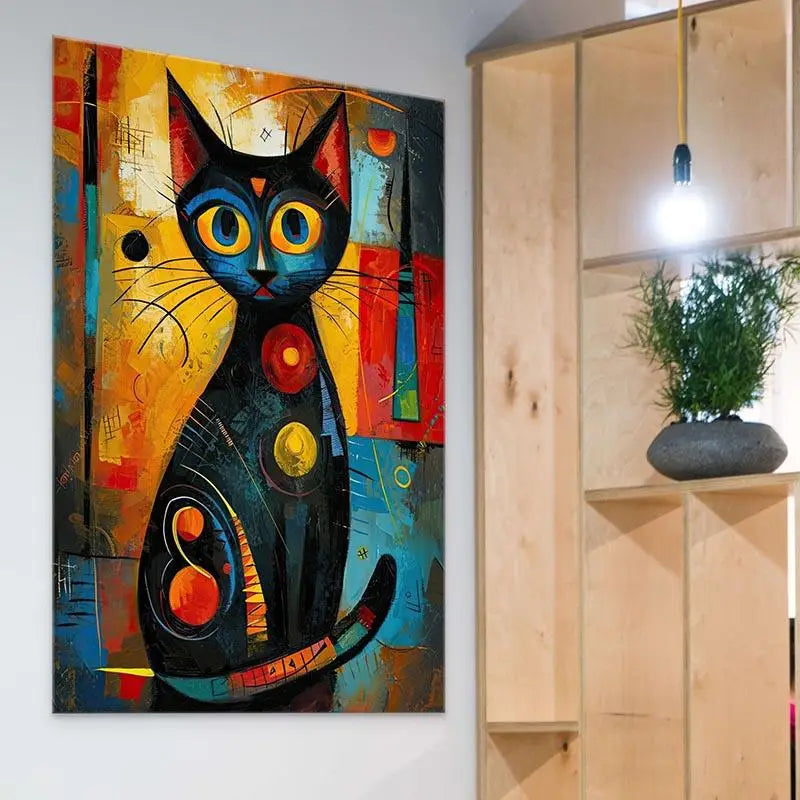
Consider the wall color, the size of the sofa, the available width, and the style of the furniture. Large contemporary or abstract wall art can become the focal point of the living room.
Natural paint and decoration: think of your wall as a whole
Choosing natural paint is not just about selecting a can of paint.
The texture, finish, color, light, and the elements you later install on the wall all contribute to the final result.
A warm beige can highlight deep blue wall art. Sage green can resonate with an artwork in cream and gold tones. An off-white wall can become the ideal backdrop for large multicolored wall art.
Paint sets the tone. Wall art tells the story.
Find the wall art that will elevate my wall