
Street Art, also known as urban art, has transformed city walls into true spaces for artistic expression.
Graffiti, stencils, collages, murals, portraits, typography, and visual messages now form an incredibly rich world.
But Street Art is no longer limited to public space. Its graphic codes now make their way into living rooms, bedrooms, offices, and gaming spaces through Street Art wall art and wall creations with a bold character.
Discover what defines urban art, its main styles, and above all how to bring its energy into your interior decor without overwhelming your walls.
Street Art brings together different forms of artistic creation linked to urban space, such as graffiti, stencil art, collage, and wall murals. It can be decorative, poetic, political, humorous, or simply visual. Its direct and accessible nature allows the artwork to meet the public in their everyday environment.
1. Street Art: when the street becomes a space for expression
One of the distinctive features of urban art lies in its relationship with public space.
A wall, a facade, a passageway, a sign, or a building can become the surface for a creation.
Unlike an artwork designed solely for a gallery, Street Art often reaches people who were not specifically looking to see art.
This direct relationship with the public partly explains the power of its visual language.
An accessible art form
A mural installed in the street can be seen by everyone, without needing to enter a museum.
A contextual art form
The architecture, neighborhood, and history of the place can contribute to the meaning of the artwork.
A visual art form
Colors, contrasts, shapes, and messages are often designed to create an immediate impact.
An art form that is sometimes ephemeral
An urban artwork can disappear, be covered over, or evolve with its environment.
Street Art sometimes does exactly the opposite: it comes to meet the public.
2. What are the main styles of Street Art?
The term Street Art actually brings together very different practices.
Tags & lettering
Letters, signatures, colors, and typographic compositions are among the most recognizable codes.
Silhouettes & messages
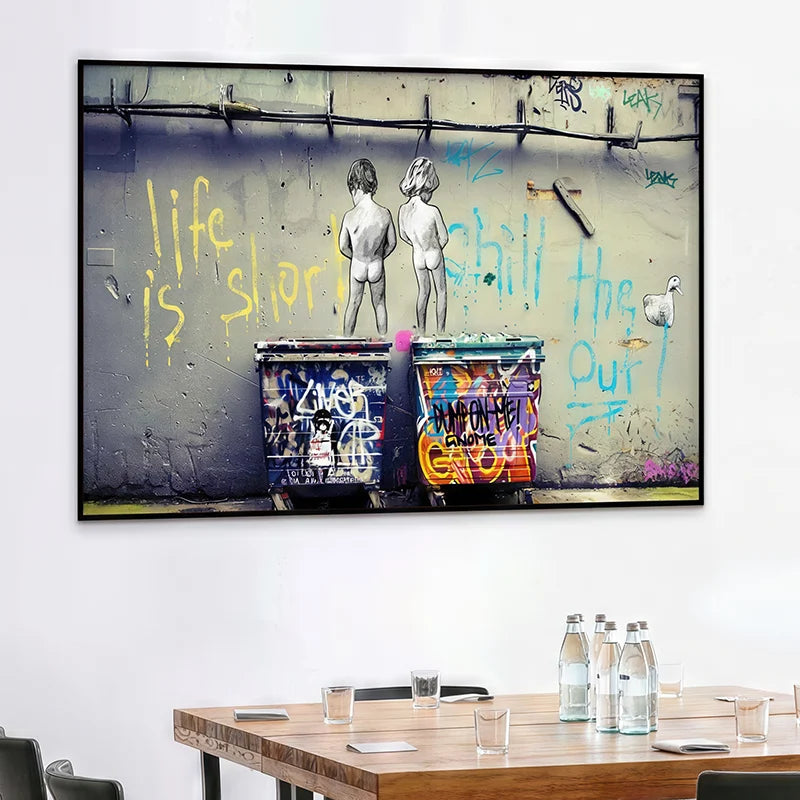
Stenciling makes it possible to create highly readable images, often associated with a message or situation.
Muralism
Very large formats transform the entire facade into a work of art.
Posters & overlays
Photographs, printed images, and typography can be assembled in urban spaces.
Urban faces
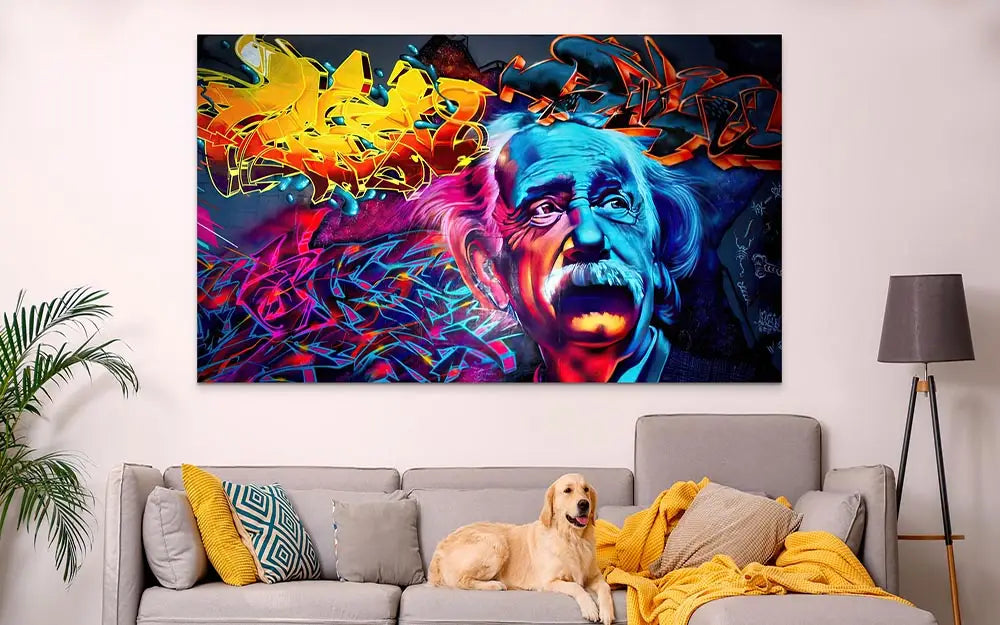
Portraiture has become an important language of contemporary muralism.
Popular culture
Cinema, music, fashion, and iconic characters can meet graffiti codes.
3. What is the difference between Street Art and graffiti?
The two terms are often used as if they meant exactly the same thing, but the reality is more nuanced.
Graffiti is one of the cultures and practices of urban expression.
Street Art is a broader term that can also include stenciling, collages, murals, installations, and various creations made in public spaces.
any graffiti wall art can fit into a Street Art decor universe, but not all Street Art is necessarily graffiti.
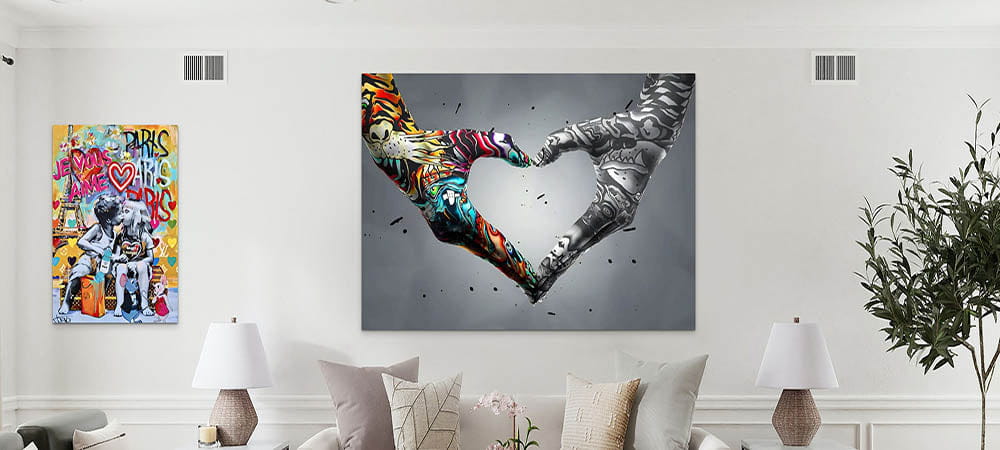
4. Street Art and Pop Art: two different worlds that love to meet
Pop Art and Street Art do not refer to the same artistic movement.
However, they can share certain codes: popular culture, well-known characters, advertising, powerful colors, typography, and instantly recognizable images.
This encounter is especially visible in contemporary decor, where graffiti and Pop references are regularly combined.
wall art blending graffiti codes and Pop Culture works especially well on a white, light gray, or beige wall.
Do you love bold colors and pop culture icons? Discover our Pop Art Wall Art collection .
5. Banksy, Basquiat, and the major influences of urban art
Urban culture has been shaped by many artists and movements.
Banksy
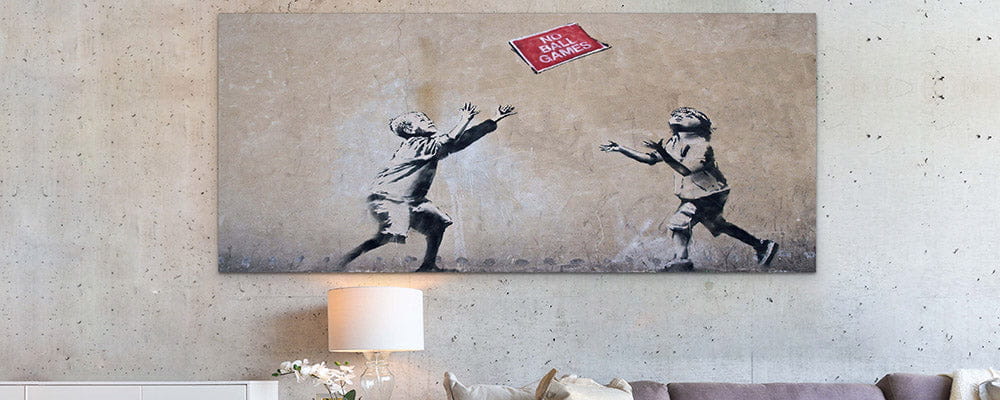
The British artist is especially known for his stencils, contrasts, and images that often carry a message.
His universe adapts beautifully to minimalist, modern, or industrial living rooms.
Jean-Michel Basquiat
Basquiat is more closely associated with contemporary art and neo-expressionism, but his beginnings in the New York scene and his graphic language create a strong connection with urban culture.
Crowns, words, figures, and colors give his world an instantly recognizable energy.
6. Why does Street Art work so well in interior decoration?
In a home, Street Art wall art has an immediate advantage: it catches the eye.
An urban piece can therefore become the focal point of a room and be enough to awaken a very neutral interior.
It brings color
Red, blue, yellow, pink, or multicolor can energize a white or beige living room.
It adds character
A graphic piece can transform a simple wall into a true space for expression.
It tells the story of your passions
Music, cinema, fashion, sport, and Pop Culture can become elements of your decor.
It creates contrast
Street Art works especially well with understated, contemporary furniture.
7. How to choose the right Street Art wall art?
First choose a piece that speaks to you
The subject and the emotion should remain the first criterion.
Analyze the colors of your room
Your wall art can either complement the existing palette or create an intentional contrast.
Measure your wall
A large wall often calls for a more generous size than you might imagine.
Define the focal point
If the wall art is meant to become the centerpiece, leave enough space around it.
Choose the finish
Canvas, floating frame, Plexiglass, or poster create very different looks.
8. What colors should you pair with Street Art wall art?
| Room color | Recommended Street Art | Desired effect |
|---|---|---|
| White | Multicolor, red, blue, black | Maximum contrast |
| Beige | Blue, red, black, orange | Energize the living room |
| Gray | Yellow, red, pink, blue | Bring energy |
| Black & white | Pop Art or colorful graffiti | Create a focal point |
| Very colorful room | Black and white or reduced palette | Rebalance the overall look |
echo just one secondary color from the wall art in a cushion, a vase, or a small accessory. That is enough to connect the piece to the rest of the decor.
9. Which room should you hang Street Art wall art in?
Living room
Above the sofa or on the main wall, a large format can become the centerpiece.
Bedroom
Choose a world that matches the occupant's passions and personality.
Office
A graphic, colorful piece can bring more energy to the space.
Gaming room
Pop Culture, graffiti, cinema, and iconic characters work especially well.
Entryway
A statement piece of wall art sets the tone from the very first seconds.
Industrial living room
Street Art naturally pairs with metal, dark wood, and concrete.
10. What size Street Art wall art should you choose?
The format should be suited to the surface you want to dress.
Above a large sofa, horizontal or panoramic wall art creates a beautiful sense of continuity.
On a narrow wall, a vertical format can, on the contrary, emphasize the height.
XXL Street Art wall art can have far more impact than an accumulation of small decorative pieces. Mark out the dimensions on the wall with masking tape before choosing.
11. Which finish should you choose for your Street Art wall art?
Frameless poster
A simple, lightweight presentation directly inspired by the world of urban posters.
Stretched canvas
A more artistic finish that gives the artwork greater presence.
Black floating frame
It strengthens the outlines, contrast, and graphic identity.
White floating frame
Brighter, it works beautifully in light, modern interiors.
Plexiglass
Its glossy finish enhances the colors and is especially suited to highly dynamic creations.
12. Mistakes to avoid with Street Art decor
Multiplying statement artworks
If every wall tries to attract attention, the decor loses clarity.
Choosing wall art that is too small
A small artwork on a huge wall can lose all its impact.
Matching everything
Street Art often works best through contrast.
Adding too many colors
If the artwork is very colorful, keep the furniture more understated.
Forgetting empty space
A powerful piece of wall art needs room to breathe.
Choosing solely based on trends
Choose an artwork you will enjoy looking at for years to come.
Explore Montableaudeco’s Street Art collections
Urban art has many facets.
Explore different worlds to find the wall art that matches your interior and your personality.
Is your wall too understated? Bring the energy of the street into your home.
Sometimes, a single artwork is enough to completely change the atmosphere of a room.
Graffiti, Banksy, Basquiat, Pop Art, or urban portrait: choose the visual language that feels like you.
Discover Street Art Wall Art Explore GraffitiFAQ: Street Art and interior décor
What is Street Art?
Street Art, or urban art, brings together different forms of artistic expression linked to public space, such as graffiti, stencils, collage, and wall murals.
What is the difference between Street Art and graffiti?
Graffiti is one form of urban culture, while Street Art can encompass a broader range of practices: stencils, collages, murals, and installations.
What is the difference between Street Art and Pop Art?
They are two distinct artistic worlds. However, they can share references to popular culture, bold colors, and graphic imagery.
Which Street Art wall art should you choose for a living room?
In a neutral living room, a very colorful artwork can become the focal point. For a more minimalist interior, Banksy wall art or a black-and-white composition may be preferable.
What wall color works with Street Art wall art?
White, beige, and light gray allow the colors of an urban artwork to stand out easily.
Which format should you choose for Street Art wall art?
Canvas offers an artistic finish, the black floating frame enhances contrast, and Plexiglass gives a glossier, more contemporary look.
Can you use Street Art in elegant décor?
Yes. An urban artwork paired with understated furniture can create a very elegant contrast.
How can you avoid overloading Street Art décor?
Use one main artwork, leave enough space around it, and avoid multiplying strong colors in the rest of the room.
Street Art: urban art now accessible even in our interiors
Street Art was born in the city and continues to draw its energy from public space, culture, and society.
But its visual language can also transform the décor of a home.
A graphic artwork, a colorful graffiti piece, a stencil, or a composition inspired by popular culture can be enough to give a wall a whole new identity.
Because Street Art wall art is not just for decorating: it can become the starting point for your interior’s entire personality.
Explore the world of Street Art