
The Icons of Global Street Art: Artists, Styles, and Cultural Influence
From the first urban graffiti to monumental murals, Street Art has become one of the most recognizable artistic movements of our time.
Stencils, graffiti, collages, portraits, typography, and socially engaged messages have transformed city walls into spaces for expression.
Artists such as Banksy, Jef Aérosol, Lady Pink, Shepard Fairey, Vhils, and D*Face have each developed a visual language capable of crossing borders.
But who are the major figures of urban art? How do their styles differ? And why can their influence now be found even in Street Art décor?
Let’s explore the icons who helped write this story.
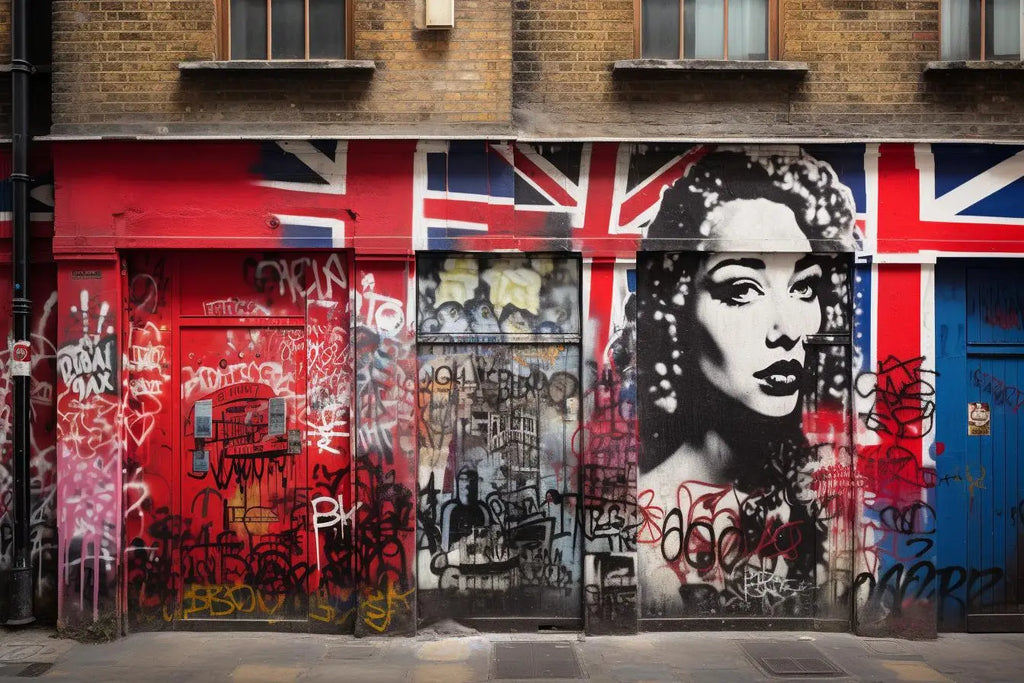
Banksy, Shepard Fairey, Lady Pink, Jef Aérosol, Ernest Pignon-Ernest, Vhils, and D*Face are among the names frequently associated with the history and development of urban art. Each has a different approach: stencil, graffiti, portrait, collage, wall carving, or a visual language inspired by popular culture.
1. The Origins of Street Art: When the City Becomes a Canvas
The development of modern graffiti and the different forms of urban expression grows increasingly important from the 1960s and 1970s onward.
Walls, trains, and various public spaces gradually become surfaces for creation and expression.
Signatures, letters, characters, and colors then create a new visual language.
The Rise of Urban Graffiti
Signatures, tags, and lettering develop across several major American cities.
Diversification
Graffiti, stencils, collage, and urban interventions are multiplying.
An International Audience
Many artists gain recognition far beyond their hometown.
A Global Artistic Language
Murals, festivals, galleries, photography, and decor now create a dialogue between urban art and contemporary art.
the city itself becomes an integral part of the work.
2. The pioneers who shaped urban art
Street Art has no single founder or unique style.
Its history is rather the result of many scenes, generations, and practices.
Jef Aérosol
Stencil holds a central place in his universe. His portraits and silhouettes have become references in French Street Art.
Lady Pink
An important figure in New York graffiti culture, she develops a highly colorful and narrative universe.
Ernest Pignon-Ernest
Her interventions combine drawing, urban space, and historical or social context.
3. Banksy: the mysterious icon of Street Art
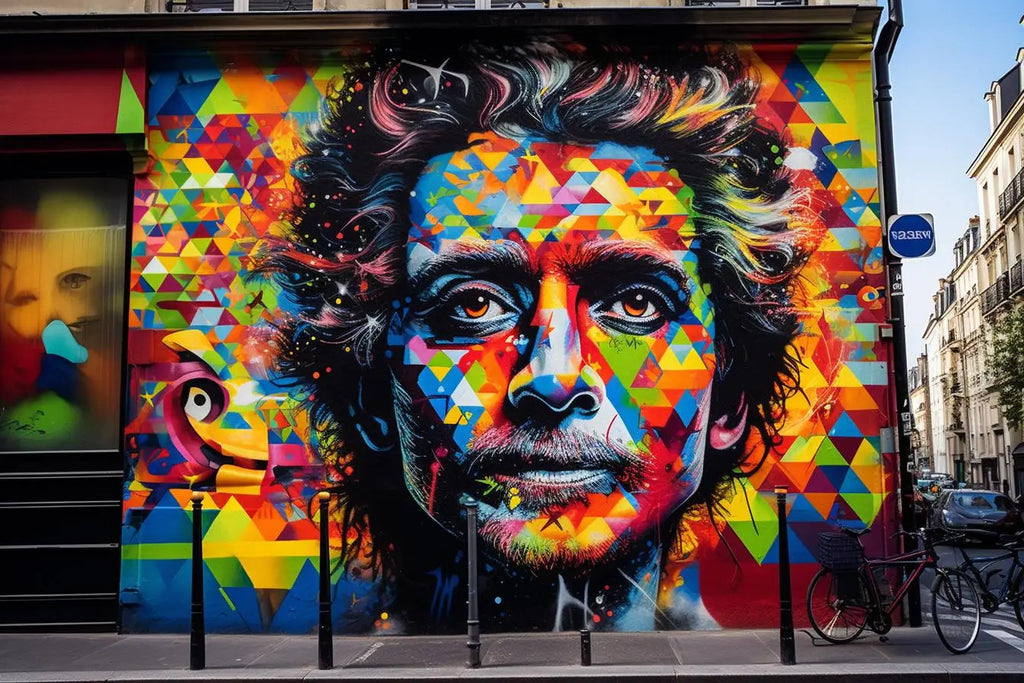
It is difficult to discuss urban artists without mentioning Banksy.
His identity remains publicly unknown, and this discretion greatly contributes to the aura surrounding his work.
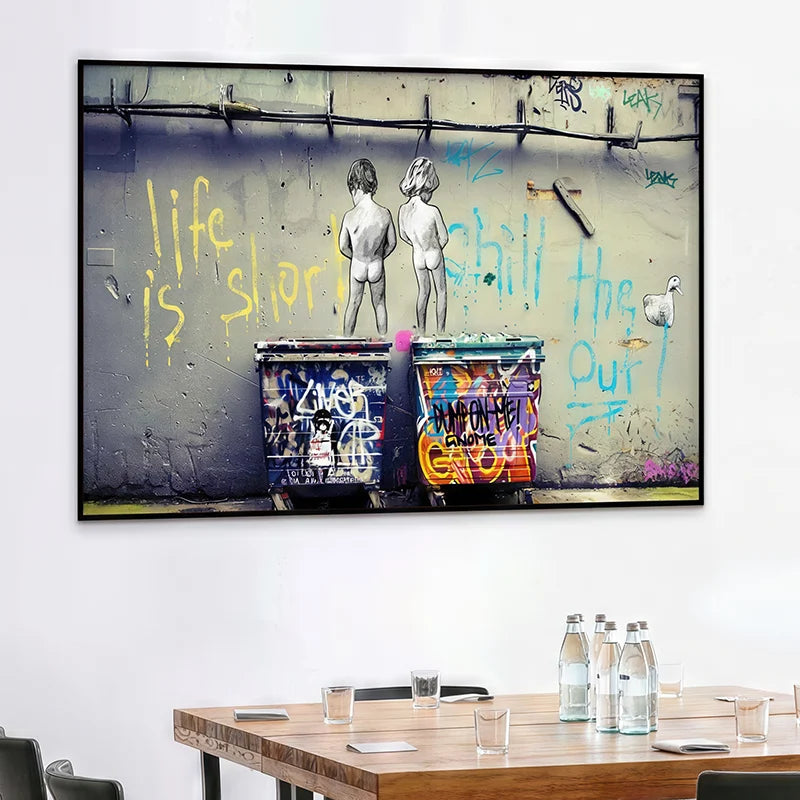
His visual language is notably based on stencils, contrasts, and easily recognizable situations.
His works regularly address social, political, or human issues.
Stencil
A technique that makes it possible to quickly create readable, graphically powerful images.
Contrast
The image may seem simple at first glance, but the context or message often changes how it is read.
black, white, and red compositions work particularly well in a minimalist, industrial, or contemporary interior.
4. Shepard Fairey: graphic design, posters, and urban culture
Shepard Fairey’s work is immediately associated with a highly structured graphic aesthetic.
Posters, portraits, typography, and compositions with powerful contrasts all contribute to his visual language.
Her universe also shows how the boundaries between graphic design, posters, popular culture, and Street Art can become fluid.
5. Lady Pink: a major figure in graffiti culture
Lady Pink is one of the artists who helped shape the evolution of the New York graffiti scene.
Her work notably uses color, storytelling, and characters to create instantly recognizable compositions.
It also reminds us that the history of urban art is made up of very different profiles, influences, and generations.
6. French Street Art: a particularly rich scene
Paris and many French cities have seen the rise of artists with very different practices.
Jef Aérosol
Portraits, stencils, and black and white are among his most identifiable signatures.
Ernest Pignon-Ernest
His works interact directly with the places where they are installed.
C215
His stencil portraits have helped renew the language of urban portraiture.
An ever-evolving scene
Graffiti, stencil, muralism, and illustration continue to evolve French urban art.
To explore the subject further, also discover our articles dedicated to Street Art in France .
7. Vhils: when the wall itself becomes an artistic material
Portuguese artist Vhils became known for an approach in which the wall surface is no longer just a support.
The material is worked directly to reveal faces and compositions.
This approach shows how Street Art can go beyond simple painting or traditional graffiti.
8. What are the main styles of Street Art?
| Style | Features | Associated decor universe |
|---|---|---|
| Graffiti | Tags, lettering, colors, and splashes | Urban, industrial, gaming |
| Stencil | Silhouettes, contrasts, messages | Minimalist, modern |
| Urban portrait | Faces, colors, texture effects | Contemporary living room |
| Pop Street Art | Popular culture and bright colors | Pop Art, bedroom, living room |
| Muralism | Large compositions and murals | Large format, gallery effect |
| Collage | Images, posters, and overlays | Eclectic decor |
To bring the graffiti aesthetic into your home, explore our Graffiti Wall Art collection .
9. Why do Street Art works often convey a message?
Public space offers artists an environment very different from a traditional gallery.
A work can be seen by thousands of people who did not specifically come looking for art.
This closeness to everyday life allows Street Art to address many subjects: society, politics, freedom, love, the environment, inequality, or popular culture.
It can also become a language of ideas.
10. How did Street Art enter interior design?
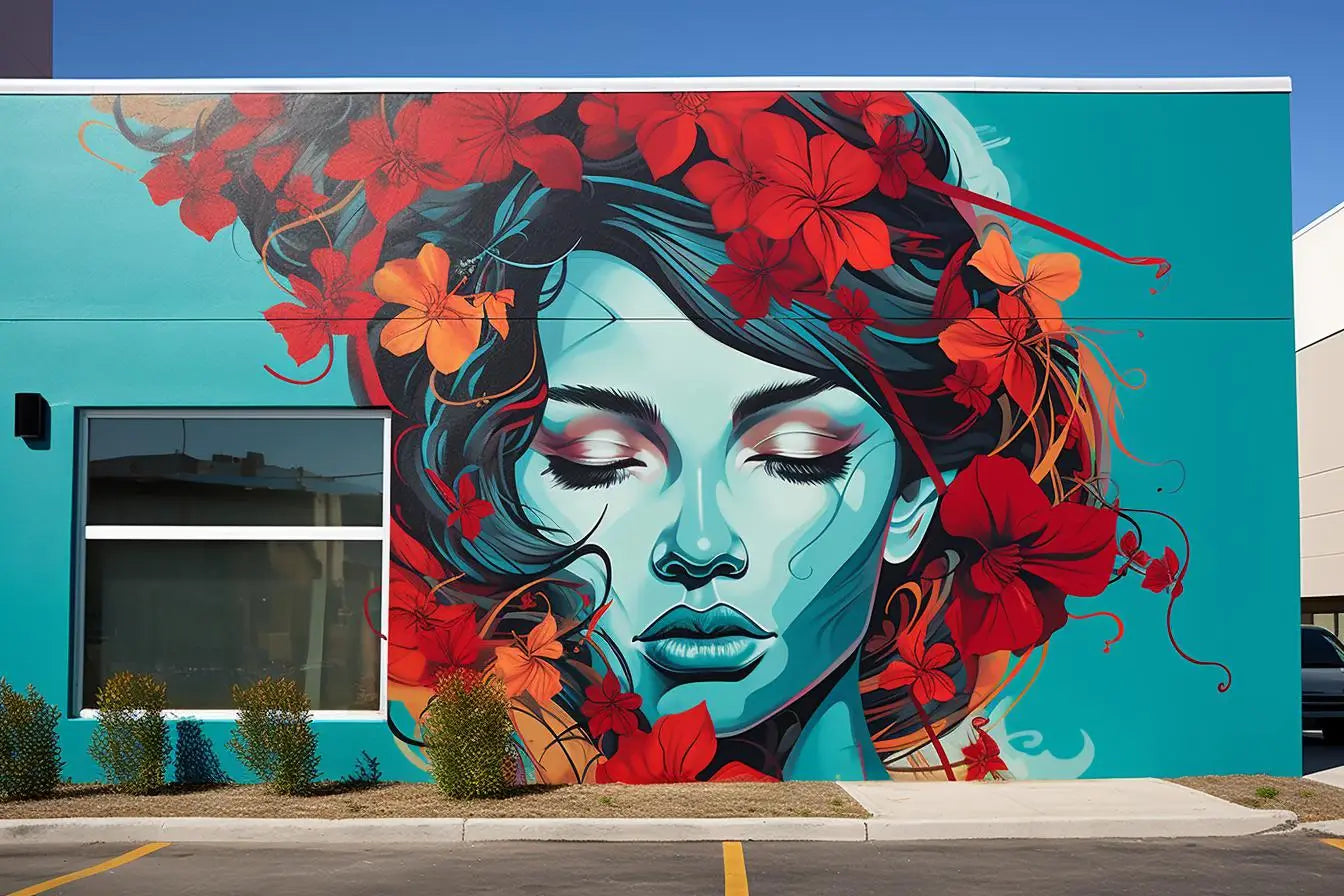
The codes of urban art are no longer reserved for facades and exterior walls today.
They appear on wall art, posters, canvases, and various wall decor creations.
In a living room
A large Street Art piece can become the focal point of the main wall.
In a bedroom
Pop Culture and graffiti worlds allow you to create a more personal decor.
In an office
A graphic creation can bring more energy to the space.
To discover how to use this universe in your home, also see our guide to integrating urban art into your decor .
11. Which Street Art wall art should you choose for your interior?
The choice depends both on your taste and on the style of your room.
Minimalist interior
A Banksy wall art piece or a black-and-white composition can create a very elegant contrast.
Contemporary living room
A portrait, graffiti piece, or colorful artwork can add a powerful focal point.
Industrial decor
Graffiti, black, and bold colors pair especially well with metal and concrete.
Gaming room
Pop Culture, graffiti, and urban worlds can create a spectacular decor.
on a white or beige wall, don’t be afraid of a highly colorful artwork. If your room already has a lot of color, a more graphic or monochrome wall art can, on the contrary, rebalance the space.
12. Street Art: a movement that continues to reinvent itself
One of the great strengths of urban art is its ability to change.
Artists explore new surfaces, new techniques, and new ways of interacting with architecture.
The movement also engages with graphic design, photography, contemporary art, digital culture, and decor.
This diversity allows Street Art to retain a living identity rather than become a fixed style.
Discover the major Street Art worlds of Montableaudeco
Love urban culture? Explore the different branches of our Street Art universe to find the creation that suits your interior.
What if a Street Art icon found its place on your wall?
Banksy, graffiti, Basquiat, or Pop Art: each world has its own energy.
A single artwork can be enough to bring character to a living room, office, or bedroom.
Discover Street Art Wall Art View Banksy Wall ArtFAQ: Street Art artists and icons
What is Street Art?
Street Art, or urban art, brings together different artistic practices created in or inspired by public spaces, such as graffiti, stencils, collage, and wall murals.
Who is the best-known Street Art artist?
Banksy is one of the urban artists best known to the general public, especially thanks to his mysterious identity and stencil works.
What is the difference between Street Art and graffiti?
Graffiti is part of urban culture. Street Art encompasses a broader range of practices, including stencils, collage, murals, and various interventions in public spaces.
Who are the well-known French Street Art artists?
Jef Aérosol, Ernest Pignon-Ernest, and C215 are among the names regularly associated with the French scene.
What technique does Banksy use?
Banksy is particularly known for his use of stencils, even though his work is not limited to a single technique.
Which Street Art wall art should you choose for a living room?
In a neutral living room, a colorful artwork or graffiti wall art can become the focal point. In a more minimalist interior, a black-and-white Banksy composition can be particularly elegant.
Is Basquiat connected to urban culture?
Jean-Michel Basquiat is mainly associated with contemporary art and Neo-Expressionism, but his beginnings in the New York scene and the SAMO project created a strong link with urban culture and graffiti.
How to incorporate Street Art into modern decor?
Use an artwork as a focal point, leave enough space around it, and possibly echo one or two colors from the wall art in a few accessories.
The icons of Street Art have transformed the way we look at walls
This movement began in public spaces, but its influence now reaches far beyond the street.
Graffiti, stencils, portraits, collages, and murals have created a visual language that can travel from one city to another and from one generation to the next.
Each artist brings their own way of telling the story of the city, society, and their era.
And that may be Street Art’s greatest strength: transforming a simple wall into a space for expression.
Explore the World of Street Art