
Street Art in France: From Alleyways to Art Galleries
Today, it’s impossible to walk through certain French cities without coming across a monumental mural, a stencil, a collage, or graffiti that immediately catches the eye.
Street Art in France has become much more than simple urban decoration. It tells the story of an era, expresses emotions, conveys messages, and sometimes transforms entire neighborhoods into true open-air galleries.
From the streets of Paris to places entirely dedicated to urban art, let’s discover this artistic movement that continues to reshape our relationship with the city, art, and decoration.
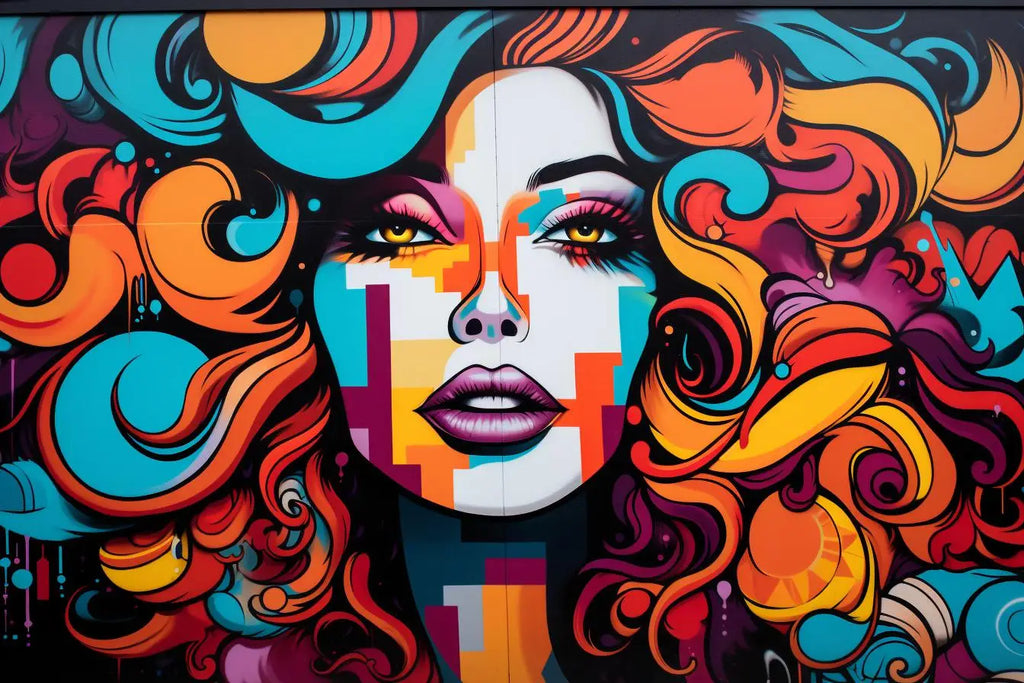
Street Art has evolved from an urban practice often perceived as marginal into a form of artistic expression widely visible in cities, cultural events, and dedicated spaces. Stencils, graffiti, stickers, collages, and large murals are now fully part of the French cultural landscape.
1. The Origins of Street Art
The development of modern Street Art is generally associated with major American cities in the 1960s and 1970s.
Walls, metros, and public spaces gradually became mediums of expression for a new generation of artists.
Originally, signatures and inscriptions held an important place. Then practices evolved: letters became more complex, colors multiplied, and characters, messages, and complete compositions appeared.
Graffiti
Letters, tags, characters, shapes, and colors allow artists to create an instantly recognizable visual language.
The stencil
This technique makes it possible to quickly reproduce an image or message on different surfaces.
Collage
Posters, photographs, and paper creations can be integrated directly into the urban space.
The mural
On a large scale, façades become true artistic mediums capable of transforming an entire neighborhood.
The street becomes the gallery.
2. How did Street Art develop in France?
As urban art gradually arrived in France, it quickly found fertile ground for expression.
Paris naturally plays an important role, but the phenomenon is not limited to the capital.
Lille, Lyon, Marseille, Bordeaux and many other cities are seeing their walls host increasingly varied works and artistic initiatives.
The roots of the movement
In the United States, graffiti and urban expression developed in major cities.
The movement crosses the Atlantic
The codes of urban art are gradually taking hold in French cities and evolving according to local artists.
An art form that has become essential
Large murals, dedicated routes and cultural venues all contribute to a new recognition of Street Art.
Graffiti is part of the world of Street Art, but urban art also includes stencils, collage, installations and many other practices.
To explore this topic further, you can also read our article on the rise of Street Art as a popular art form .

3. A few figures of French Street Art
French Street Art is particularly rich thanks to the diversity of its artists, their techniques and their messages.
Each generation has helped give French urban art a distinctive identity.
Ernest Pignon-Ernest
His work in public spaces combines drawing, place and message. His interventions helped change the way art can engage in dialogue with the city.
Birdy Kids
The collective is especially associated with colorful creations and an instantly recognizable graphic world.
There is no single style. Some artists favor realism, others graffiti, stencils, bright colors or, conversely, very minimalist compositions.
4. What techniques do urban artists use?
Aerosol
It is one of the most iconic tools of graffiti and large urban murals.
Stencil
It makes it possible to work quickly with pre-cut shapes and patterns.
Posters & collages
Works on paper can be integrated directly into walls and urban furniture.
Stickers
Small formats and rapid distribution make it possible to multiply urban interventions.
Monumental mural
Entire façades can be transformed into true large-scale artworks.
Combined techniques
Many artists today combine painting, collage, text, and other techniques.
5. Where to see Street Art in France?
Some French destinations have become true benchmarks for urban art lovers.
| Place | City / Region | Why discover it? |
|---|---|---|
| Street Art City | Auvergne | A place dedicated to urban art and numerous wall creations |
| Street Art Avenue | Saint-Denis Canal / Paris region | An open-air artistic route punctuated by murals and installations |
| Darwin | Bordeaux | An alternative space where urban culture holds an important place |
| Paris | Île-de-France | Many neighborhoods offer the chance to observe graffiti, stencils, and large murals |
| Lyon / Marseille / Lille | France | Varied urban scenes with artworks and artistic routes |
6. Street Art City: an immersion in urban art in Auvergne
Street Art City offers a unique experience for urban culture enthusiasts.
The site gives a central place to murals, artists, and the exploration of different graphic worlds.
The idea is simple: no longer look at a single isolated work, but step into an environment entirely shaped by urban art.
Immersion
Art is not simply hung on a wall: it is an integral part of the place.
Diversity
Different artists, different styles, and different techniques help vary the visual experiences.
Renewal
Urban creation remains alive, evolving, and in motion.
7. Street Art Avenue: when Paris becomes an open-air gallery
The Paris region also offers many spaces where you can discover the different facets of Street Art.
The Street Art Avenue route, around the Saint-Denis canal, notably allows you to observe murals, graffiti, and installations during a walk.
The appeal of this type of route lies in the relationship between the artwork and the urban environment.
A creation does not produce the same effect on the façade of an industrial building, on a wall along the canal, or in a traditional gallery.
8. Street Art as a tool for expression and protest
Since its origins, Street Art has not been limited to an aesthetic pursuit.
Walls also become spaces where opinions, dreams, criticism, hopes, and demands are expressed.
The artwork is visible to everyone and can provoke an immediate reaction.
Social message
Some artists use public space to question social issues.
Personal expression
The work can also be a way to tell an individual or collective story.
Urban transformation
A mural can completely change the perception of a façade or a neighborhood.
Accessibility
Unlike an exhibition behind museum walls, urban art is directly visible in public spaces.
9. Street Art and popular culture: an influence that goes beyond walls
The influence of Street Art does not stop at the streets of major cities.
Its graphic codes can be found in music, fashion, music videos, cinema, video games, and of course in interior décor.
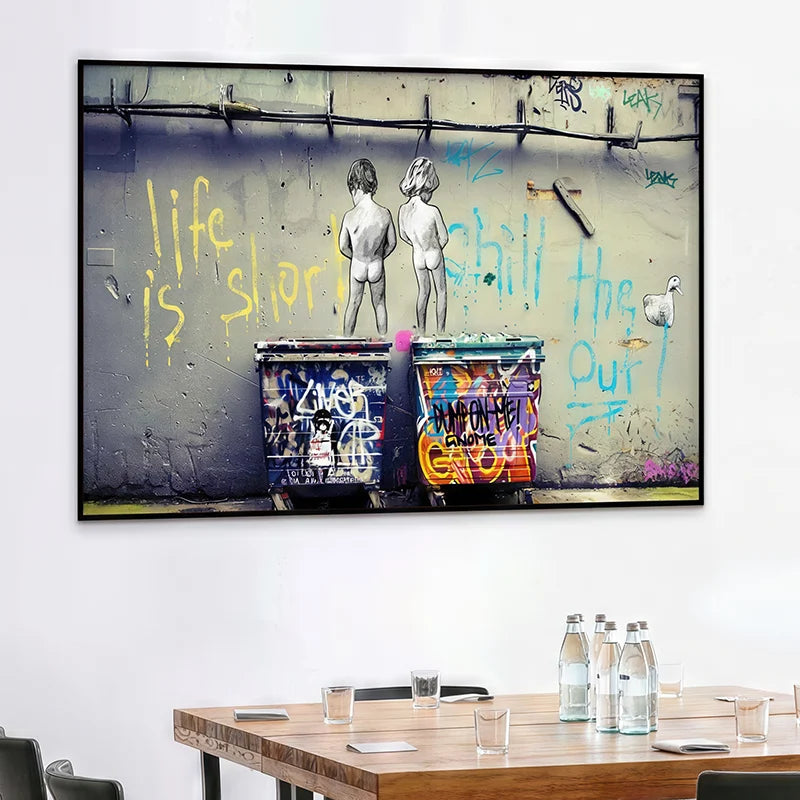
This connection with Pop Culture also explains the growing popularity of wall art that blends well-known characters, graffiti, bright colors, and contemporary references.
today, it is one of the most effective combinations for creating modern, energetic, and highly personal décor.
If you love this world, you can also discover our Pop Art Wall Art collection .
10. How to bring Street Art into your décor?
Urban art is no longer reserved for façades and streets.
A Street Art wall art piece can become a true statement piece in a living room, bedroom, office, or gaming room.
On a white wall
A piece with intense colors instantly stands out against a neutral setting.
Above the sofa
A large format can become the focal point of the living room.
In a bedroom
Graffiti, Pop Culture, and urban portraits bring plenty of personality.
In an office
Dynamic colors and compositions can enhance the creative atmosphere of the space.
What if the street moved onto your walls?
Street Art brings color, energy, and personality to an interior without changing the entire décor.
Graffiti, Banksy, Pop Culture, urban portraits, or highly colorful creations: explore different worlds and find the one that feels like you.
Discover Street Art Wall Art View Graffiti Wall Art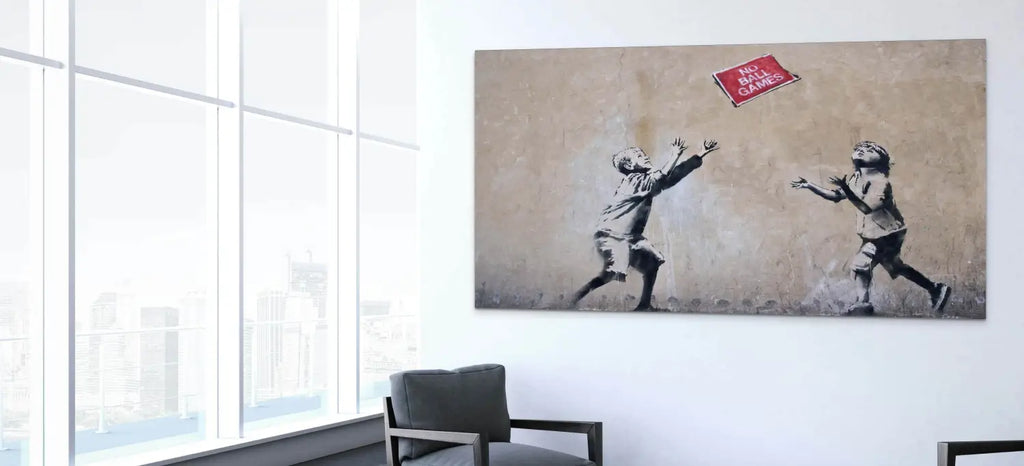
Discover our collections inspired by urban art
FAQ: Street Art in France
What is Street Art?
Street Art refers to a set of artistic practices created in urban spaces: graffiti, stencils, paste-ups, stickers, posters, installations, and wall murals.
What is the difference between graffiti and Street Art?
Graffiti is part of Street Art culture, but Street Art encompasses a much broader range of artistic techniques and practices.
Where can you see Street Art in France?
Paris, Bordeaux, Lyon, Marseille, Lille, and many other cities have places and districts where urban art is especially present. Street Art City and Street Art Avenue are also among the well-known destinations for enthusiasts.
Why is Street Art so popular?
Because it is directly visible in public space and often blends creativity, color, messages, and references to contemporary culture.
Can Street Art be incorporated into a modern interior?
Yes. An urban artwork can even create a beautiful contrast with understated furniture, a white wall, or minimalist decor.
Which Street Art wall art should you choose for a living room?
On a large wall, a generous format is often preferable. Choose a work whose colors and world reflect your personality and the atmosphere of the room.
Which medium should you choose for Street Art?
Stretched canvas offers an artistic finish, the black floating frame enhances contrasts, the white frame brings greater lightness, and Plexiglass gives a glossy, highly contemporary look.
Street Art in France: an art form that never stops reinventing the city
From graffiti to large murals, from anonymous walls to artistic trails, Street Art has evolved profoundly.
Yet it continues to preserve what gives it its strength: a direct relationship with the public, the city, and emotions.
And today, this world is no longer limited to the streets. It also finds its place in living rooms, bedrooms, and living spaces.
Because deep down, whether it is painted on a façade or installed on an interior wall, Street Art always has the same mission: to catch the eye and stir something.
Explore the Street Art Collection