
Living Room Decor Guide
What size wall art should you choose above a sofa? The answer depends first on the width of the sofa, then on the height of the wall, the artwork's format, and whether there is a console table or bookcase. With a few measurements, you can create a balanced arrangement without guesswork.
The simplest guideline is to choose a piece of wall art or an arrangement that covers approximately two-thirds to three-quarters of the sofa's width. This proportion draws the eye toward the center of the living room without making the artwork look as though it is floating on an overly large wall.

1. The Two-Thirds Rule: The Best Starting Point
Wall art placed above the sofa naturally becomes the focal point of the living room. If it is too narrow, the wall looks empty and the sofa appears disproportionate. If it is too wide, the artwork dominates and makes the arrangement feel heavy. The 2/3 to 3/4 rule creates visual breathing room on each side while clearly connecting the furniture and the wall.
Measure the total width of the arrangement, not just the canvas. For a triptych, add together the widths of the panels and the spaces between them. For a gallery wall, measure the overall width of the group. This is the total dimension that should be compared with the sofa.

2. Measure the Wall and Available Space
Start by measuring the width of the sofa from end to end. Then measure the height between the top of the backrest and the ceiling, noting any constraints: wall lights, windows, outlets, shelves, or radiators. These elements may affect your chosen size, even when the width is right.
Create a Template Before Drilling
Cut paper or cardboard to the dimensions you are considering and secure it with painter’s tape. View the result from the sofa, the room entrance, and the sides. This method lets you compare horizontal, vertical, or square formats without moving furniture or making multiple holes.
- Measure the sofa and the total width of the wall.
- Identify outlets, light fixtures, and any elements that cannot be moved.
- Allow enough space for mounting and opening windows.
- Test the size with a full-scale template.

3. Match the width of the wall art to the sofa
Here are approximate guidelines based on the two-thirds to three-quarters rule. They refer to the total width of the artwork or composition, including frames and spacing. Adjust them if the wall features a window, alcove, or tall piece of furniture.
| Sofa width | Width of the wall art or composition | Suggested format |
|---|---|---|
| 160 cm | Approximately 105 to 120 cm | A horizontal format or two small framed pieces. |
| 180 cm | Approximately 120 to 135 cm | Panoramic wall art or a balanced pair. |
| 200 cm | Approximately 130 to 150 cm | A large horizontal format or a triptych. |
| 240 cm | Approximately 160 to 180 cm | XXL wall art or a three-panel composition. |
| 280 cm | Approximately 185 to 210 cm | Panoramic wall art or a structured gallery wall. |
For a corner sofa, use the main side visible from the room entrance as your reference. Avoid following the sofa’s entire length if this means the wall art extends too far above the chaise section. Wall art centered over the most frequently used section will often look more harmonious.

4. Choose the hanging height
The height complements your choice of width. As a general rule, leave approximately 15 to 25 cm between the top of the sofa and the bottom of the wall art. This guideline can be adjusted depending on the depth of the backrest, the ceiling height, and whether you are creating a multi-panel arrangement.
The center of the artwork should remain close to eye level, but the measurement of 145 to 150 cm from the floor is only a guideline. In a living room where it will mainly be viewed from the sofa, sit down to check the alignment. The artwork should be comfortable to look at, without feeling as though it is hung too high.
- Measure from the top of the backrest, not just from the floor.
- Keep a consistent gap between the wall art and the sofa.
- Align the center of the artwork with the center of the sofa.
- Adjust the height if a lamp or shelf creates a constraint.

5. Large wall art or several smaller pieces?
Large wall art: an instant focal point
A large horizontal wall art piece is ideal for a straight sofa and an uncluttered wall. It keeps the decor simple while giving the artwork a strong presence. Choose this option if you prefer clean, easy-to-read arrangements and want the image to be instantly recognizable upon entering the room.
A triptych or gallery wall: greater flexibility
Several small wall art pieces can add rhythm to a large wall and allow the arrangement to evolve. Add up their widths, then include the spaces between the frames to ensure the overall arrangement follows the two-thirds rule. Keep the spacing even and use a common alignment, even if the images differ.

6. Choosing the style of wall art for your living room
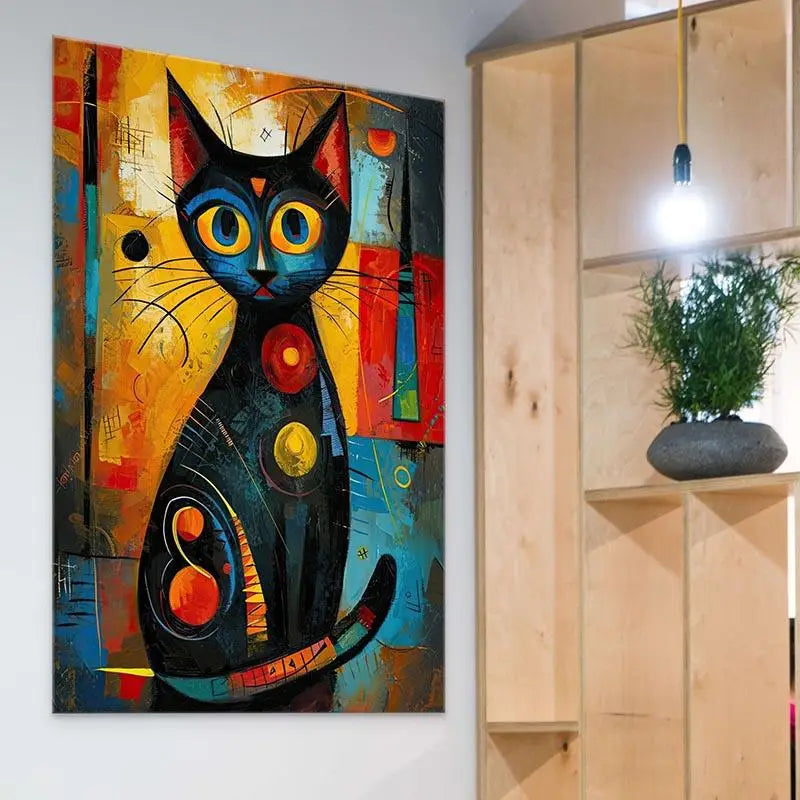
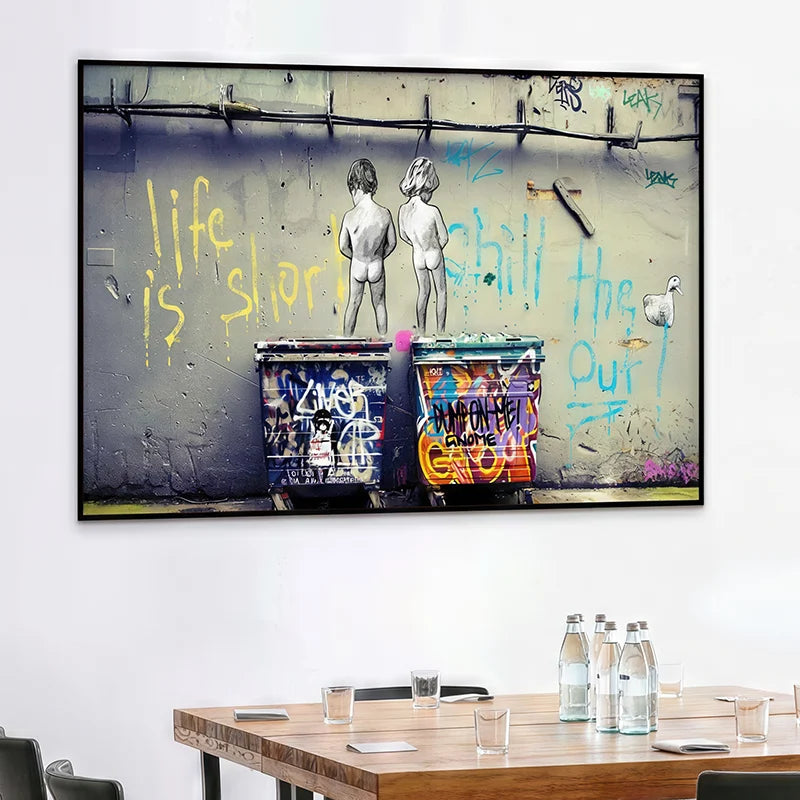
Size alone is not enough: the subject and style should complement the furniture. Contemporary wall art with clean lines suits a modern living room. An abstract artwork can bring movement to a neutral space. A photograph adds a personal story, while street art or pop art brings more energy.
- Minimalist living room: simple shapes, balanced contrast, and a discreet frame.
- Warm living room: landscapes, natural textures, and earthy and wood tones.
- Contemporary living room: graphic abstract art in black and white, blue, or gold.
- Colorful living room: a bold artwork complemented by matching accents.
To compare styles suited to a living room wall, browse our contemporary wall art collection or discover the more graphic designs in our modern wall art collection.

7. Coordinate colors, materials, and frame
Echo one or two colors from the wall art in the cushions, rug, or an object on the coffee table. This repetition creates a common thread without requiring every shade to match exactly. If the artwork is very colorful, let the walls and sofa play a more neutral role.
The frame should complement the artwork. Black highlights a graphic design, white lightens a bright composition, and a wood finish adds warmth to a natural interior. For a cohesive look, choose a finish that also complements the sofa legs, lighting fixtures, or furniture handles.

8. Which medium should you choose for wall art above the sofa?
The medium influences the finish, weight, and how light reflects off the artwork. Available options depend on the selected design and size, but several solutions are well suited to a living room.
- Frameless poster: a lightweight option that lets you choose the frame.
- Stretched canvas on wooden frame: a warm finish without glass that blends easily into any interior.
- Black or white floating frame: a sleek finish that defines the edges.
- Plexiglass: a glossy, contemporary surface that should be protected from direct glare.
For a large piece, check the total weight and use wall-appropriate fixings. For a multi-panel arrangement, carefully mark the hanging points to maintain even alignment.
9. Illuminate and showcase the artwork
Directional lighting brings out the colors and details of the wall art. Use a wall light or adjustable spotlight, positioned slightly off-center from the surface. Avoid direct reflections from the light source on Plexiglass or glass, and check the result from where you usually watch television or chat with your guests.
- Opt for soft, adjustable lighting.
- Avoid overly powerful spotlights that distort the colors.
- Test the lighting both in the evening and during the day.
- Keep the area around the sofa clear for easy movement.

10. Mistakes to avoid
- Choosing based solely on the size of the wall: the sofa remains the main reference point.
- Forgetting frames and gaps: the total width is often underestimated.
- Hanging it too high: the artwork no longer connects with the furniture.
- Overcrowding the wall: bold wall art needs space to breathe.
- Overlooking reflections: light can make the artwork difficult to see.
- Copying an arrangement without measuring: every living room has its own proportions.
If you are unsure, start with a template and compare two similar sizes. The best wall art is not necessarily the largest: it is the one that blends naturally with the sofa, the wall, and the way you use the room.
11. Frequently asked questions about wall art size above a sofa
How wide should wall art be above a sofa?
As a general rule, aim for between 2/3 and 3/4 of the sofa's width. For a 240 cm sofa, the arrangement can be around 160 to 180 cm wide, including gaps and frames.
How much space should you leave between the sofa and the wall art?
A gap of around 15 to 25 cm between the top of the backrest and the bottom of the wall art is a good starting point. Adjust it according to the height of the backrest and the size of the artwork, then check how it looks when seated.
What size should you choose for a 2-meter sofa?
A total width of around 130 to 150 cm generally works well. You can choose horizontal wall art, a triptych, or two complementary pieces, including the gaps between the panels.
Is one large piece of wall art better than several smaller ones?
One large piece of wall art creates a simple, powerful focal point. Several smaller pieces offer greater flexibility and allow you to tell a story. In both cases, check the total width of the arrangement in relation to the sofa.
What wall art should you choose for a modern living room?
Contemporary, modern, or abstract wall art pairs beautifully with clean lines. Choose colors that complement the sofa, wall, and accessories, then leave some breathing room around the artwork.
Find the size that brings balance to your living room
Measure your sofa, determine the desired total width, then choose the style that best reflects your personality. Discover our modern and contemporary wall art to create a balanced display above your sofa.
Discover modern wall art