
How to hang wall art correctly?
You've found the perfect wall art, but are still hesitant to drill into the wall? Learn how to hang wall art neatly, choose the right mounting hardware for its weight and the wall type, determine the ideal height, and create a harmonious arrangement without any unpleasant surprises.
1. Choose the location and identify the wall type

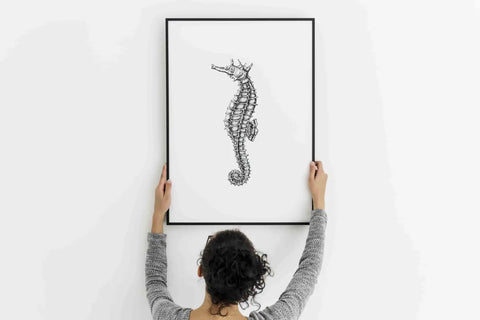
Before reaching for the hammer, take a look around the room and choose the wall you want to highlight. Above a sofa, console table, sideboard, or headboard, wall art naturally becomes a focal point. In an entryway or hallway, choose a size that leaves enough room to move around comfortably.
The wall material determines which mounting hardware to use. Drywall is not handled in the same way as a brick or concrete wall. Tiles also require care to prevent cracks. If in doubt, consult the instructions for the wall, mounting system, or wall anchor before drilling.
- Drywall: use mounting hardware designed to support the weight and, if possible, locate a stud.
- Brick or concrete: choose a wall anchor and screw suited to the material.
- Tiles: avoid drilling whenever possible; otherwise, use a suitable drill bit and start without the hammer setting.
- Painted or wallpapered wall: check the condition of the surface before using adhesive mounting strips.
To easily refresh your decor, start by choosing a piece from our decorative wall art collection, then select a location suited to its dimensions and mounting system.
2. Prepare the tools and mounting hardware

A successful installation starts with the right tools. Prepare a tape measure, spirit level, pencil, painter's tape, and mounting hardware suited to the weight of the wall art. A drill is not always necessary for a small poster, but it is useful when installing a wall anchor or a sturdier mounting system.
For lightweight wall art
A small frame or framed poster can generally be hung on a picture hook or lightweight mounting hardware suitable for your wall. Always follow the maximum weight indicated on the packaging and avoid using a simple thumbtack for delicate artwork.
For medium-weight wall art
Choose a picture hook, a screw with a wall plug, or two mounting points if the frame is wide. Two points reduce the risk of the artwork rotating and make it easier to level.
For heavy wall art
A large-format piece, mirror or multi-panel wall art requires mounting hardware designed to support its weight. Locate a wall stud whenever possible, or use wall plugs designed for the wall material. For XXL sizes, also check the strength of the hanging system installed on the back of the wall art.
Finally, turn the frame over to identify its hanging system: wire, D-rings, sawtooth hanger or dedicated mounting hardware. The screw or hook must be compatible with this component without putting pressure on the frame.
3. Measure, preview and mark the position

Most mistakes result from marking the position too quickly. Start by measuring the width of the wall and the wall art. Above a piece of furniture, generally leave 15 to 25 cm of space between the furniture and the bottom of the artwork, then adjust this distance to suit the ceiling height and your furniture.
For a single piece, position its centre approximately 1.45 to 1.55 m from the floor as a starting point. Adjust this height if the wall art is above a sofa, bed or console table. Visual comfort matters more than a rigid measurement.
The paper template technique
- Measure the wall art and transfer its dimensions onto kraft paper or cardboard.
- Cut out the template, then temporarily attach it to the wall with painter's tape.
- Step back a few metres to check the scale, height and alignment.
- Mark the position of the mounting hardware directly on the template.
This method also works for a gallery wall. You can move the templates until you achieve a balanced arrangement without drilling multiple holes in the wall.
4. Mount and hang the wall art

Once the marks are confirmed, install the mounting hardware according to the manufacturer's recommendations. If drilling, use a drill bit suitable for the wall and check that there are no cables or pipes behind the chosen spot. If using a wall plug, the hole diameter must precisely match the size indicated on the packaging.
- Protect the floor and keep the screws, wall plugs, and tools within easy reach.
- Drill or drive the mounting hardware in while keeping the tool perfectly straight.
- Leave the screw protruding just enough to hold the wire or hanging ring.
- Hang the wall art with both hands, then check that it is level.
- If necessary, add small pads to the back to stabilize the frame.
For a large piece or multiple panels, do not rely on a single central point if the manufacturer recommends several mounting points. A secure installation protects the wall art, the wall, and anyone moving around the room.
5. Install wall decor without drilling

Are you renting, or do you enjoy rearranging your interior? Several solutions allow you to display artwork without using a hammer. They are best suited to lightweight wall art and smooth, clean, completely dry surfaces.
Place the wall art on a shelf
A picture ledge creates a relaxed display that is easy to update. Place larger pieces at the back, then layer a small frame, book, or low-profile object in front. Make sure the depth and raised edges of the shelf prevent the artwork from slipping.
Use a picture rail
A picture rail allows you to hang several frames using cables and hooks. The arrangement can be changed without drilling new holes in the wall, making it practical for an evolving collection. This solution is particularly well suited to gallery-style interiors.
Use adhesive mounting
Adhesive strips or hooks should be selected according to the actual weight of the wall art and the wall surface. Follow the specified setting time and avoid using this method above a bed or sofa, or in an area where falling wall art could injure someone. For heavy wall art, mechanical mounting remains the better option.
Create a harmonious gallery wall
Multiple pieces of wall art can add rhythm to a wall, provided they share a common thread. You can group pieces by color, theme, frame type, or style. A successful arrangement does not need to be perfectly symmetrical, but it should feel intentional.
- Spacing: generally leave 5 to 10 cm between frames and adjust according to their size.
- Alignment: align the top edges, bottom edges, or center line.
- Palette: use a shared hue to tie different subjects together.
- Breathing room: leave some open space around the arrangement to avoid a cluttered look.
For a contemporary gallery wall, you can combine an unframed poster, stretched canvas and floating frame, provided you maintain a cohesive color palette. Explore our modern wall art and abstract wall art to create a personalized display.
Finally, there is no need to frame every artwork. A stretched canvas can be displayed on a shelf, while an unframed poster can retain an intentionally minimalist look. The key is to protect the piece and choose a presentation suited to the room.
Frequently asked questions about hanging wall art
At what height should you hang wall art?
As a guide, position the center of the artwork around 1.45 to 1.55 m from the floor, then adjust the height to suit the furniture below. Above a sofa or bed, proportion and visual comfort should take priority.
How do you hang heavy wall art on drywall?
Locate a wall stud if possible, then use mounting hardware designed for the weight and type of drywall. For large-format artwork, seek professional advice rather than relying on a universal wall plug.
Can you hang wall art without drilling holes?
Yes, with a picture ledge, picture rail or suitable adhesive mounting system. Adhesive solutions are best suited to lightweight artwork and smooth surfaces.
How can you keep wall art from tilting?
Use two mounting points for a wide frame, check the level after installation and add stabilizing pads to the back. Also ensure that the wire or rings are properly tensioned.
Conclusion: how to hang wall art properly
Hanging wall art becomes much easier when you work step by step: assess the wall, choose the right mounting hardware, plan the layout, measure precisely and check the level after installation. This preparation allows you to showcase the artwork while protecting your wall.
Whether you choose an unframed poster, stretched canvas, floating frame or acrylic glass print, the right installation transforms simple wall decor into a true focal point. All that remains is to select the artwork that best reflects your interior and personality.