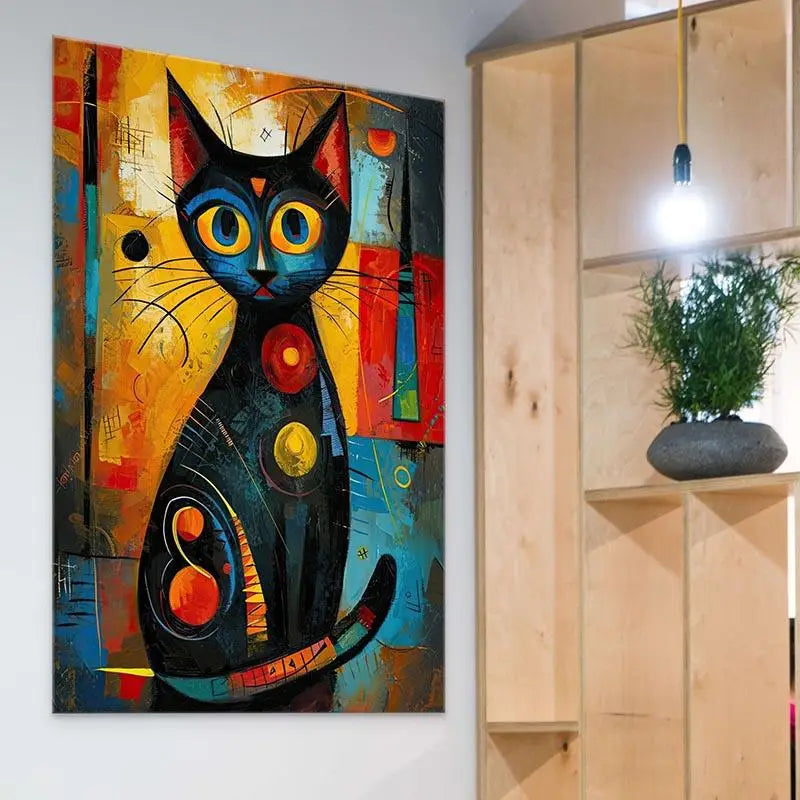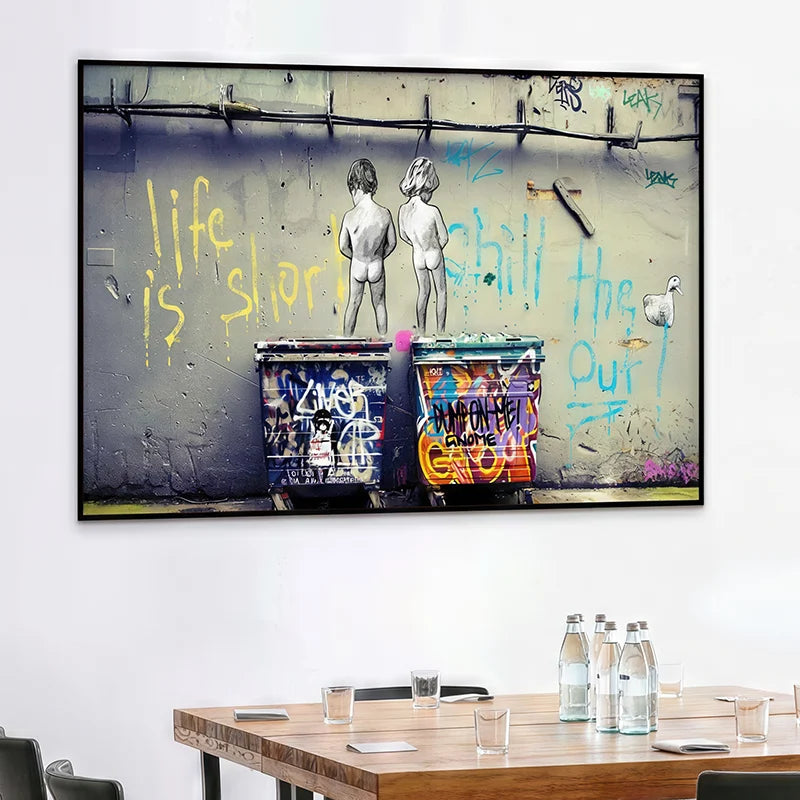

A welcoming sofa, a well-chosen rug… and a TV area that still feels unfinished? To create a harmonious living room, the TV unit and wall décor should be considered together. Their proportions, colors, and placement influence the balance of the entire room.
There is no need to completely redesign your interior. A better-suited TV unit, discreet cables, and wall art placed in the right spot can transform the atmosphere. Here are six tips for creating a TV wall that is both attractive and practical for everyday use.

1. Choose the right proportions for your TV unit
A TV unit should not be chosen based solely on the screen size. The available wall width, the depth of the living room, and the space taken up by other furniture also matter. The goal is to create a cohesive visual foundation without obstructing movement.
Consider the entire wall
A unit slightly wider than the TV can create a balanced look. Conversely, a screen that extends far beyond the unit on either side can make the space feel cramped. This is simply an aesthetic guideline to adapt to your room: above all, make sure the TV feet rest fully on the top and that the unit can support its weight.
To compare sizes and configurations, browse the TV units at vidaXL. Keep your measurements handy: a model that looks appealing in a photo also needs to fit the space actually available in your home.
Test the height from the sofa
Sit in your usual spot and check that you can watch the screen without constantly tilting your head upward. The right height depends on your sofa, your posture, and the TV. Before drilling or ordering, mark out the unit and screen with masking tape suitable for your wall.
2. Wall-mounted or floor-standing TV unit: which should you choose?
Low profiles, simple fronts, and shallow units can make the TV area feel visually lighter. Both a wall-mounted unit and a model with legs can achieve this effect, though each has different requirements.

| Configuration | Benefits in the living room | What to check |
|---|---|---|
| Wall-mounted TV unit | Keeps the floor clear and makes cleaning underneath easier. | Wall type, fixings, and maximum permitted total weight. |
| Floor-standing TV unit | Creates a visual base and can be moved more easily. | Footprint, stability, and any required anti-tip anchoring. |
| TV unit with legs | Keeps the floor visible while providing storage. | Final screen height and access for cleaning. |
In a small living room, also consider depth: a shallow unit can help preserve valuable walkway space. In a large room, a wider arrangement helps fill the wall without adding multiple small decorative pieces.
3. Organize devices and conceal cables
Beautiful TV wall decor quickly loses its appeal when cables, game controllers, and remote controls begin to pile up. Before choosing storage, take stock of what needs to remain accessible: set-top box, console, soundbar, accessories, and power strip.
Combine closed storage with easily accessible spaces
Drawers and cabinets are ideal for storing small accessories. For devices that are used while running, check the manufacturer's clearance and ventilation requirements. An open compartment can be practical, but it must provide enough space for heat to dissipate.
- Consoles and set-top boxes: allow enough space for connections at the back.
- Remote controls and game controllers: set aside a drawer or small dedicated box.
- Cables: use the TV unit's cable management openings or a cable cover that matches the wall.
- Soundbar: keep the area around it clear, following the manufacturer's instructions.

4. Coordinate wall colors and materials
To create a cohesive living room, start with the elements already in place: sofa, flooring, curtains, and TV unit. Then choose a dominant color, a complementary shade, and, if desired, a bolder accent. This palette provides a common thread for both the wall art and the accessories.
Three easy color combinations to adapt
- Light wood, off-white, and blue: a bright foundation that works beautifully with artwork in natural tones.
- Black, beige, and terracotta: a warm combination that echoes the black of the screen in the frames.
- Oak, sage green, and cream: a soft palette to complement with a landscape or botanical composition.
A dark wall can soften the contrast with a switched-off screen, while a light wall emphasizes its outline. Test the paint at different times of day before deciding. If you keep the wall white, add color through wall art, a cushion, or ceramics.
5. How to decorate a TV wall with wall art
Wall art adds a decorative presence to the living room even when the TV is off. It allows you to express your taste, a memory, or a color that the furniture alone cannot convey. However, its placement should leave enough space around the screen.
Next to the TV: an airy arrangement
If the wall is wide enough, place a vertical wall art piece on one side of the screen. You can balance the other side with a lamp or plant, without aiming for perfect symmetry. Leave visual space between the elements and check the overall effect from the sofa.
Above the TV stand: consider the screen
Wall art above the TV can work well if there is enough height on the wall. However, avoid placing it close to the ceiling simply to fill an empty space. If the arrangement feels too crowded, hang the wall art on an adjacent wall or above the sofa instead.
Choose a cohesive subject and finish
To echo the lines of your furniture, explore our abstract wall art collection. A graphic composition or blocks of color can pick up some of the shades in your living room. You can also read our guide to choosing vibrant abstract wall art to refine your selection.
If you prefer figurative subjects, landscape wall art offers another avenue: the sea, mountains, or the horizon can become the starting point for your decor palette.
When it comes to materials, compare the options available on the product page: unframed poster, stretched canvas, black or white floating frame, or Plexiglass. A black frame can echo the outline of the TV, while a white finish can blend more subtly into a light-colored wall. For a glossy surface, consider the position of windows and lamps to anticipate reflections.
6. Perfect the lighting without overwhelming the TV area
A table lamp or indirect lighting can make the living room feel more inviting in the evening. Check its direction from where you sit: a light source reflected in the screen or wall art may be distracting.
To showcase wall decor near the TV, choose adjustable lighting and adapt its brightness to suit how the space is being used. Keep the top of the TV stand relatively uncluttered: a lamp, a vase, or a small group of objects is often enough to create an appealing display.
Final checks
- Does the TV stand leave enough room to move around and open its doors?
- Is the screen comfortable to watch from the sofa?
- Are the devices accessible and properly ventilated?
- Is there enough space around the wall art?
- Does the lighting create distracting reflections in the evening?
Frequently asked questions about styling a TV wall
What decor should you place around a TV?
Choose a few coordinated pieces: wall art, a lamp, and perhaps a plant. Echo colors already present in the living room and leave some areas of the wall bare to keep the overall look from feeling cluttered.
Should the TV stand be wider than the TV?
A wider TV stand can create a balanced visual base, but it is not an absolute rule. Check the wall dimensions, make sure the screen's feet are fully supported, and check the maximum weight capacity specified for the TV stand.
Can you hang wall art above the TV?
Yes, if the available height allows for an airy arrangement. If the wall art ends up too high or too close to the screen, consider placing it to the side or on another wall in the living room.
How do you style a TV wall in a small living room?
Choose a TV stand with a depth that allows people to move around easily, suitable storage, and minimal accessories. A wall-mounted model can free up floor space if the wall and mounting hardware are suitable for installation.
What color should you choose behind the TV?
The choice depends on the lighting and furniture. Off-white or beige creates a light backdrop, while a darker shade can reduce the contrast with the screen when it is off. Test a sample during the day and in the evening.
Add a personal touch to your living room
Once you have chosen the furniture and storage, wall art can tie the room's colors together and add character to the wall. Compare different arrangements, then choose the size and material best suited to your space.
Find wall art for my living room