
Understanding Pop Art: History, Artists and Wall Decor Inspiration
Pop Art is an artistic movement known for its bold colors, repeated imagery and fascination with popular culture. Advertisements, comic strips, celebrities, consumer products and cinema became artistic subjects in their own right.
Born in the United Kingdom in the 1950s before flourishing in the United States in the 1960s, Pop Art changed the way people viewed everyday images. Today, its visual codes blend effortlessly into wall decor through colorful portraits, graphic compositions and wall art inspired by pop culture.
1. What is Pop Art?

The term Pop Art comes from the English expression “popular art.” The movement focuses on images seen by the widest audience: packaging, advertisements, magazines, comic strips, movie stars and mass-produced objects.
At a time when television, advertising and consumerism were playing an increasingly prominent role, Pop Art artists chose to portray this new reality. They did not always seek to beautify their subjects. They enlarged, repeated, cropped or isolated them to question our relationship with images.
Art inspired by everyday culture
Pop Art blurs the line between fine art and mass culture. A soup can, a comic strip or a celebrity portrait can become the starting point for a work of art. This familiarity explains why the movement remains accessible: viewers recognize the subject, then discover a new way of looking at it.
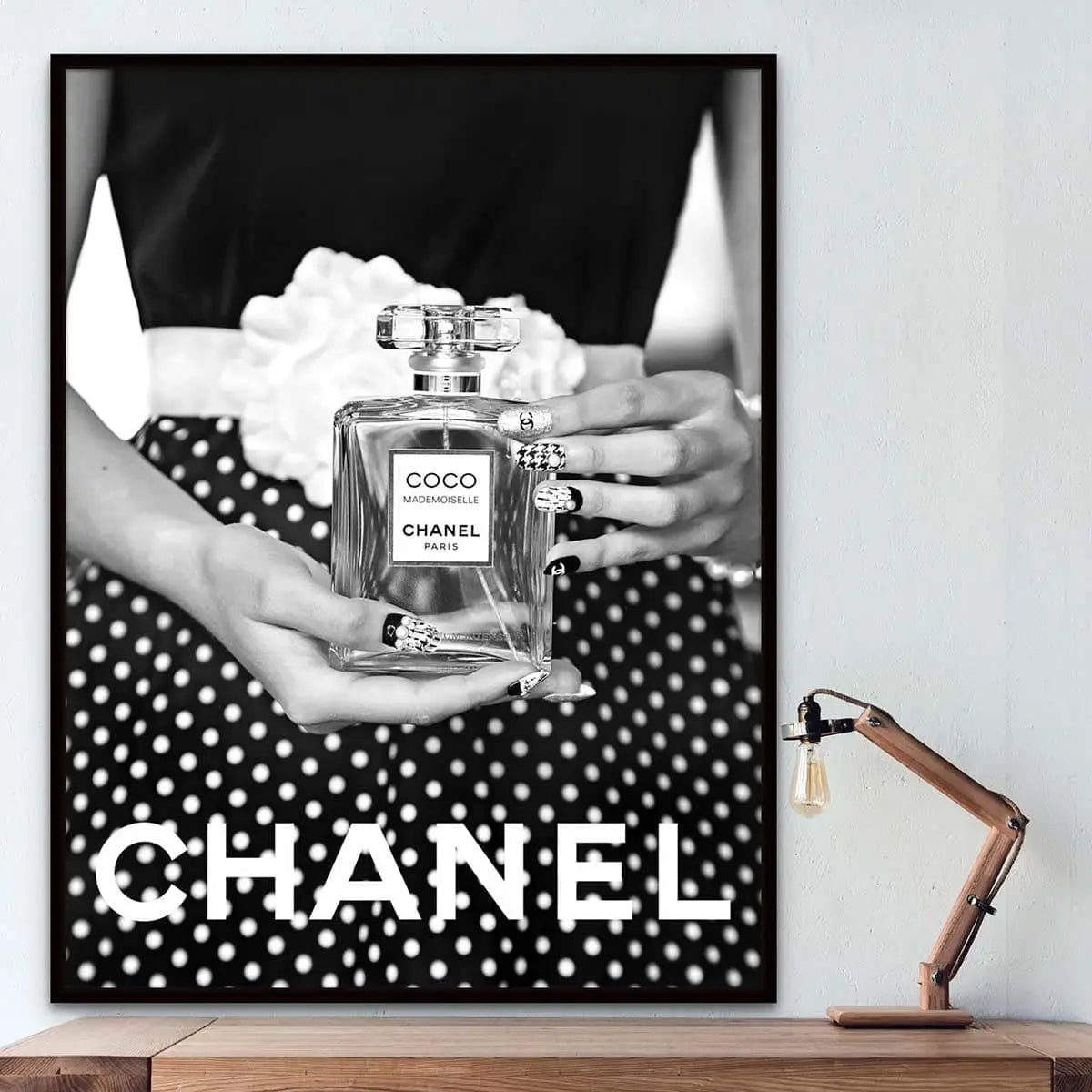
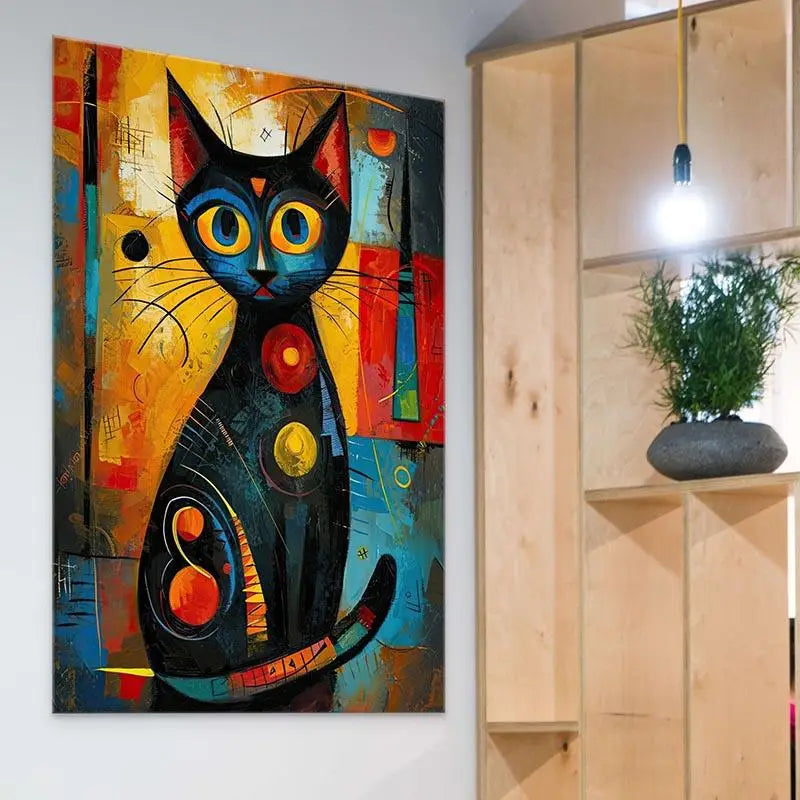
This approach can still be seen today in decorative Pop Art wall art, which uses the movement's iconic colors, contrasts and compositions to create original wall decor.
2. How did Pop Art emerge?

Pop Art emerged in the United Kingdom in the mid-1950s, against a backdrop shaped by the post-war era, the rise of advertising and the influx of new imagery into people's homes. Artists observed consumer society and explored the role of media in everyday life.
The Independent Group and Early Explorations
In London, artists and intellectuals associated with the Independent Group explored advertising, design, science fiction and cinema. Eduardo Paolozzi and Richard Hamilton contributed to this exploration, which helped lay the foundations of the British movement.
The Development of Pop Art in the United States
The movement then gained considerable momentum in the United States. Artists embraced images from supermarkets, celebrity portraits, comic books and symbols of American success. Andy Warhol and Roy Lichtenstein became the best-known figures of this period, each with a distinct method and aesthetic.
Pop Art was not limited to London and New York. Its visual language spread to many countries and influenced photography, graphic design, fashion, music, advertising and design. This ability to engage with multiple fields explains its enduring presence in contemporary visual culture.
3. What Influenced Pop Art?

Dadaism: Subverting Objects and Conventions
Dadaism showed that an everyday object, found image or assemblage could become a work of art. This freedom to subvert artistic conventions is also found in Pop Art, which transforms consumer goods and advertising images into creative subjects.
Collage and Assemblage
Collage brings together elements from different sources: magazine clippings, photographs, typography and illustrations. This technique creates contrasts and reflects the way images circulate through the media.
Advertising and Consumer Society
Advertising provides Pop Art with much of its visual vocabulary: slogans, logos, packaging, bold colors and repeated messages. The movement does not always celebrate consumerism; it can also expose its excesses and trivialization.
Comics, Cinema and Music
Comic book panels, onomatopoeia, celebrity portraits and album covers fuel the Pop Art imagination. These references give the artworks an immediate impact and explain their influence on interior design, fashion and visual communication.
4. What Are the Characteristics of Pop Art?

Pop Art is about more than bright colors. Its identity comes from the combination of popular subject matter, graphic treatment and critical distance. An ordinary image can become surprising when enlarged, repeated or placed in an unusual context.
| Visual code | Function | Decorative effect |
|---|---|---|
| Bold colors | Draw the eye and amplify the subject. | Adds energy to a neutral wall. |
| Repetition | Transform a single image into a pattern. | Creates a highly graphic visual rhythm. |
| Bold outlines | Evoke the world of comic books. | Makes the artwork easier to read from a distance. |
| Everyday objects | Question consumerism and everyday habits. | Makes the artwork familiar and accessible. |
| Humor and subversion | Provoke a reaction or reflection. | Gives the room a distinctive personality. |
Colors that instantly catch the eye
Red, yellow, blue, pink, green or orange: Pop Art colors are often bold and contrasting. In an interior, they can brighten up a white wall or echo a palette already present in the furniture. If the room is already very colorful, opt for a piece with a clear, balanced composition.
Repetition and series
Repeating the same portrait or object changes how we perceive the image. The series draws the eye and creates a sense of movement. This principle also works with several coordinated pieces of wall art, as long as the sizes and colors remain connected.
Collage and visual references
The layering of images and typography evokes magazines, posters and advertising culture. It adds depth to the composition while enhancing its urban, contemporary feel.
5. Who are the major Pop Art artists?

Several artists helped define and popularize Pop Art. Their approaches differ, but they all explore the role of popular imagery in modern society.
| Artist | Approach | Associated themes |
|---|---|---|
| Andy Warhol | Repetition, screen printing and media portraits. | Celebrities, consumer products, the Factory. |
| Roy Lichtenstein | Black outlines, Ben-Day dots and comic-book framing. | Comics, dialogue, heroes and dramatic scenes. |
| Richard Hamilton | Collage and analysis of consumer society. | Advertising, domestic interiors and mass culture. |
| Eduardo Paolozzi | Collages and the repurposing of industrial imagery. | Machines, science fiction and popular media. |
| Pauline Boty | Colorful painting, portraits and a critical perspective on society. | Popular culture, celebrities and the role of women. |
Decorative prints inspired by these styles should not be confused with original or signed works of art. They draw on graphic elements to create an accessible Pop Art atmosphere in a contemporary interior.
6. How can you incorporate Pop Art into your decor?

Pop Art wall art can become the centerpiece of a living room, office or bedroom. To avoid a cluttered look, give the artwork room to breathe and choose more understated furniture around it. A single large, colorful piece is often enough to transform a wall.
In the living room
Hang a large portrait or graphic composition above the sofa. Echo one color from the wall art in the cushions or a decorative object without recreating the entire palette. Bright colors stand out particularly well against a white wall.
In the bedroom
Choose a less elaborate composition or slightly softer colors. A graphic portrait, silhouette or fashion-inspired piece can add character without making the room feel heavy. Check that it is securely mounted if the wall art is placed above the bed.
In the office or entryway
These spaces are perfect for the boldest designs: typography, colorful portraits, collages or cinematic references. A vertical format accentuates a narrow entryway, while a collection of small wall art pieces can add rhythm to a hallway.
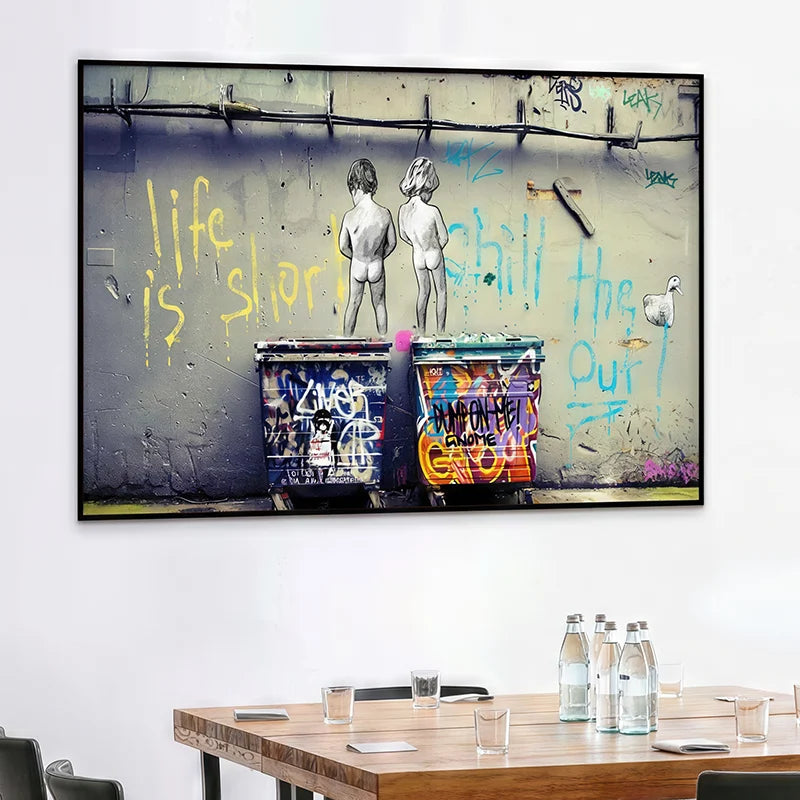
To extend this look, you can pair Pop Art with street art. Explore our selection of street art wall art or our guide to creating original decor with urban art.
7. Which size and material should you choose?
Measure the wall and the furniture below it before choosing your wall art. Above a sofa, a width of around two-thirds to three-quarters of the furniture's width creates a balanced look. A large format works well on an open wall, while several smaller pieces create a more dynamic gallery wall.
| Material | Appearance | Ideal for… |
|---|---|---|
| Frameless poster | Lightweight and versatile. | Choose your own frame or easily refresh your decor. |
| Stretched canvas on wooden frame | A warm, ready-to-hang finish. | A contemporary-style living room or office. |
| Black floating frame | A graphic, high-contrast border. | Modern, urban or industrial decor. |
| White floating frame | A bright, lightweight finish. | A bright or Scandinavian-inspired interior. |
| Plexiglass | Glossy surface with a contemporary look. | A well-lit wall without distracting direct reflections. |
Dimensions, finishes, and prices depend on the selected model. Check the product page before ordering, and verify the image orientation, available space, and mounting system. Find more inspiration in our Pop Art collection.
8. Mistakes to avoid with Pop Art decor
- Overcrowding the room: a bold artwork needs space around it.
- Mixing too many colors: use only one or two shades from the wall art.
- Choosing a size that is too small: measure the wall and furniture before purchasing.
- Overlooking reflections: check the lighting before choosing Plexiglass.
- Hanging it too high: position the center of the artwork at eye level.
- Confusing a print with an original: check the product page to find out what medium is used.
Frequently asked questions about Pop Art
What is Pop Art in a few words?
Pop Art is an art movement that emerged in the United Kingdom in the 1950s and notably developed in the United States during the 1960s. It draws inspiration from advertising, celebrities, comic books, and consumer goods.
Why does Pop Art use such vivid colors?
Bold colors draw the eye and evoke advertising, industrial printing, and media imagery. In interior design, they can bring a neutral wall to life.
Which Pop Art wall art should you choose for a living room?
A colorful portrait, a comic book-inspired composition, or a graphic collage can work well. Choose a size that is proportional to the sofa and echo one of the colors from the wall art in a few accessories.
What is the difference between Pop Art and street art?
Pop Art mainly focuses on images from mass culture and consumerism. Street art is rooted more in urban spaces and notably uses graffiti, stencils, and collage. However, both styles can come together in contemporary interiors.
Is Pop Art wall art an original work?
A decorative print inspired by Pop Art is not an original painting or a signed piece. Check the product page for precise details about the available medium and finish.
Add color to your walls
Explore the Montableaudeco collection and find Pop Art wall art to suit your style, your space, and your preferred medium.
Discover Pop Art wall art