
I am delighted to invite you to embark on this captivating journey through the new frontiers of picture art. By exploring the advantages of innovative materials, revolutionary techniques, and personalization technologies, you will discover a universe of opportunities to express your creativity in a truly unique way. You will also get an overview of current trends, which will enrich your understanding of modern art. Don’t miss this opportunity to open your mind to new artistic horizons.
1/ New materials in picture art
Innovation is the cornerstone of the world of modern art. Artists, with a passion inextinguishable, constantly push the boundaries of tradition, using new materials to bring their vision of the world to life. And I am here to show you how these new and exciting materials are used in modern picture art.
Contemporary painters embrace the advent of new technologies and new materials to create unprecedented works of art. Wood, canvas, and clay are no longer the only available mediums. Synthetic materials, such as epoxy resins and acrylics, bring a new dimension to paintings. I watch with fascination how these materials offer a depth and brilliance unmatched, almost like 3D. Works created with these epoxy resins have a smooth, shiny surface that makes the colors stand out intensely.
When I think of art that harnesses innovation, I invariably turn to artists who use these new techniques. They assemble these materials in a way that evokes a sense of movement and energy. Then, the digital makes its entry, galloping in a revolution in picture art.
Art digital, in particular, has shed new light on how we create and appreciate art. Digital paintings, sometimes incorporating animations, combine visual and sound elements to create an immersive experience for the viewer. The artist’s journey is thus simplified, allowing for greater freedom of expression.
But that’s not all, as other techniques avant-garde are emerging. I have seen artists create with concrete, fiberglass, recycled metal, and even phosphorescent materials. We are indeed living through an exciting time for the art of painting.
So yes, new technologies and modern materials are paving the way for more innovative and exciting artworks that stimulate and nourish our imagination. The art world is changing, and I am delighted to share these developments with you. fascinating and inspiringLet's remember that art is not set in stone; it changes with us, constantly enriched by the new techniques and materials that come to light.
2/ The innovative use of traditional materials
Revisiting Wood in Modern Art
Have you ever thought about how wood, an age-old material, could be reinvented inmodern art ? Well, using this material offers a visual experience that is both innovative and familiar. In fact, the use of wood is deeply rooted in art history. From tribal totems to Michelangelo's sculptures, this material has shaped the history of humanity, holding within its fibers the reflections of our lives.
As highlighted in a study byArtsy (2019), wood is now used for a distinctly more contemporary purpose. The material is no longer only molded or sculpted; it is transformed through new techniques using natural pigments, incorporated into contemporary painting.
- Resilience and the sustainability of wood: an unparalleled visual rendering.
- High-temperature heating: obtaining unique textures and patterns.
- Science of natural pigments : creation of a wide range of colors.
- Juxtaposing different wood species: an enticing contrast for the eye.
- Recycled wood : raising awareness of planetary conservation.
Refined Metals for Unique Wall Decoration
Now, let's move from wood to shining metalsDo you know of a more contemporary and bold way to decorate your walls? Metal is a fantastic way to bring a new and futuristic look to any artistic space. Its variety and flexibility allow for unparalleled freedom of expression.
Metal wall artworks, with their robustness and light-reflecting potential, provide a dazzling reinvention of what we consider art. Skillfully forged, worked, or molded, metal transforms into a true work of modern art.
Whether in stainless steelbrass, bronze, or in copper, each metal brings a new dimension to the work. I encourage you to embrace these new techniques and add an extra dimension to your interior decoration. In short, the materials of our daily lives, skillfully reinvented, can achieve wonders.
3/ The exploration of unconventional materials in art
The raw charm of resin in modern art
I tell you: the art world is boiling over. The texture of resin offers a an endless palette of possibilities. This material, at once delicate and robust, is used to create unique, colorful, and hypnotic designs. Resin delivers results as astonishing as they are unpredictable, offering a captivating contrast between opacity and transparency, raw and refined.
The experimentation with glass, a dreamlike escape
Glass, a material traditionally used for making utilitarian objects, is now celebrated in modern artistic creation. The experimental manipulation of glass leads to intriguing aesthetic explorations. The unique properties of this material, such as the refraction of light, its ability to be shaped, and its resistance, make glass an exciting choice for modern artists.
The age of fabrics in contemporary art
Integrating fabric into artworks is not a new concept. However, contemporary artists push the boundaries of this traditional material with remarkable boldness. Imagine canvases where threads of all textures and colors elegantly intertwine. Fabric brings a tactile dimension to art, inviting the viewer to experience a multisensory journey.
Artistic recycling, a green revolution
Finally, I would like to talk to you about artistic recycling, this fascinating practice that transforms waste into treasures. Worn and damaged objects find a second life through the creative vision of artists. By recycling everyday items, artists invite the viewer to reflect on our consumption habits and the role of recycling in our society. Artistic recycling is more than a trend, it is a deep commitment to the future of our planet.
Modern art is a land of endless exploration and innovation. Through the use of resin, the experimental exploration of glass, the integration of fabric, and artistic recycling, artists invite us to rethink our vision of art. Let us show curiosity and open-mindedness to discover these new dimensions of artistic creation.
4/ The new techniques revolutionizing paintings
Pictorial art, much like a living tableau, is constantly evolving. New techniques are emerging, bringing their own palettes of nuances and revolutionizing the world of modern paintings.
The art of aerosol painting: a colorful revolution
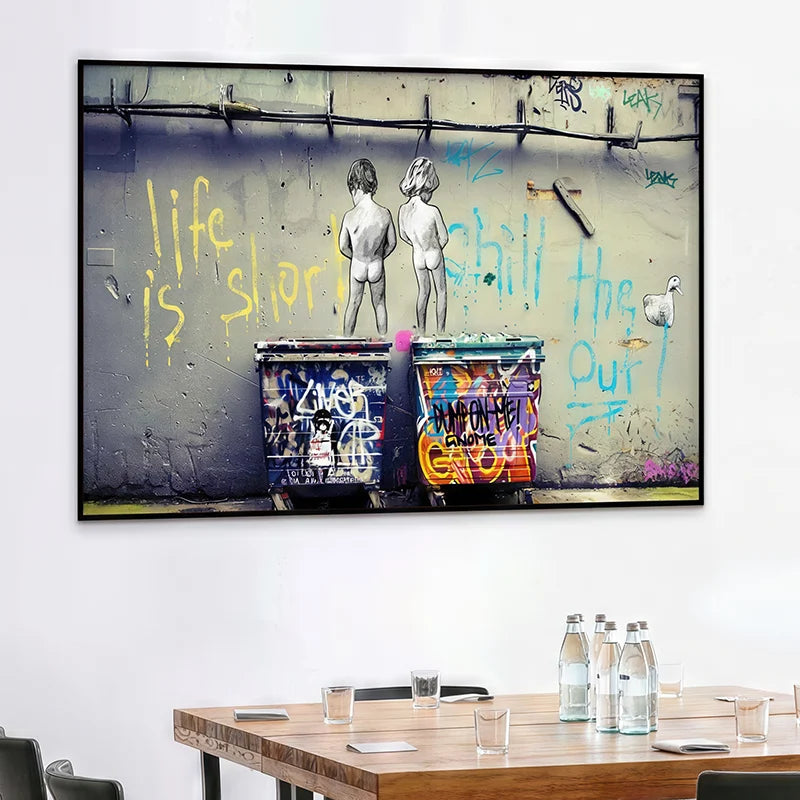
Aerosol painting, long reserved for street graffiti, has become a major tool in the creation of modern paintings. The subtle harmony between pressure, nozzle size, and spraying distance gives rise to an infinite range of textures, revealing astonishing nuances. The fine texture of aerosol paint provides a elusive fluiditya new depth, taking artworks to unexplored horizons.
The splash and dripping technique: beauty in chaos
Splash and dripping are methods that combine the fluidity of action with the density of material. Before your amazed eyes, every drop of paint, every splashcreates unique and unrepeatable forms that bring to life fascinating compositions. This technique allows for a large degree of unpredictability and spontaneityspontaneity, enabling both artist and observer to immerse themselves in a universe of constantly evolving colors and shapes.
The appealing marbling method on canvas: when art meets science
The marbling technique, which involves floating drops of paint on a liquid before transferring them onto the canvas, requires precision and meticulous control. Each color follows its own path, creating delicate patterns whose contours seem to evolve continuously. The capillarity capillarity and surface tension, combined with creativity, create works of art as whimsical whimsical as they are captivating.
Photorealism: precision, detail, and illusion
Photorealism pushes the boundaries of what the human eye perceives as real. Through this technique, the artist works out the details to eclipse reality and give birth to a new perception. A perspectivereflection, a textureevery particle is meticulously studied to create a perfect illusion of reality. A true masterpiece of precision, photorealism moves with its fidelity and impresses with its almost tangible rendering.
The rise of wall sculpture: a third dimension for paintings
Wall sculpture, by combining volume and painting, offers paintings an extra dimension. The forms detach, overlap, creating an interactive play between the flat surface of the wall and the work of art. The materiality of wall sculptures sets up a conversation with the space, staging stories where every viewing angle brings a new perspective.
Each of these techniques offers a renewed approach to pictorial art, revealing the endless possibilities to create and innovate. The world of modern paintings has never stopped reinventing itself, paving the way for inspiration and discoveries for future artists.
5/ Customizing paintings with new technologies
Have you ever considered how much technological advances can transform the art of painting?
Indeed, much more than a simple generational leap, we are witnessing a true revolution in the field of artistic creation. The customization of artworks is now part of the game, propelled by the arrival of increasingly precise and refined new technologies.
I invite you to consider with me how digital technology and new materials help redefine what a modern painting is.
At the heart of this upheaval, 3D technology truly plays its part. The 3D printers offer artists unprecedented possibilities to make their creations emerge. Imagine relief paintings, works with unique textures and innovative aesthetics, created with incredible precision!
Moreover, augmented reality also opens up unprecedented horizons for the customization of paintings. Artists can create interactive works that change depending on the viewing angle, the time of day, or even on the person observing them. The painting is no longer just a fixed object—it becomes a dynamic and evolving entity.
The use of new materials in the creation of artworks is another very important factor of innovation. As proof, conductive inks make paintings responsive to touch. It is even possible to link them to mobile applications to trigger virtual animations, sounds, or stories when certain areas of the painting are touched.
Finally, it digitization of painting offers artists almost infinite customization options. To paraphrase a famous saying, the only limit now is their imagination. Nothing is out of reach anymore: the use of unique colors, stunning lighting effects, 3D animations… All of this is now within reach.
From new cutting-edge personalization techniques to modern materials and various applications, the creation of modern paintings is experiencing a second Renaissance. And like any burgeoning phenomenon, it awaits only one thing: for you to be tempted by its captivating and innovative dance. So, are you ready to dive into the exciting world of modern art?
6/ Current trends in decorative paintings
Abstract and geometric designs: the new norm
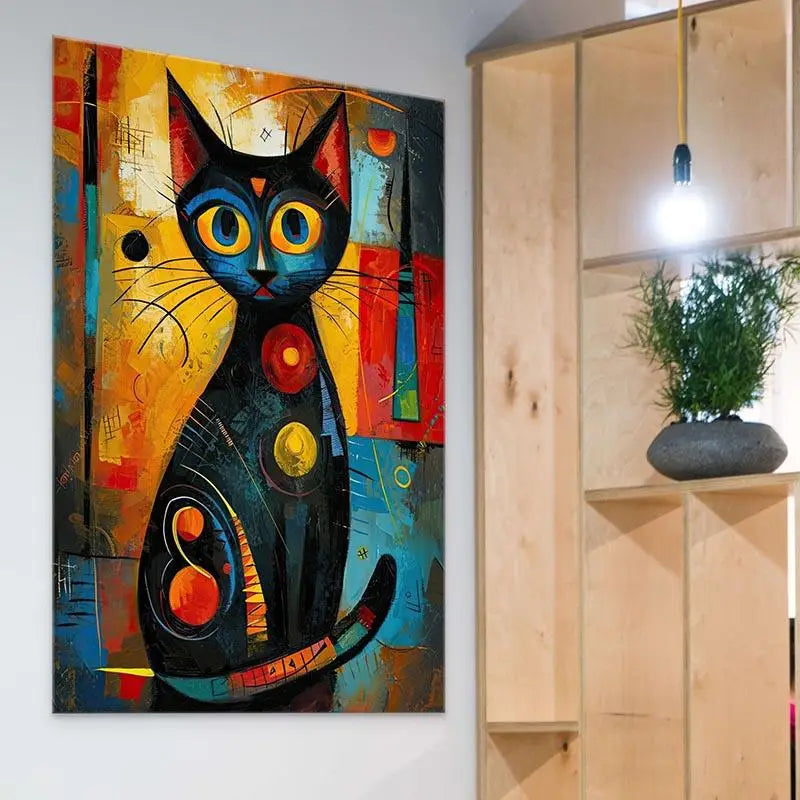
It's no longer surprising to see abstract and bold geometric shapes patterns in modern art galleries and, of course, in our homes. Their fragmentation offers a visual escape and stimulates the mind in a unique way. It's a subtle way to showcase one's personality and sense of creativity.
- Build layers of shapes and colors to create visual depth.
- Play with contrasting tones to attract attention.
- Explore minimalist forms for a calming effect.
- Experiment with elements of nature for an emotional touch.
- Incorporate textures to provide a tangible feel.
Beyond the classic: the era of technology and innovation
It is undeniable that art has evolved over time. And recently, a remarkable breakthrough has emerged, as reported by ScienceDaily. Nanotechnology is reshaping the boundaries of traditional art, allowing the creation of paintings with colors that change depending on the lighting. Imagine artworks that literally transform before your eyes!
This integration of technology renews our perception of art. The classic painting is enhanced and comes even closer to our daily lives. Artworks become alive, dynamic, and constantly interacting with their environment.
Thanks to this explosion of techniques and materials, art is becoming more and more accessible, innovative, and exciting. I encourage you to embrace these trends, immerse yourself in this new era of art, and appreciate its evolving beauty.
To further explore current trends in decorative paintings, you can visit the website https://montableaudeco.com/ where you'll find a wealth of additional information on the subject. Discover more tips and ideas to enhance your interior decor with original and trendy paintings.