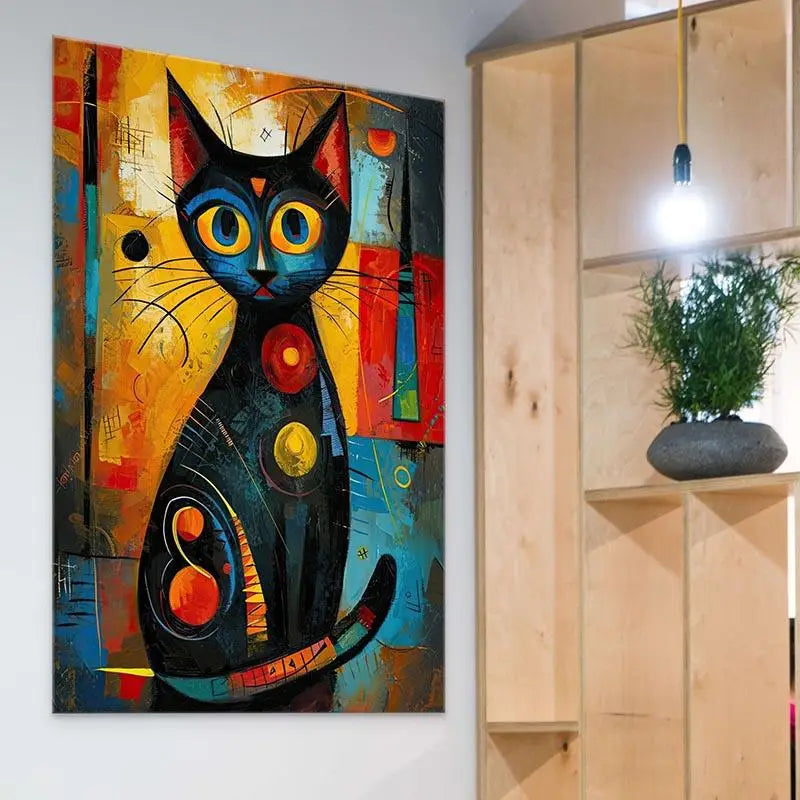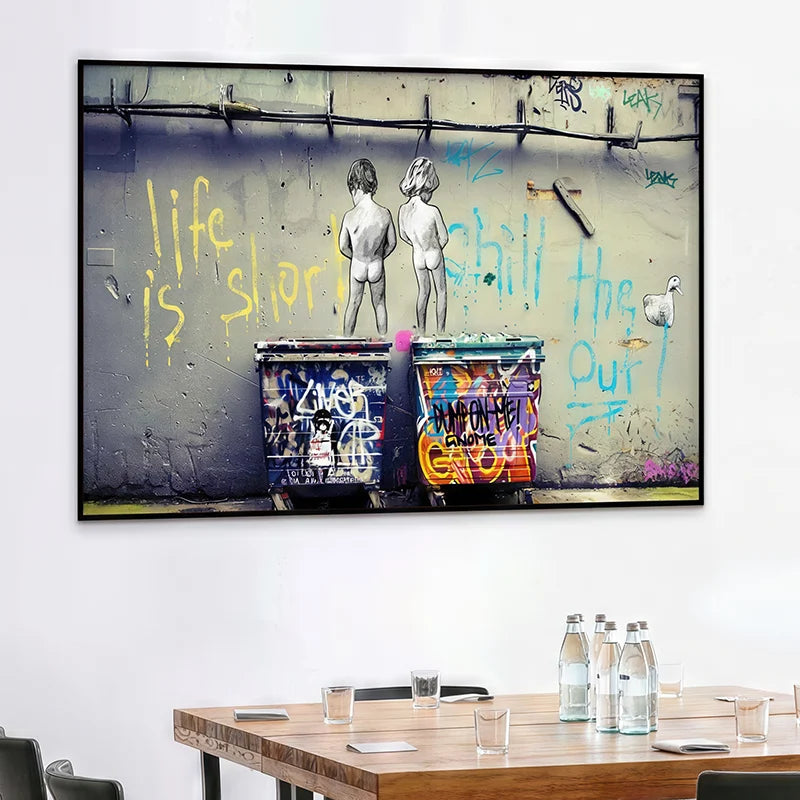

Wall art is one of the elements most effective to give personality to a living room.
But choosing an artwork you like is only the first step.
Where to place wall art in a living room? Above the sofa, on a large wall, above a sideboard, near a fireplace or even placed on the floor: the placement influences directly the way the artwork will be perceived.
Dimensions, height, furniture, colors and light must therefore be taken into consideration to create harmonious décor.
Here are our tips to transform simple wall art into a true focal point of your living space.
The most natural placement is generally above the sofa, of a sideboard or on the main wall of the living room. The wall art should be visible enough, proportional to the furniture and installed at a comfortable height for the eye. In a large living room, XXL wall art or a triptych can also structure an empty wall.
1. How to choose the best place for wall art in the living room?
A piece of wall art should not simply fill an empty space.
It should contribute in the visual balance of the entire room.
Even before about thinking to hanging it, observe your living room from its entrance and identify the areas that naturally draw the eye.
The main wall
It is often the best place for a statement artwork or a large-format piece.
The sofa
It creates a natural visual axis and creates the classic placement of the living room wall art.
A sideboard or console table
The furniture allows to create a structured composition and balanced.
A secondary wall
A vertical artwork or more understated can enliven an area less dominant.
To find a suitable artwork for your living space, you can start by exploring our Living Room Wall Art collection .
2. Placing wall art above the sofa: the classic choice that works
The wall located behind the sofa is often the largest surface free space in the living room.
It is therefore an ideal spot to create a focal point.

Colorful wall art can brighten up a sofa and furniture in more neutral tones.
A horizontal artwork works particularly well above of a wide sofa.
To preserve good proportions, the wall art can represent about two-thirds of the width of the sofa.
It is not an absolute rule, but an excellent visual guide.
In many interiors, leave about 15 to 25 cm between the top from the sofa backrest and the bottom of the wall art helps preserve a visual relationship between the furniture and the artwork. However, adapt this distance to the actual height of your sofa and the wall.
A piece of wall art should not seem to float too high above the sofa.
The goal is that the two elements seem to belong to the same composition.
For a living room with an urban spirit, also discover our Street Art Wall Art .
3. Can you place wall art on the floor in a living room?
Yes. A piece of wall art does not necessarily have to be hung on the wall.
Placing a large artwork directly on the floor, slightly tilted against the wall, can give a very contemporary look to a living room.
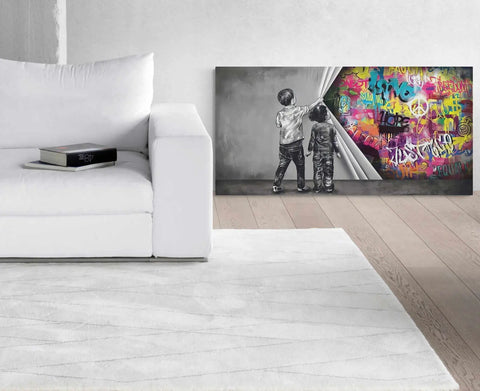
A relaxed look
This arrangement gives the impression of an interior more artistic and less conventional.
A modular decoration
The wall art can be moved without having to modify the wall fixings.
Ideal for large formats
An XXL vertical wall art can be particularly spectacular placed on the floor.
A no-drill solution
It can be useful when you want avoid making too many holes in the wall.
wall art placed on the floor must remain stable and not obstruct high-traffic areas. This arrangement is less suitable if the artwork risks being knocked over by children or animals.
4. Hanging wall art above a sideboard or console table
The sideboard is another excellent anchor point in the living room.
This configuration allows you to create a true decorative composition.
Centered wall art
Classic solution and balanced, particularly suited for a large sideboard.
Slightly off-center wall art
It allows to create a décor more contemporary.
Pairing with a few objects
A lamp, a vase or a few books can complement the composition.
if the wall art is very colorful or highly detailed, keep objects placed on the sideboard more understated. The artwork should remain the main element.
5. Dare to use a triptych to decorate a large living room wall
A large living room offers enough of space to move away from traditional wall art in a single part.
The triptych consists of three panels that work together to form a single composition.
It naturally creates rhythm and allows to cover a large width without creating an overly massive visual block.
The triptych lets you decorate a large wall while retaining a sense of movement.
It works particularly well above of a large sofa, of a sideboard or on a wall with no other decoration.
For an atmosphere more understated and graphic, also explore our collection of Minimalist Wall Art .
6. Can you hang wall art above a fireplace?
The space located above a fireplace is naturally a focal point in the living room.
A piece of wall art can therefore find a truly beautiful place, provided that to take into account the heat and the configuration of the installation.
always respect the safety distances specified by the manufacturer of the fireplace and the heating system. Excessive heat or repeated exposure to high temperatures can damage some supports, frames or prints.
In the case of a decorative fireplace or a mantel far enough away from the heat source, the wall art can become the central element of the entire room.
7. At what height should you hang wall art in a living room?
A piece of wall art installed too high often seems disconnected of the rest from the rest of the decor.
For an artwork displayed alone on a wall, a common guideline is to position its center around from 145 to 155 cm from the floor.
This guideline must however be adapted to the height of the room, to the furniture and to the position from which you will view the wall art.
the furniture is often more important than the theoretical height. Above a sofa or a sideboard, first look for a harmonious relationship between the wall art and the furniture.
8. What size wall art should you choose for a living room?
| Placement | Recommended size | Desired effect |
|---|---|---|
| Above a sofa | Horizontal or panoramic | Create continuity with the furniture |
| Large empty wall | Large format or XXL | Create a striking focal point |
| Narrow wall | Vertical | Emphasize height |
| Above a sideboard | Horizontal or square | Structure the composition |
| Large living room | Triptych or composition | Fill the width and create rhythm |
recreate the dimensions of the wall art on the wall with masking tape. You will immediately see if the size seems too small, too imposing or perfectly balanced.
9. What style of wall art should you choose for your living room?
The placement is not enough. The style of the artwork should also interact with your furniture, your colors and the overall mood.
Street Art Wall Art
Ideal to give character to a modern living room, industrial or very refined.
Contemporary Wall Art
Graphic shapes, colors and modern compositions fit easily in a modern interior.
Minimalist Wall Art
Simple lines and understated colors for living rooms where one seeks calm and elegance.
Abstract Wall Art
An abstract wall art piece can bring depth and create a true presence on a large wall.
10. Canvas, floating frame, Plexiglass or poster: which material for the living room?
Frameless poster
A look simple and light, suited for interiors more relaxed.
Stretched canvas
It creates an artistic look and suits many interior styles living room.
Black floating frame
It strengthens the contrast and gives more presence to the artwork.
White floating frame
A luminous finish that pairs with living rooms bright and contemporary.
Plexiglass
The glossy finish can enhance the colors and bring a very modern look.
11. How to light wall art in a living room?
A good location can lose some of its appeal if the artwork is constantly immersed in shadow.
Conversely, overly aggressive light can create annoying reflections, especially on a glossy surface.
Indirect natural light
It allows to reveal the colors without creating overly harsh lighting.
Adjustable spotlight
A good solution to a specific wall art piece enhance.
Wall sconce
It can create an atmosphere warmer in the evening.
Avoid direct reflections
Think about the position the windows if you choose a glossy surface.
12. Mistakes to avoid when placing wall art in the living room
Hanging it too high
The artwork then appears isolated of the sofa or the furniture.
Choosing a format that is too small
On a large wall, a small wall art piece can feel lost.
Overloading the wall
Leave enough empty space to give presence to the artwork.
Neglecting proportions
The wall art must be consistent with the width of the sofa, of the sideboard or the fireplace.
Ignoring the light
Reflections and backlighting can reduce the visual impact.
Trying to match everything
A piece of wall art can also serve to create an interesting contrast with the room.
Which wall art should you choose for your living room?
Now that you know where to install your artwork, still remains to choose the style that will give its personality to your room.
Your living room has found its perfect spot. Now all that’s left is to find its wall art.
Above the sofa, on a large wall, near a sideboard or as as a triptych, the right wall art can transform the balance of the entire room.
Choose now the artwork that will give a true personality to your living room.
Discover Living Room Wall Art Explore all Decorative Wall ArtFAQ: where to place wall art in a living room?
Where to place wall art in a living room?
The locations the most natural are generally above the sofa, of a sideboard, on the main wall or near a fireplace. The essential thing is to create a visual relationship with the furniture.
At what height should you hang wall art in the living room?
For wall art installed on its own, its center can generally be placed around 145 to 155 cm from the floor. Above a piece of furniture, the relationship with the furniture is more important than this theoretical measurement.
At what height should you hang wall art above a sofa?
A distance of about 15 to 25 cm between the top of the backrest and the bottom of the wall art is often a good starting point, to be adjusted to the actual proportions of the room.
What size wall art should you choose above a sofa?
A piece of wall art whose width represents approximately two-thirds of the sofa generally produces a harmonious result. This proportion remains a guideline and not a strict rule.
Can you place wall art on the floor?
Yes, particularly with a large format. However, make sure that it is stable, protected from impacts and away from traffic areas.
Can you hang wall art above a fireplace?
Yes, if the layout allows it. In the case of a working fireplace, follow the distances safety and recommendations the manufacturer to avoid excessive exposure heat.
Is a triptych suitable for a living room?
Yes. The triptych is particularly suited large walls and wide sofas, because the three panels create rhythm while covering a large surface.
Which wall art should you choose for a modern living room?
Contemporary wall art, abstract, minimalist and Street Art work particularly well in a modern living room. The choice then depends on the colors and the atmosphere you are looking for.
The right wall art in the right place can transform your entire living room
A piece of wall art is never a simple element placed on a wall.
Its format, its height, its placement and its relationship with the furniture directly contribute to the balance of the room.
Above the sofa, on a main wall, near a sideboard, placed on the floor or as as a triptych, each layout can produce a result very different.
The best placement is the one that allows to the wall art to naturally draw the eye without unbalancing the rest of the living room.
Find My Living Room Wall Art