
An empty wall can make a room feel as though it lacks personality. Conversely, a well-chosen modern wall art piece naturally draws the eye, anchors the decor and instantly adds character to your interior.
Abstract, contemporary, colorful, minimalist, pop art or street art-inspired: countless styles are available today. But how do you choose the right wall art, find the perfect colors and, above all, select a size that is proportionate to your wall?
In this guide, discover our tips for choosing modern wall art that complements your decor, your room and the atmosphere you want to create.
Which style of modern wall art should you choose?

Wall art should not simply fill an empty space. It plays an integral role in the room's visual identity. The first consideration is therefore naturally the style you love.
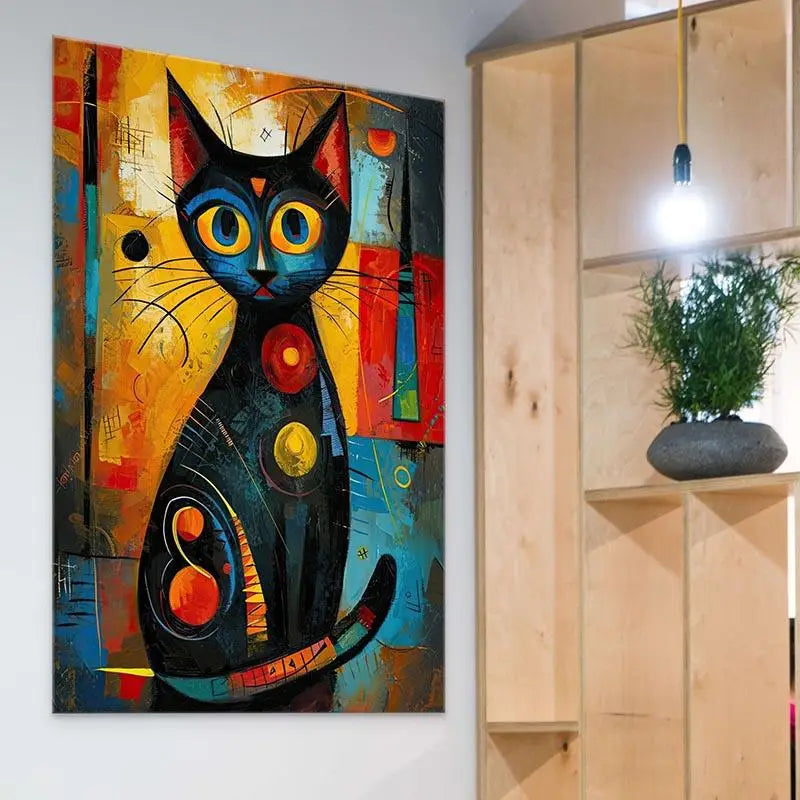
Abstract wall art for contemporary decor

Geometric shapes, movement, textures and color combinations allow abstract art to blend effortlessly into contemporary interiors. It also leaves plenty of room for interpretation: everyone can see a different emotion or story in it.
An abstract wall art piece works particularly well above a sofa, in a dining room or in a modern entryway.
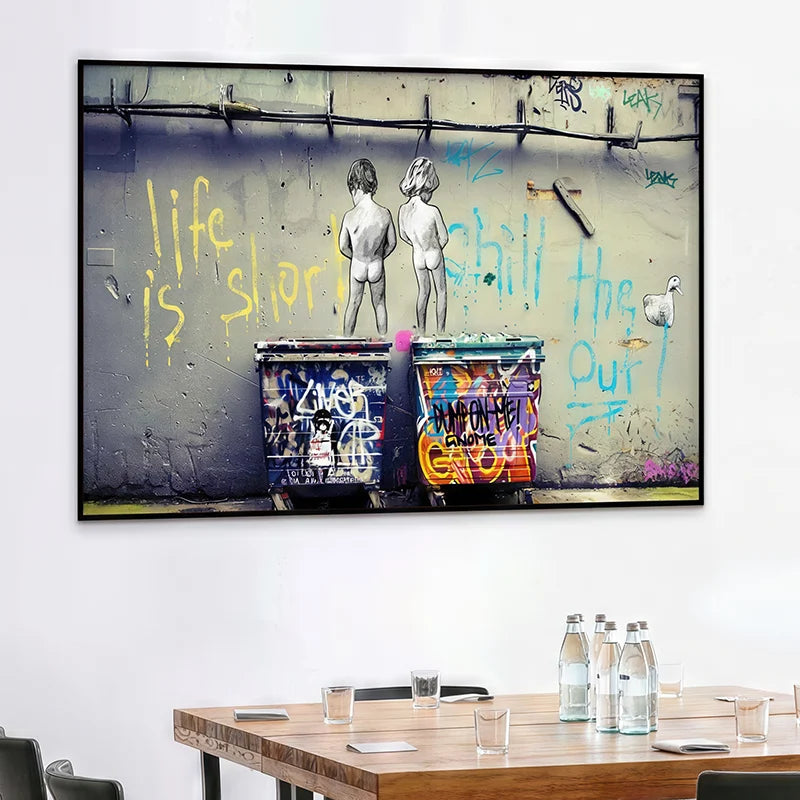
Street art to add character
Inspired by urban culture, graffiti and stencil art, street art creates a powerful visual presence. It is particularly well suited to modern, industrial or minimalist interiors.
In a relatively understated interior, colorful street art wall art can become the centerpiece of your decor.
Pop art to bring your walls to life
Vibrant colors, popular references and graphic compositions define pop art wall art. It is an excellent way to energize a living room, office or room with fairly neutral decor.
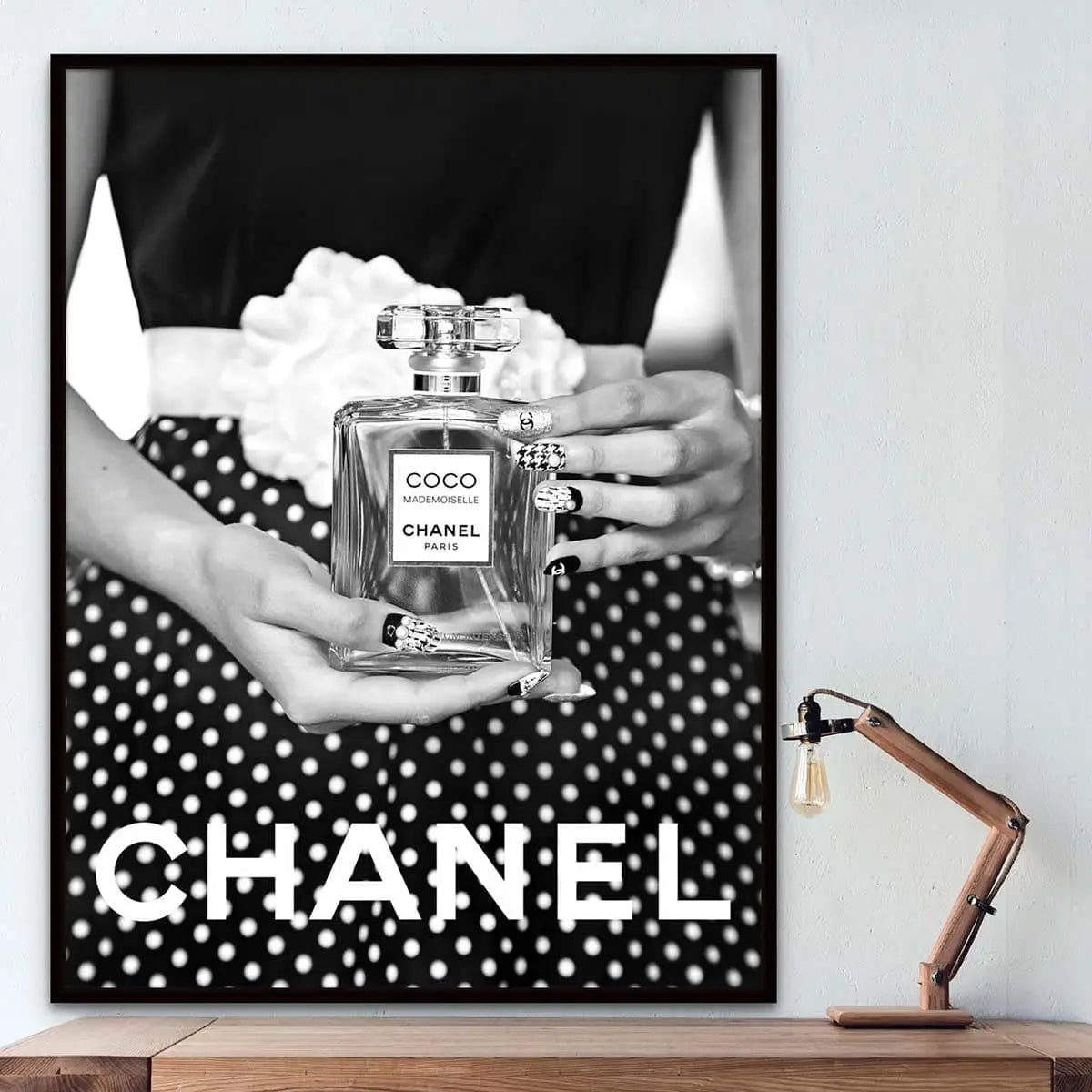
Black and white for elegant decor
More timeless, black and white wall art fits effortlessly into minimalist or contemporary decor. It creates contrast without adding too many colors and pairs particularly well with wood, white, gray, beige or black.
How to choose colors for your modern wall art

Color plays an essential role in the visual balance of a room. Two approaches work particularly well: creating harmony or deliberately introducing contrast.
Create harmony with existing colors
Look at the main colors already present in your room: the sofa, cushions, rug, curtains, lighting and decorative objects.
The wall art does not need to reproduce these shades exactly. A few color accents are generally enough to create visual continuity.
In a beige and terracotta living room, for example, a piece featuring shades of sand, brown, orange or gold can perfectly complement the overall decor.
Use contrast to draw the eye
You can also do exactly the opposite.
On a large white wall or in a living room with neutral colors, deep blue, red, orange or multicolored wall art instantly becomes a focal point.
In an already colorful interior, a more understated piece can instead create a sense of balance.
Decor tip: there is no need to match every color. Two or three carefully chosen color accents are often more elegant than entirely tone-on-tone decor.
Which wall art should you choose for each room?
A piece that works perfectly in a living room will not necessarily have the same impact in a bedroom or hallway. The atmosphere you want to create should therefore guide your choice.
In the living room
The living room is generally where you can make the boldest statement. A large contemporary wall art piece, an abstract artwork or a street art design can become the focal point of the decor.
Above the sofa, choose a piece large enough to visually fill the space without overwhelming the furniture.
In the bedroom
A bedroom calls for a more peaceful atmosphere. Landscapes, soft abstract compositions, natural colors and pastel tones help create a relaxing space.
In an office
Wall art can bring energy and personality to a workspace. Urban art, photography, architecture, or graphic designs can add character to an office that may otherwise feel too impersonal.
In a hallway or entryway
These spaces are often overlooked, even though they are perfect for wall decor. A vertical piece works particularly well on narrow walls, while a series of wall art pieces can add rhythm to a long hallway.
What size wall art should you choose?
Size is almost as important as the design. A beautiful artwork can lose much of its impact if it looks tiny on a vast wall.
For wall art hung above a sofa, console table, or sideboard, a useful guideline is to choose a width equal to around two-thirds of the furniture's width. This proportion is not an absolute rule, but it is an excellent starting point.
For example, above a 180 cm sofa, a wall display measuring approximately 110 to 130 cm wide can create a balanced look.
When should you choose large-format wall art?
An XXL wall art piece is particularly striking on a large, open wall. Rather than grouping numerous small decorative pieces, a single statement artwork can define the entire room.
Large-format wall art works particularly well in a living room, dining room, spacious entryway, or above a large sofa.
Where should you hang wall art to showcase it?
A common mistake is hanging wall art too high. For natural viewing, the center of the artwork should generally be positioned approximately at eye level.
When wall art is hung above a piece of furniture, it should remain visually connected to it. Too much space between the furniture and the artwork can make the two elements feel as though they belong to different settings.
Also consider the lighting. A piece placed near indirect lighting or a spotlight can gain a much stronger presence, provided excessive glare is avoided.
One large wall art piece or a gallery wall?
Both options can produce a beautiful result, but they do not create the same atmosphere.
A large wall art piece as a centerpiece
A single large artwork instantly creates a focal point. This approach is ideal for modern, minimalist interiors.
It also allows the room to breathe and prevents it from feeling overcrowded.
Create a gallery wall
A gallery wall offers greater creative freedom. You can combine several sizes around the same theme, color palette or artistic style.
Before drilling into your wall, recreate your arrangement on the floor. This allows you to try several layouts and easily adjust the spacing between the artworks.
Stretched canvas, unframed poster, floating frame or acrylic glass print: which option should you choose?
The look of wall art also depends greatly on the material. At Montableaudeco, the same design may be available in several finishes to suit your preferred style and budget.
Frameless poster
An unframed poster is a simple way to enjoy decorative artwork while choosing your own frame.
Stretched canvas on wooden frame
Stretched canvas offers a warm, artistic look. Mounted on a wooden frame, it can be seamlessly incorporated into your decor.
Black or white floating frame
A floating frame adds depth and visually enhances the artwork. Black generally accentuates contrast, while white creates a brighter, more understated look.
Plexiglass
Acrylic glass prints offer a glossy, contemporary finish that is particularly well suited to colorful illustrations and modern interiors.
Mistakes to avoid when choosing your wall art
- Choosing a size that is too small: on a large wall, the artwork may look lost.
- Hanging the wall art too high: the artwork should remain naturally within your field of vision.
- Using too many colors without consistency: incorporate a few shades already present in your decor.
- Overcrowding the wall: leave enough space around the wall art to let it breathe.
- Choosing based solely on trends: you will look at your wall art every day. It is therefore essential to choose a piece you truly love.
Modern wall art: a simple way to transform your decor
It is not always necessary to replace furniture or repaint a room to give it a new personality. New wall decor can be enough to completely transform the atmosphere.
Wall art also has the advantage of being easy to move. Whenever you want to refresh your interior, you can relocate it, create a new arrangement, or simply replace an artwork.
From abstract creations and landscapes to pop art, street art, and contemporary compositions, the possibilities allow you to create truly personal decor.
At Montableaudeco, you can choose your artwork based on its artistic style, colors, size, and finish to ensure it complements your interior.
FAQ: How to choose the right modern wall art
What color wall art should you choose for a white wall?
A white wall gives you plenty of freedom. You can opt for bold colors to create a striking contrast, or choose beige, black, gray, and natural tones to maintain a minimalist look.
What size wall art should you choose above a sofa?
A width approximately two-thirds that of the sofa is a good visual guideline. However, you should also consider the height of the wall, the shape of the wall art, and the other decorative elements in the room.
What wall art should you choose for a modern living room?
Abstract, contemporary, street art, pop art, and minimalist wall art work particularly well in a modern living room. The best choice mainly depends on the room's colors and the atmosphere you want to create.
How can you showcase large wall art?
Leave enough open space around the artwork and avoid placing too many objects nearby. Soft, well-positioned lighting can also enhance its visual impact.
Should wall art match the sofa?
Not necessarily. A few matching color accents are usually enough. You can also deliberately choose a contrasting color to turn the wall art into the room's focal point.
The final criterion: let your emotions guide you too
Dimensions, colors, placement, and style all help create balanced decor. But one criterion remains impossible to measure: falling in love with it.
Wall art is something we look at every day. It can evoke a passion, a destination, a period in time, or simply stir a particular emotion.
The perfect modern wall art is one that naturally finds its place in your interior while still making you want to admire it long after hanging it.