The language of colors in street art and how to translate it into your decor
Welcome to the colorful world of street art! Have you ever wondered what the dominant colors are that bring our city streets to life? Or how these colors can transform the atmosphere of your interior space? Let's take an artistic journey together and discover how the street art palette can revolutionize your decor.
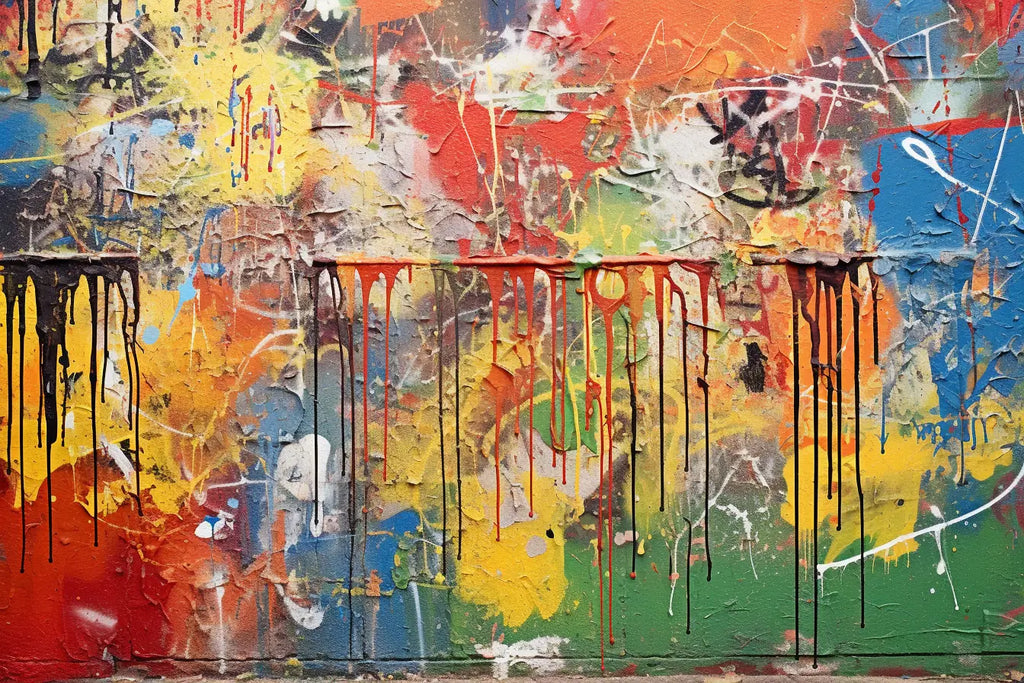
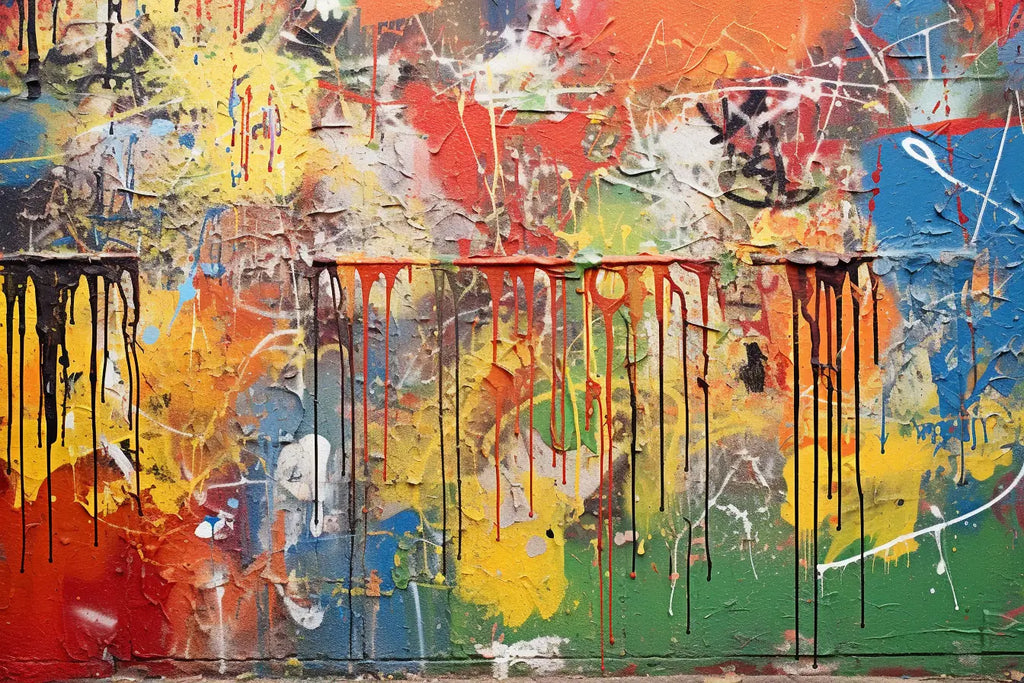
When we talk about street art, it's impossible not to think of the colorful murals that adorn our neighborhoods. From Paris to Rennes, artists express their passion through vibrant palettes, offering the general public a unique form of artistic expression.
Before diving deeper, let's take a look at a simplified classification of popular street art colors.
Color
Meaning
Iconic artist
Red
Passion, rebellion
Maser
Blue
Calm, depth
Margaux Vignal
Yellow
Energy, radiance
Unknown
These colors are not chosen at random. They have deep origins, meanings, and artistic uses that make them emblematic of the street art movement.
The psychological impact of colors
Colors are not merely aesthetic. They have the power to touch our minds and evoke emotions. Red, for example, often associated with passion, can also be seen as a cry of rebellion in the urban landscape. Similarly, blue, a symbol of calm, gives depth and perspective to a work of art.
"Heads on plastic film, Place de la République" - Margaux Vignal
So, whether you are an artist or simply a spectator, understanding the impact of colors can help you better interpret the message hidden behind each mural or graffiti.
Incorporating street art into interior design
How about transforming your living space with a touch of urban art? It's not just a matter of sticking graffiti on a wall. It's about choosing the right colors, harmonizing patterns, and above all, not overdoing it.
So how can you combine styles without committing a faux pas? Start by choosing the right colors. If you like the bright hues of street art, incorporate them in small touches. A bright yellow cushion here, a blue lamp there... Finally, don't hesitate to take inspiration directly from artists. After all, art is meant to be shared!
Street art: Beyond colors
Present in our neighborhoods since the first tag appeared in Arcachon in the past, street art has a rich history. This art, which you can find on the walls of your cities, is much more than graffiti or a mural. It is a cultural and historical witness to the movements, politics, and projects that have enlivened our streets.
Indeed, from the Latin Quarter to Yffiniac, urban art has evolved over time, adapting and influencing the general public. Artists such as Maser, by offering increasingly innovative works, have shown that street art is not just a passing fad, but an artistic movement in its own right.
The geometric and colorful art of Maser
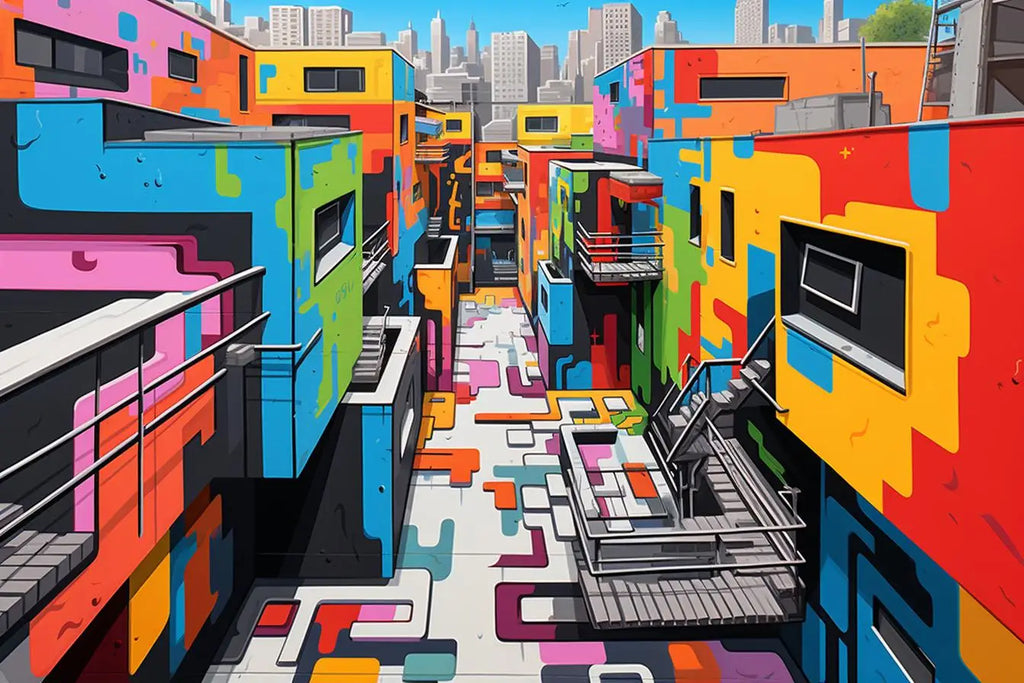
Have you heard of Maser? If not, then you're missing out! This artist, known for his artistic and geometric works, has won the hearts of many urban art lovers. His brightly colored murals perfectly illustrate his mastery of shapes and shades. His style, though unique, has inspired a large number of modern urban artists.
3D works: Immersion in the world of Maser
Imagine walking down the street and coming across a mural that seems to literally pop out of the wall. That's the "wow" effect Maser seeks to create by using 3D techniques in his art. By blending reality and imagination, he invites viewers to immerse themselves completely in his creations. This innovative approach breathes new life into street art and allows everyone to enjoy an extraordinary artistic experience.
Maser and the beautification of urban spaces
When it comes to transforming abandoned urban spaces into true masterpieces, Maser is the undisputed master. With notable projects in Paris and Dublin, he has breathed new life into forgotten areas, transforming them into true venues for artistic expression. These creations are not only decorative; they also play a social role, bringing communities together around art that is accessible to all.
In short, street art, with its colors and shapes, is much more than just decoration. It is a true expression of urban culture, reflecting the aspirations, struggles, and creativity of an entire generation. And with artists like Maser, the future of street art certainly looks bright.
The essence of colors in street art
Street art, this open-air artistic expression, is a melting pot of colors, styles, and emotions. Every graffiti artist, whether from New York, Paris, or Tokyo, has a unique palette that invites you to explore their world. But where do these colors come from? And what do they really mean?
Originally, graffiti artists used paint that was available locally, often left behind by public works projects or even "borrowed" from construction sites. But over time, special colors were developed and produced specifically for street art. These palettes have evolved over the years, influenced by technology, fashion, and, of course, artistic expression itself. The web, and in particular platforms such as Google and Street, has become a place of exchange and inspiration for these artists, allowing them to work with increasingly diverse color palettes.
Incorporating street art colors into interior design
Your home is a bit like an art gallery. But instead of paintings by famous artists, why not invite street art inside? The bright, bold colors of this urban art form have the power to transform a space into a unique place of expression. Would you like a little piece of Yffiniac or a touch of Martin in your living room? It's totally doable!
Instagram, for example, is full of photos of artistic residences where graffiti motifs blend harmoniously into the decor. Whether it's entirely painted walls or simply boldly colored street furniture, these artistic touches breathe new life into the space. However, the trick is to use moderation. Too many bright colors could make the space overwhelming. Instead, opt for key elements that catch the eye, such as an accent wall or a few artistically designed cushions.
Street art around the world: An explosion of colors
Street art, that wonderful artistic universe that turns the world into a veritable open-air museum, continues to showcase its splendors in every corner of the globe. Whether you're in Paris, Amsterdam, or elsewhere, every street corner can pay tribute to daring artists who share their vision of the world, their culture, and sometimes even their politics.
For example, Arcachon has become a favorite residence for several French artists, with its murals that tell extraordinary stories. Not to mention Spain and Ireland, which have also distinguished themselves in the field of street art at recent festivals.
Maser: Simplicity of shapes and colors
Maser, this street art prodigy, loves to play with simple shapes and bright colors. Born in Germany, he quickly made his mark in public spaces. His creations, scattered between Rennes in France and other major cities, transform urban spaces into veritable open-air galleries. His unique artistic style, centered on primary colors and geometric shapes, has inspired many other international artists.
Wordplay and humor in street art
While street art is a powerful way to express opinions, it can also be incredibly humorous. From witty graffiti to works that make you laugh out loud, humor is often found on the streets. Some artists use clever puns to convey a powerful message while entertaining the general public. Have you ever seen these works that make you smile on a street corner or on a website dedicated to urban art?
Reinventing the classics: The Mona Lisa and Van Gogh in graffiti style
Art, in all its splendor, is constantly evolving. And what better example than these urban artists who have decided to revisit the great classics? Imagine the Mona Lisa, that iconic portrait, painted on a wall with a modern touch of graffiti. Or Van Gogh, whose works are reinvented to suit the urban context, while retaining the essence of the original artist. These works, whether in Paris or Dublin, prove the importance of reinterpretation in artistic expression.
"Heads on plastic film, Place de la République" - Margaux Vignal