
Street art in Paris: where to see the most beautiful works and how to bring them into your home
Where can you see street art in Paris? Start in Belleville and the 13th arrondissement, then continue your walk towards Butte-aux-Cailles, Oberkampf and the Canal de l’Ourcq. Monumental murals, stencils, collages and mosaics create a vibrant urban art scene, with works that evolve as new projects emerge.
This guide helps you plan a street art route through Paris without relying on a fixed address. Walls may be painted over, restored or transformed, so check local programs before setting out. You will also find tips for visiting with your family, photographing artworks respectfully and bringing the spirit of graffiti into your home décor.
Understanding Parisian street art
Street art, or urban art, encompasses creations designed to engage with a public space. Graffiti and lettering are well-known forms, but stencil art, posters, collages, mosaics and painted murals also play an important role. In Paris, a work may be created as part of an authorized project, on an exhibition wall or through an independent initiative: its status and lifespan are not always the same.
This diversity makes every route so rewarding. A monumental façade is best viewed from a distance, while a small stencil invites you to examine the details. Take time to consider the surface, colors, signature and relationship between the image and the architecture. Parisian street art is more than spectacular decoration: it also transforms the way we experience the city.
- Graffiti and lettering: typography, gestures and creative use of color.
- Stencil art: clean outlines, repeated motifs and an immediate message.
- Collage and poster art: printed images, layering and creative reinterpretation.
- Mosaic: small pieces incorporated into street furniture.
- Mural: a large-scale composition, sometimes commissioned.

The must-visit neighborhoods for street art in Paris
For a first visit, choose two nearby neighborhoods or a single area to explore slowly. The table below provides a helpful guide, but it does not replace an up-to-date map, as artworks and access may change.
| Neighborhood | Atmosphere | Ideal for |
|---|---|---|
| Belleville | Murals, collages and ever-changing walls | A first taste of urban art |
| 13th arrondissement | Large-scale murals | Photograph monumental façades |
| Butte-aux-Cailles | Quiet lanes and poetic details | Stroll and explore as a family |
| Oberkampf and the M.U.R. | An ever-changing exhibition space | See a creation as part of a regular schedule |
| Canal de l’Ourcq | Riverbanks, vast walls and a waterside stroll | Combine urban art with a stroll |
Belleville: a vibrant starting point
Belleville is often mentioned when searching for graffiti in Paris. The neighborhood’s façades, passageways and walls form an ever-changing landscape where lettering, portraits, collages and murals come together. Rue Denoyez is regularly recommended by enthusiasts, but the appeal of the walk lies precisely in what you may discover in the surrounding streets.
Wear comfortable shoes and remember to look up: some works are high above the ground or tucked away in hidden corners. To preserve the neighborhood atmosphere, stay in public areas, do not block entrances and avoid photographing residents without their permission.
The 13th arrondissement: the realm of monumental murals
In the 13th arrondissement, several projects have given prominence to monumental murals. The size of the walls allows artists to create portraits, landscapes or abstract works spanning several stories. The area is equally enjoyable to explore on foot or by public transport, taking time to step back and appreciate the proportions.
Not all works remain on display for the same length of time. Before your visit, look up recent projects by the city council, local associations and cultural organizations in the neighborhood. This will help you avoid promising your readers or family a mural that may already have been altered.
Butte-aux-Cailles: stencils and bohemian strolls
Butte-aux-Cailles offers a more intimate experience. Along its streets and passageways, small-scale works, stencils, and painted messages appear between storefronts. The neighborhood’s charm invites you to slow down rather than follow a list of addresses.

Oberkampf and Le M.U.R.: an open-air exhibition
Le M.U.R. d’Oberkampf serves as an artistic display space where new works regularly replace previous creations. It is an excellent place to view a work in its urban setting, then return a few weeks later to see how the wall has evolved. Check the schedule and featured artists on the official M.U.R. website.
This stop is ideal for visitors who enjoy keeping up with the latest developments in urban art. Depending on the day, you may see only the finished work or watch an artist at work: do not disturb them, and ask permission before taking close-up photographs.

Canal de l’Ourcq: urban art and a waterside walk
The banks of the Canal de l’Ourcq provide a pleasant setting for combining a street art walk with an outdoor break. Depending on the area and current projects, you may find large-scale murals, temporary installations, and unobstructed views for photography.
This route is ideal for families with children or anyone who prefers to walk at their own pace. However, check the starting point, route length, and current events: the artistic landscape varies from one stretch of the canal to another.
Le Marais, Batignolles, Saint-Denis, and La Défense: more places to explore
Street art extends well beyond the five best-known neighborhoods. Le Marais, Batignolles, Saint-Denis, and La Défense may also reveal works connected to a cultural project, gallery, or temporary art trail. These areas are therefore excellent options for a second outing, provided you check the latest information before you go.
- Le Marais: look for paste-ups and other interventions around cultural venues.
- Les Batignolles: combine a neighborhood walk with a search for recent murals.
- Saint-Denis: check local projects and access conditions.
- La Défense: look for installations and art trails announced on the website.
This method prevents you from confusing a permanent artwork with a temporary event. It also helps you follow opening hours, photography rules, and any booking requirements.
Signatures and styles to recognize in Paris street art
Artists often attract visitors, but a name alone is not enough to identify an artwork. Pieces may be moved, painted over, or created as part of a collective commission. Use signatures as clues, then check the source documenting the artwork.
- Invader
- His pixelated mosaics are recognizable by their format and inspiration from digital culture.
- C215
- The portrait and cat stencils play with details, expressions, and layered colors.
- Miss.Tic
- Her silhouettes and wordplay combine imagery, poetry, and commentary on urban life.
- JR
- Large-format photographic portraits challenge the way people and places are perceived.
- Banksy
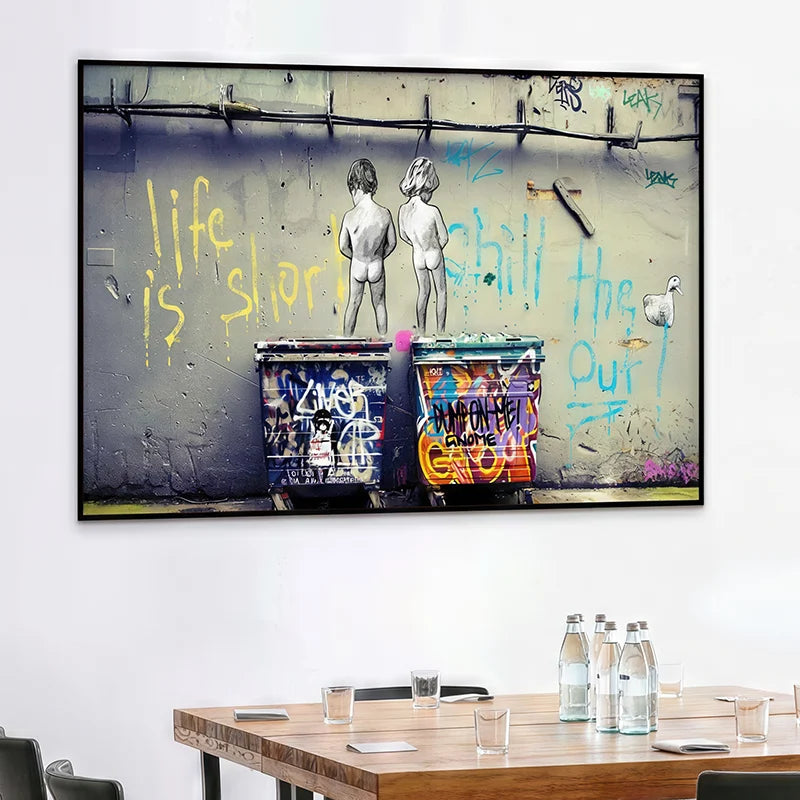
- An internationally renowned figure in socially engaged stencil art: do not present a decorative reproduction as an original artwork.
This technique-based approach is more reliable than a fixed list of “best artists.” It also helps you appreciate emerging artists and local collaborations, which often receive less coverage in general-interest guides.
Exploring Paris street art as a family
An urban art outing works very well with children if the route remains short and includes regular breaks. Prepare a small challenge: find three colors, spot an animal, compare a stencil with a mural, or make up a story based on a character.
- Short format: choose a single area and plan for a one-hour to one-and-a-half-hour walk.
- Comfortable route: choose riverbanks or quiet streets, with a designated place to take a break.
- Observation: explain that a wall is not a play surface and that artworks should not be touched.
- Flexibility: keep a backup location in mind in case the weather or tiredness means you need to shorten the walk.
Belleville, Butte-aux-Cailles, and the Canal de l’Ourcq can serve as starting points, but always adapt the route to the children's ages and the day's conditions.

Activist street art: understanding the messages and contexts
Many works explore memory, migration, ecology, inequality, or freedom of expression. Their impact depends on the location, the commissioner, and how passersby respond to them. An authorized mural and a spontaneous collage do not follow the same rules, even if they share certain visual codes.
To discuss a social message without oversimplifying it, look for the artist's name, the project, and the date it was created whenever this information is available. Avoid attributing a political intention to an artwork simply because it features a slogan or symbolic color.

Galleries, festivals, and exhibition walls in Paris
Paris's urban art scene can also be explored beyond the streets. Galleries, cultural centers, studios, and festivals showcase urban artists in settings that offer better preservation and interpretation. Events such as Ourcq Living Colors may be held depending on the year and location: always check the official program before making the trip.
Le M.U.R. is an especially useful landmark for keeping up with the regularly changing artworks in Oberkampf. Its website showcases the artists and successive works: use it as a source of verified information rather than a promise of permanent content.
- Check the event date, address, and opening hours.
- Book ahead if places for the tour or workshop are limited.
- Check age requirements, accessibility, and photography rules.
- Plan an outdoor alternative in case the program changes.

Photographing and sharing Parisian street art
A smartphone is enough to document your journey, provided you pay attention to lighting and composition. Ideally, take photos in the morning or late afternoon, step back to capture the scale of the wall and take several shots: a wide view, a close-up and an image showing how the artwork interacts with the architecture.
- Clean the lens and enable perspective correction if necessary.
- Avoid using flash, as it flattens textures and disturbs passersby.
- Note the neighborhood and date, as the artwork may change.
- Ask permission before publishing the face of an artist or resident.
- Credit the artist and the project when the information is available.
Taking your own photo of an artwork displayed in a public space does not automatically give you the right to reproduce it for commercial purposes. For professional publication, check the terms of use and image rights.

Bringing the street art spirit into your home decor
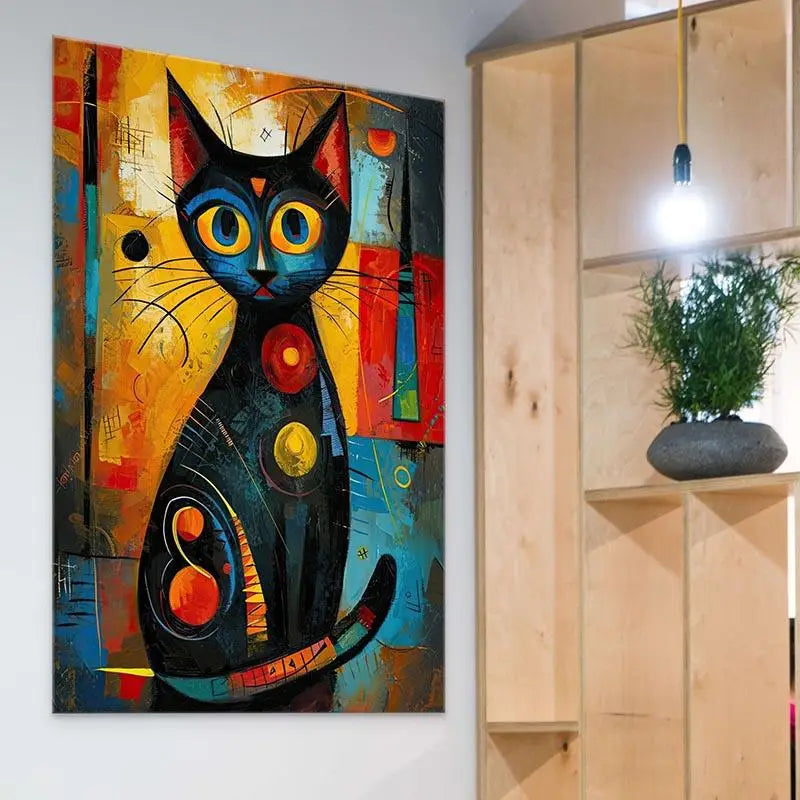
A stroll can become the starting point for street art decor. The aim is not to turn every wall into a colorful facade, but to choose one statement piece and give it room to breathe. A large-format piece draws the eye above a sofa, while a diptych or framed poster works well in a hallway, office or bedroom.
For more inspiration, explore our street art wall art collection. A decorative print is not the artist's original work: check the design, material, dimensions, hanging system and delivery terms before ordering.
Coordinating colors, materials and furniture
Pick up one or two shades from the wall art in cushions, a rug or a subtle decorative object. Light wood adds warmth to high-contrast graffiti, black metal enhances a graphic composition and neutral walls prevent visual clutter. If your interior is already colorful, street art wall art with a limited palette can create a cohesive look without competing with the furniture.
To explore other styles, discover our modern wall art and abstract wall art collections. These collections make it easy to transition gradually from a bold graffiti style to more understated wall decor.

DIY: create an urban accent without painting in the street
For a home project, use a removable panel, canvas or poster rather than an exterior wall. Test the colors on a small area first, protect the floor and ventilate the room if you are using suitable paint. Reusable stencils, geometric shapes and hand-painted lettering create a personalized result without permanently altering your home.
- Choose a palette of three to five colors.
- Work on a removable, properly prepared surface.
- Test the composition before adding the details.
- Follow the manufacturer's instructions for the paint and varnish.

Graffiti-inspired decorative objects
If you prefer a subtle touch, opt for a cushion, lamp, notebook, ceramic piece or small print. Echo one detail from the wall art rather than all its patterns: a color, line or symbol is enough to create visual continuity.

Plan your route with the right resources
Before you leave, save the neighborhoods on a map, check public transport and plan an alternative route. Community apps and maps are useful for locating an artwork, but their information may be outdated. Cross-check it with the website of the artist, association or local authority concerned.
- Latest wall art: check the official pages of M.U.R. and the exhibition venues.
- Guided tours: compare duration, meeting point, language and accessibility.
- Workshops: check what materials are provided, the minimum age, and registration requirements.
- Preparation: save the addresses for offline access and bring water on longer walks.

Frequently asked questions about street art in Paris
Where should you see street art in Paris on a first visit?
Belleville, the 13th arrondissement, Butte-aux-Cailles, Oberkampf, and the Canal de l’Ourcq are great places to start. Choose just one area for your first walk and check which artworks are currently on display before setting out.
Is street art in Paris free?
Artworks visible from public spaces can generally be enjoyed without a ticket. However, a guided tour, exhibition, workshop, or event may charge a fee or require a reservation.
Can you still see street art on Rue Denoyez?
The area is known for its graffiti history, but the walls are constantly changing. Check recent local sources and respect access restrictions to private property before visiting.
Which neighborhood should you choose with children?
The Canal de l’Ourcq, Butte-aux-Cailles, or a short route through Belleville offer a good balance of sightseeing and breaks. Adapt the distance, schedule, and amount of walking to the children’s ages.
What is the M.U.R. Oberkampf?
It is an open-air exhibition space run by the Le M.U.R. association. The artworks change regularly: check the official program for details of the featured artwork and announced dates.
How can you bring the inspiration from a street art walk into your home?
Choose a color or shape spotted during your visit, then echo it in a piece of wall art, a poster, or a few accessories. For decorative wall art, always check the material, size, and image usage rights.
Continue the journey with street art wall art
A Parisian mural can inspire a colorful composition, a stencil design, or a bold graphic atmosphere. Explore our selection of street art wall art and choose the size that will naturally complement your interior.
View the street art collection